Search
Choose a style
Dark
Light

Loto-Québec brings Incentive Games’ real-money casino games to Canada

Incentive Games‘ real-money content is now available in Canada for the first time thanks to a new deal with Loto-Québec.

The B2B games provider, which specializes in both real-money and free-to-play games, has delivered a range of crash and arcade real-money titles to the crown corporation through its real-money gaming division, Incentive Studios.

Loto-Québec is Incentive Games’ first active real-money gaming client in Canada, marking what it called its “gateway” into the country. The first real-money titles from Incentive Studios’ portfolio are live with Loto-Québec, and more will follow throughout 2026.

“Partnering with Loto-Québec marks an important milestone for Incentive Games as we continue to expand across regulated markets,” said the company’s Chief Commercial Officer, Ahmed Baker. “Loto-Québec is a highly respected and trusted operator, with a strong commitment to responsible play and delivering high-quality entertainment for players across Québec.

“We’re excited to introduce our real-money crash games to the market and demonstrate how our approach to game design can offer something genuinely fresh and engaging for players in the region.”

Incentive Games’ real-money titles are delivered to Loto-Québec via Light & Wonder, with which Incentive Games has an existing distribution deal.

Incentive Games has Ontario access

While Incentive Games has launched real-money gaming in Canada with Loto-Québec, it also has plans to do so in Ontario. Incentive Games gained market access in Canada’s only open and competitive regulated iGaming market last summer, when it was awarded a license by the Alcohol and Gaming Commission of Ontario (AGCO).

Last month, it announced it had extended its partnership with British operator bet365 to include a slate of real-money games in numerous markets including Ontario. Incentive Games already offers a range of free-to-play games with operators including bet365, such as a daily Prize Matcher and a Tournament Challenge predictor game for European soccer.

A first wave of real-money games supplied by Incentive Games will be launched on bet365’s casino in Ontario this year, as well as in several U.S. states that offer online casino gaming.

Incentive Games CEO John Gordon said at the time it received its AGCO license that Ontario’s multi-billion-dollar online casino market is “a huge opportunity” for the company.

Loto-Québec CEO cites 17% digital growth

Adding Incentive Games’ content is the latest enhancement for Loto-Québec’s online platform, which also onboarded Finnish Lottery subsidiary Fennica Gaming at the end of 2025.

Speaking later in December, President and CEO Jean-François Bergeron said that the lottery’s online gaming posted growth of about 17% for the period from April 1 to Sept. 30, 2025, compared to the prior year period.

He insisted that did not come at the expense of its land-based gaming.

“We are experiencing very good growth in Quebec when compared to other jurisdictions,” he said. “There is no cannibalization. What we might lose in sales at land-based points of sale, we make up for online.”

BetRivers sponsoring CBC’s Winter Olympics broadcast as it opens Alberta sign-ups

Rush Street Interactive’s BetRivers online casino and sportsbook is sponsoring CBC/Radio-Canada’s broadcast of the Olympic Winter Games Milano Cortina 2026 as it begins to recruit customers in Alberta.

This month’s Winter Olympics, which runs from Feb. 6-22, is the third Olympic Games for which BetRivers has collaborated with CBC. The partnership makes the brand the exclusive sports betting and online gaming partner of the event on Canada’s national pubic broadcaster, which RSI said in a Friday announcement reinforces its long-term commitment to the Canadian market.

BetRivers will present CBC’s daily free-to-play trivia show throughout the tournament, ‘The Game,’ wherein fans across Canada have the chance to test their Olympic knowledge each day for a chance to win premium prizes, including an all-expenses-paid getaway to the Mexican Riviera.

The ultimate benefit for RSI is that Ontario-licensed BetRivers will again get prominent, nationwide visibility and brand recognition across one of Canada’s leading news and sports platforms. It’s received that benefit before through its previous Olympics partnerships with CBC/Radio-Canada; this time around it comes at a more important time than ever.

BetRivers opens Alberta sign-ups

As first reported by Canadian Gaming Business earlier this week, BetRivers has officially applied for a license with Alberta Gaming, Liquor and Cannabis (AGLC) to enter Alberta’s online sports betting and online casino market when it opens later in 2026.

In tandem with the Winter Olympics sponsorship announcement, RSI confirmed it has launched pre-registration for Alberta, giving players in the province the opportunity to sign up for early access and an exclusive offer ahead of the province’s regulated iGaming market launch. Operators like BetRivers and PointsBet that have formally applied for registration with AGLC are allowed to let users open accounts in advance, per the provincial gaming regulations.

“Canada continues to be a priority growth market for BetRivers, and Alberta represents an exciting next step,” said RSI CEO Richard Schwartz. “With an office and large employee base in Toronto and a growing presence across the country, we’ve been building and investing in Canada for years.

“We’ve seen strong momentum in Ontario since launching in 2022, and through our continued partnership with CBC and our Olympic activations, we’re showing that we’re all-in on Canada for the long term.”

‘Slots-first casino approach’ drives BetRivers in Ontario

BetRivers is an online casino-first platform that offers real-money gaming in 16 regulated markets across North America, with a focus on those where online casino is legal. That includes Ontario, as well as the key iCasino states of Michigan, New Jersey, Pennsylvania and West Virginia. It holds monopoly status as the lone authorized sports betting and online casino operator in Delaware, and is live with sports betting in all of the aforementioned markets, plus several other U.S. states.

Since launching in Ontario in 2022, BetRivers has continued to see strong growth, which it says is driven by its “slots-first casino approach and commitment to product quality.” It pointed in its Friday release to its wide range of unique and “extra gamified” features such as Rush Packs, Wheel Spins and various slot and bingo tournaments.

In RSI’s most recent earnings call in October, Schwartz reported that BetRivers had its best quarterly performance in Ontario in nearly two years, with 24% year-over-year revenue growth. The gains were even greater in online casino, with revenue up 34% from the same period in 2024. RSI’s monthly active users rose 34% in 12 months, the fastest quarterly user growth rate in over four years. For iCasino specifically, that year-over-year growth was 46%.

Schwartz called the company’s upcoming entrance into Alberta “a significant online casino opportunity that leverages our proven success in similar markets, such as Ontario.”

Not dissimilar to another Alberta door-knocker in BetMGM, while online casino is BetRivers’ main revenue driver, RSI sees the value of prominent sports partnerships as it looks to extend its successful Canadian footprint. For the next few weeks, the BetRivers name will be all over the Winter Olympics.

Alberta the next frontier for BetMGM’s online casino machine

Plenty of iGaming brands will be raring to go once Alberta’s long-awaited regulated online gambling market opens. One of the operators that will expect to make the biggest splash in the province is BetMGM, and for good reason.

BetMGM has the U.S. cachet, with an expansive presence across the States and the might of co-parents MGM Resorts International and Entain behind it. It has the Ontario leadership positioning, billing itself last year as that province’s market leader in online casino. And, as evidenced by Wednesday’s full-year 2025 earnings call, it has the momentum.

The company reported FY 2025 net revenue of US$2.8 billion (approximately C$3.8 billion), up 33% year over year. It ended the year with an all-time record quarter in Q4, an all-time record month in December, and an all-time record week in the final week of the year.

“BetMGM had a pretty tremendous year,” said CEO Adam Greenblatt. “We entered 2025 planning for it to be a transformative year for BetMGM, and the success and financial impact of that transformation continued to meaningfully exceed our expectations as we progressed through 2025.”

iCasino the primary moneymaker

While sports betting showed surging growth, up 63% in 2025 from 2024, it’s online casino that remains what Greenblatt called “the powerhouse and anchor of our business.”

Already by far the biggest revenue contributor in terms of gaming verticals for the company, BetMGM’s net revenue from iCasino grew 24% year over year in 2025 to reach US$1.8 billion (around C$2.5 billion). That growth accelerated from 13% in 2024.

Greenblatt said that BetMGM holds a podium position in online casino, with 21% market share by gross gaming revenue in its active markets, including several U.S. iCasino states and Ontario. That is significantly higher than its total GGR market share across all verticals of 13%.

The CEO noted on the call that BetMGM’s growth from an already strong position in online casino was down to several factors, including its ever-expanding live dealer offering, which features dedicated studios and content, as well as increased cross-sell initiatives between sports, land-based gaming and online casino.

“We continue to focus on cross-deal initiatives and sports-branded casino games, allowing us to better showcase our iGaming promotions within our sports offering, encouraging cross-product play,” Greenblatt added. “During this past NFL season, we saw approximately 60% of our online sports players also playing in our casino.”

Leaning on familiar names

A particular strength of BetMGM’s casino offering is its range of intellectual property (IP) deals that allow it to offer games based on well-renowned brands. The roster includes quiz shows like Wheel of Fortune, Family Feud and The Price is Right, as well as other film and television classics such as The Wizard of Oz and Friends.

It’s also benefiting from its investments in live casino at its long-established brick-and-mortar casino properties in Las Vegas. Greenblatt said the Playtech-powered live dealer studio at its MGM Grand in Vegas, which streams table games directly to Ontario players, has become “a strong differentiator” for BetMGM among its competitors.

“We understand from our product partners that we continue to be the fastest growing live dealer business in the U.S.,” he added. “MGM Resorts’ strategic relationship with Playtech brings an authentic Vegas experience to our Ontario players in a way, frankly, in a way that only that MGM can. And Family Feud Live from Las Vegas led the category in audience reach.

“I think we’ve got our strategy right. We have the widest range of games, we have exclusive games, we are the home of entertainment titles, we’ve got bespoke games that we build for our team partners supporting cross-sell. I think you put all that together, we have a fairly compelling, differentiated iGaming offering.”

Plenty to draw upon in Alberta

In Ontario, where online casino makes up close to around 85% of wagering handle and where the roughly 50 licensed platforms made more than C$3.1 billion in non-adjusted GGR from online casino alone in 2025, those advantages matter.

And while BetMGM will look to tap into Alberta’s sports fandom when it launches in the province, particularly leveraging its existing relationships with Edmonton Oilers legends old and new in Wayne Gretzky and Connor McDavid, this all-around strength in online casino will be a core part of its offering.

BetMGM has been talking about its excitement for Alberta for more than a year and a half. Greenblatt noted on Wednesday that when that province opens, hoped to be as soon as spring/summer 2026, it will be the operator’s first new online casino market since 2022. All its other new North American markets have been sports betting only.

“The thing that moves the dial for BetMGM, the biggest single dial mover, is more [iCasino] states,” said Greenblatt. “That’s the thing that fundamentally changes our outlook.

“As we’re seeing with Alberta, the process of regulating a new market is not trivial. There are lots of considerations. And it takes probably, I think there’s been some analysis on this, on average from law passing to first bet taken is about nine months.”

Alberta passed its iGaming law in May 2025, so we’re at that nine-month mark right now. After such a long wait, what’s a little longer? But whenever those doors are open, BetMGM will surely be one of the fastest horses out of the gate.

AGCO now allows camera monitoring of self-serve lottery terminals

The Alcohol and Gaming Commission (AGCO) has updated the lottery section of its gaming standards to remove a requirement that staff must maintain direct visual oversight of self-serve lottery terminals (SSTs).

The regulatory change that went into effect on Feb. 2 means that sellers can now use CCTV or other video camera systems to monitor their terminals. Previously, the standards required Ontario Lottery and Gamign and retail sellers to ensure that when an SST was installed within a retail store, it was in the direct line of sight of the seller and/or employees on the premises for the purposes of monitoring every usage.

Now, sellers can choose the monitoring method that best suits their business – either direct line-of-sight surveillance or camera-based oversight. The AGCO said that the updates reflect “the evolving risk profile” and practical needs of expanding self-serve lottery terminals into third-party locations.

If camera-based surveillance is used, measures must be in place to ensure that cameras are in good working condition, are recording and storing files in high definition and are directly and clearly capturing the self-serve lottery terminal when in use. Video footage monitoring the self-serve lottery terminal must be retained for seven days or such other time period required by the registrar and must be provided to the AGCO upon request.

Operators must also ensure that a self-serve lottery terminal is equipped with a disablement mechanism. When line-of-sight monitoring is used, the seller should use the disablement mechanism whenever an ineligible person attempts to access the self-serve lottery terminal or in any cases of suspected tampering or similar misuse of a self-serve terminal.

Wider change follows casino carve-out last year

The AGCO said that the changes are part of the regulator’s ongoing modernization efforts for SSTs.

Previous updates include last year’s change to the standards to allow SSTs terminals on gaming floors at Ontario casinos. In that case, AGCO allowed for an exemption to the line-of-sight monitoring rules so that casinos could more freely add terminals across their often expansive floors, rather than limiting them to locations where an attendant could be near the machine at all times.

The AGCO noted at the time that as casinos have “a high degree of control and surveillance” and already must meet other regulatory requirements, they should not need to meet the same line-of-sight surveillance standards as retailers.

Now, the regulator has green-lit the use of video surveillance for retail stores too.

PointsBet, BetRivers, Betty among operators to apply for Alberta iGaming license

The registration process for Alberta’s upcoming online gaming market has only been officially open for a few weeks, but Ontario-licensed operators are already queuing up to get in on day one.

When Alberta Gaming, Liquor and Cannabis (AGLC) unveiled its regulations on Jan. 13 and announced that companies could apply, the standards noted that AGLC would “consider an applicant’s registration in another jurisdiction acceptable to AGLC where the applicant is operating in the same role or function.”

The minister responsible for Alberta iGaming, Dale Nally, told Canadian Gaming Business that Alberta’s government was working with Ontario’s to make it easier for iGaming companies already licensed in Ontario to enter the western province. “We want to make it easy for them to transition to the province, to get rid of roadblocks rather than put them up. There are ways that we can do that and those are absolutely things that we’re exploring.”

Several of Ontario’s 48 licensed commercial operators are looking to take advantage, with multiple brands confirming plans to launch in what will be Canada’s second regulated open-market iGaming province.

PointsBet will launch online sports betting and casino

PointsBet Canada has begun the licensing process in Alberta, something which allows it to begin marketing activities and customer sign-ups in the province, as specified in the AGLC standards.

PointsBet, whose current footprint consists of online sports betting in its home market of Australia and both online sports wagering and online casino in Ontario, expects the AGLC’s streamlined process to allow it to launch both verticals on one platform in Alberta in the next few months.

“Alberta’s move toward an open, competitive iGaming framework is a positive step for Canadian players, offering more choice and consumer protections in a safe and regulated environment,” said PointsBet Canada CEO Scott Vanderwel in a statement. “We’re excited to introduce our innovative, Canadian-focused sports betting and online casino products to Alberta residents, supported by industry-leading speed, responsible gaming tools, and local expertise.”

RSI aims for further BetRivers inroads

Another operator with years of Ontario expertise to draw from in both casino and sports is Rush Street Interactive (RSI). RSI has applied for an Alberta license for its BetRivers platform, the company confirmed to Canadian Gaming Business in a statement from President and Chief Financial Officer Kyle Sauers.

A self-described iCasino-first operator that is active in most U.S. online casino states, Sauers and RSI CEO Richard Schwartz have said for a while that Alberta fits their model down to a tee, and the company has chosen not to pursue licenses in some sports betting-only states. BetRivers has Canadian momentum; in October 2025, the company reported its best quarterly performance in Ontario in nearly two years, with 24% revenue growth overall and 34% in online casino.

“Canada continues to be a priority growth market for BetRivers, and Alberta represents an exciting next step,” said Schwartz this week. “With an office and large employee base in Toronto and a growing presence across the country, we’ve been building and investing in Canada for years. We’ve seen strong momentum in Ontario since launching in 2022, and through our continued partnership with CBC and our Olympic activations, we’re showing that we’re all-in on Canada for the long term.”

Betty Canada branching out

Like BetRivers, Betty Canada hopes to translate strong Ontario progress into Alberta impact. Ontario is the slots-focused online casino operator’s only active market, but after reporting growth of around 200% in both revenue and active players in that province in 2025, Alberta awaits.

“We want to be among the first operators entering the province,” Betty Canada CEO Chavdar Dimitrov told Canadian Gaming Business. “We’re actively discussing our approach to starting in Alberta and moving to accommodate some of the product changes and compliance requirements. We have a proven formula for Ontario, I don’t think we’re gonna enter the market with any new mix of verticals. 

“One thing we are going to go for is a cross-provincial experience. We would like to make it seamless. We’ll be doing a lot of localization and I’m sure there will be some cultural differences, but we are going to create an Alberta experience that is at least on par with Ontario.”

Expect the biggest US brands to be there

Many, many others will join the fray, including several U.S. market giants.

A spokesperson from American sports betting market leader FanDuel told Canadian Gaming Business that the gaming giant intends to pursue a license, adding that the online gaming giant is “excited and encouraged” by the progress Alberta has made towards finally opening its doors.

BetMGM reiterated it is excited to bring its multi-vertical offering to Alberta, noting that it already leans heavily on one of Alberta’s favourite sons, Edmonton Oilers captain Connor McDavid, in cross-Canada marketing. “Alberta represents the first jurisdiction with a multi-product launch in over four years,” noted Chief Revenue Officer Matt Prevost in a statement. “Given our track record of success in Ontario, we are committed.”

Land-based and online gaming behemoth Caesars Entertainment is another renowned name that everyone should expect to be in Alberta. As well as its deep and extensive U.S. roots, Caesars has operated the brick-and-mortar Caesars Windsor in Ontario on the border with Detroit for almost 18 years, and offers three separate iGaming brands in the province: Caesars Sportsbook & Casino, Caesars Palace Online Casino and Horseshoe Online Casino.

Others big and small

As well as those giants, Canadian Gaming Business understands that DraftKings, PENN Entertainment’s theScore Bet, Betway and Jackpot Spin owner Super Group, NorthStar Bets, Bet99, PowerPlay and High Roller Technologies, the latter of which has not yet been licensed to operate in Ontario, all intend to launch in Alberta.

Toronto-area police lay 22 charges in 2-year illegal gambling probe

York Regional Police (YRP) in Ontario have charged nine people with crimes that include keeping a gambling house, possession of property obtained by crime and trafficking proceeds obtained by crime as a result of a two-year investigation into illegal gambling in the Toronto area.

Police announced on Monday that they laid a total of 22 charges against the nine people and seized multiple gaming machines in connection with illegal gambling rings in Toronto and Vaughan.

Investigators with YRP’s Traditional Organized Crime Task Force launched “Project Scala” at the start of 2024 in collaboration with South Simcoe Police. That probe uncovered what police called an organized operation that involved the collection of money from illegal gambling establishments in Vaughan and Toronto. The probe led to officers executing search warrants at three residences and three gaming houses, and additional warrants were carried out at a business, storage locker and two vehicles in Toronto.

Police said they seized not only video gaming machines, related accessories and a large quantity of cash in bulk, but also silver bars and coins, a crypto wallet, illegal tobacco and alcohol, two vehicles and an undisclosed quantity of controlled substances.

They charged nine suspects from various cities across southern Ontario, ranging in age from 27 to 70 years old. The charges, which vary between the accused but are for a total of eight different offenses, are yet to be tested in court.

Ex-Toronto Police constable charged in separate incident

The latest YRP charges for alleged gambling crimes come just two weeks after the police service said they had charged retired Toronto Police Constable John Madeley after a different investigation into illegal online gaming and betting.

In that case, YRP said, an organized crime group allowed people to access gaming websites and place bets using credit between January 2024 and October 2025. When bets lost, the victims of the alleged scheme were required to settle debts in cash, sometimes in “exaggerated” amounts, said a YRP news release. Madeley and the other defendant, a man called Thomas Phippard and known as Frank the Tank, were both accused of using threats and violence to intimidate victims to collect money.

What’s changed on OLG’s new Kambi-powered omnichannel PROLINE sportsbook?

Ontario Lottery and Gaming Corporation (OLG) has officially launched its new Kambi-powered omnichannel sportsbook.

Kambi announced on Jan. 29 that it has formally begun life as the provider of OLG’s PROLINE following the successful completion of the novation agreement with the previous supplier, La Française des Jeux’s FDJ Gaming Solutions.

OLG offers sports betting through its PROLINE book and its online and mobile PROLINE+. The crown corporation’s revamped sportsbook went live on Jan. 27 both online and across roughly 10,000 retail locations in the province.

“OLG strives to provide a market-leading PROLINE sports betting experience for our players,” said OLG President and CEO Duncan Hannay. “We look forward to working alongside our new partner, Kambi, who offers a proven track record of product excellence and reliability, as we deliver on our commitment to give back to the people and communities of Ontario. This is an exciting step forward for both organizations.”

More markets, more options

Kambi has brought not only a new platform but several other updates to OLG’s PROLINE sportsbook, including new betting markets. PROLINE now hosts more player props, alternate lines and futures markets, and enhanced same-game parlay options, including the addition of baseball SGP options for Toronto Blue Jays and other games.

OLG has also added more markets for sports in different countries. OLG now also offers esports betting, including options like Counter-Strike: Global Offensive, Dota2, League of Legends, Overwatch, Rainbow Six, Valorant and more.

“As Kambi is a leader in this gaming space, the enhanced PROLINE at retail and PROLINE+ platforms, plus the all-new PROLINE app, repositions OLG and PROLINE in the provincial competitive landscape,” an OLG spokesperson told Canadian Gaming Business.

Kambi targets higher market share

Kambi first announced in February 2025 that it had been selected by FDJ to take over as OLG’s long-term sports betting partner with OLG’s consent, inheriting a deal that runs until 2032. Becher said at the time that Kambi would make “a significant material investment” as part of the deal, which included OLG taking up the provider’s turnkey sportsbook, technology and supporting services.

The partners initially hoped to roll out the new sportsbook in the second half of last year, but hit delays which Kambi said was down to the size and complexity of the project, which included integrating with OLG’s lottery system and 10,000 points of sale.

Kambi Group CEO Werner Becher called OLG one of the world’s most respected lottery operators and added that Kambi’s proven technology will help to drive sustainable growth for the government-run gaming operator.

“I believe with a sportsbook of Kambi’s quality, combined with OLG’s local market knowledge and reputation, OLG can grow its online market share,” Becher added in an earnings update in early 2025, noting that OLG has a large existing retail business as well as a competitive and growing iGaming platform.

Previously the monopoly operator of regulated sports betting before the province welcomed commercial operators into the mix starting in April 2022, OLG’s PROLINE platform is estimated to still hold roughly 20% of Ontario’s regulated online casino and sports betting market. OLG told Canadian Gaming Business earlier this year that it expects the migration to Kambi to make it even more competitive against Ontario’s dozens of commercial sportsbooks.

Kambi brings deep expertise

Kambi provides its tech to dozens of gaming operators in more than 50 jurisdictions. In North America, it supplies sportsbook solutions to the likes of Bally’s, MGM Resorts International subsidiary LeoVegas and Rush Street Interactive.

The Swedish-rooted company also has a sizeable existing land-based sports betting presence in Ontario, powering retail sportsbooks for numerous Great Canadian Entertainment casinos, as well as Mohegan’s Fallsview Casino and Casino Niagara.

Now, it hopes to help OLG maintain and improve its competitiveness in a highly saturated market. iGaming Ontario (iGO) reporting this week showed that the province’s 48 licensed iGaming operators, who compete with OLG for players’ time and money, set new all-time monthly records for handle ($9.5 billion) and non-adjusted gross gaming revenue ($425.4 million) in December, up 21.5% and 57.3% year over year, respectively. Total handle for the 2025 calendar year ended at more than $98 billion, with operators’ collective revenue eclipsing $4 billion.

OLG has yet to report its own results for the full 2024-25 fiscal year ended March 31, 2025.

Ontario iGaming operators made $4 billion in gross revenue in 2025

Ontario’s licensed iGaming operators collectively handled almost $100 billion in wagering activity and made a fraction over $4 billion in non-adjusted gross gaming revenue (NAGGR) in 2025.

The latest iGaming Ontario (iGO) report, published on Wednesday evening, completed the full picture of 2025 in North America’s most competitive online gambling market in terms of number of operators.

For the full calendar year, the total value of all cash wagers placed was around $98.3 billion, up 26% year over year. Meanwhile, operators’ combined NAGGR amounted to $4.0 billion over the last 12 months. That was 34% more than Ontario’s licensed online casino, sports betting and peer-to-peer poker platforms took in 2024.

Ontario made $807 million in iGaming tax in 2025

All of iGO’s NAGGR numbers are gross and indicate the amount of money taken from gaming activities before the province’s 20% tax rate is applied.

While the agency does not break down the revenue-share details in its reporting, that would ostensibly mean that the province made $807 million in tax revenue from regulated iGaming in 2025, while the operators collectively took home around $3.2 billion.

All-time since its launch in April 2022, Ontario’s total operator revenue has now exceeded $10 billion, at $10.2 billion. That has yielded rough total tax revenue of $2.04 billion for the province since regulated iGaming was introduced.

December a multi-record month

In terms of month-to-month data, Ontario iGaming market ended the year with new monthly records in both handle ($9.5 billion) and revenue ($425.4 million) in December. Those totals were up 21.5% and 57.3% year over year.

As of September 2025, Ontario’s monthly iGaming handle record was $8.5 billion; the year ended with that number eclipsing $9 billion three months in a row. Similarly, gross gaming revenue broke the $400 million barrier for the first time ever in November and then beat its own record again the following month.

Highest-ever average revenue per player account

As of the end of 2025, Ontario was home to 1.267 million active player accounts. That number was down from October and November but up 24.5% year over year.

Average revenue per active player account was $334, the highest it has ever been in the market’s near-four-year history. That average revenue was up 27% on 2024.

iCasino is Ontario’s biggest cash cow

It’s no secret that while Ontario is a sports fan’s province, it is an online casino-first market.

In December, almost $8.3 billion of the $9.5 billion in handle (87%) came from online casino gaming. That percentage split was never lower than 83% throughout 2025 and peaked at 89% in the summer slowdown of July and August.

The vast majority of Ontario’s licensed iGaming sites offer online casino, either with or without sports betting alongside it. December’s total gross gaming revenue from iCasino alone was $320.5 million, representing 75% of the total. All in all, operators took more than $3.1 billion in online casino-specific NAGGR last year.

Sportsbooks end strong

Sports betting, meanwhile, continues to hover around the $1 billion mark for handle per month, equating to 11% of the market’s total handle in December. While it’s a comparatively small slice of the pie, Ontarians still wagered more than $12 billion on sports last year. However, December’s online sports betting handle of $1.09 billion was down 4% from December 2024’s total.

Ontario’s online sportsbooks finished 2025 strong at the end of a year that often included year-over-year monthly declines. Operators took $102 million in online sports betting NAGGR in November and $99.1 million in December, the two highest totals of 2025.

Partly assisted by December’s sports results in the NFL and elsewhere, that marked a huge upturn in fortunes for Ontario’s sportsbooks. December 2025’s total sports betting revenue was 150% ahead of December 2024’s $39.6 million.

P2P poker, meanwhile, remains a tiny sliver of the market while it is still fenced in to Ontario play only. Handle for that vertical was just $141 million and revenue was $5.8 million in December, both of which were around 1.4% of the market totals.

More operators coming to market in 2026

At the time of publishing, Ontario is home to 48 licensed iGaming operators running a combined 82 gaming sites. That does not include Ontario Lottery and Gaming (OLG), the government-run operator that is not part of iGO’s reporting. As of Jan. 29, OLG still has not released its full annual report for 2024-25.

Last year saw a few changes in the operator makeup in Ontario. DraftKings‘ separate online casino brand, Golden Nugget Online Casino, was a major arrival, while the likes of Fitzdares, Betiton, MagicRed Casino and the Wildz group of brands all left the market during 2025.

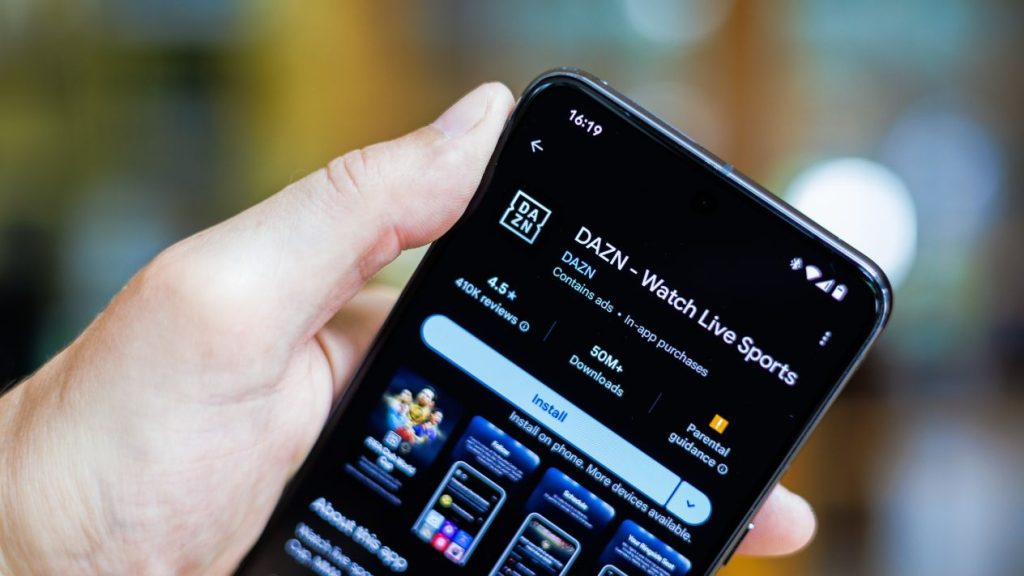
But the market could soon hit 50 operators again. This month, sports streaming giant DAZN received its license to launch DAZN Bet in Ontario in 2026. New brand absolutebet has also secured a license but is yet to launch gaming in the market, while High Roller Technologies has an application pending with the Alcohol and Gaming Commission of Ontario (AGCO).

High Roller partners with Altenar and Kindbridge ahead of planned Canadian entry

Rapidly diversifying online casino brand High Roller Technologies is further preparing to enter Canadian iGaming through a responsible gambling-focused deal with Kindbridge Behavioral Health that faces Ontario.

The Las Vegas-based company has signed a non-binding letter of intent with the telehealth-based problem gambling treatment and mental health provider. If and when High Roller obtains its license from the Alcohol and Gaming Commission of Ontario (AGCO), signs an operating agreement with iGaming Ontario (iGO) and launches online gambling in the province, it intends to offer self-excluding players confidential education and support, as well as connections to no-cost treatment.

High Roller CEO Seth Young said the partnership emphasizes the operator’s commitment to a responsible gambling-focused approach to Ontario.

“Partnering with Kindbridge reinforces our commitment to player wellbeing by ensuring that anyone who may be experiencing challenges with their gambling activity has access to meaningful, professional support,” said Young. “This collaboration reflects our responsibility not only as an operator, but as a trusted brand that puts people first.”

Kindbridge works with a range of gaming operators across North America to deliver early-intervention programs designed to identify, assess and support at-risk individuals. Its partners include the likes of DraftKings, BetMGM and PrizePicks. High Roller’s Young is a shareholder and member of the Board of Advisors at the health company, and a former director.

“Building strong, accessible pathways to support is an essential part of effective responsible gambling programs,” said Kindbridge Founder and CEO Daniel Umfleet, Founder & CEO of Kindbridge Behavioral Health. “Operators are uniquely positioned to assist individuals who may be experiencing distress by helping connect them to appropriate care.”

High Roller prepares to add sports betting

High Roller applied for an AGCO licence back in May 2025, but it is yet to receive one. The company also intends to enter the upcoming Alberta market when that province launches iGaming later in 2026.

Young told Canadian Gaming Business in September that High Roller, whose current existing online gaming footprint focuses on Finland, that the company’s flagship online casino brand would be a perfect fit for Ontario’s crowded, iCasino-heavy market. High Roller’s Ontarip-facing partners already include the likes of Playtech for its technology platform, Xpoint for geolocation, Kinectify for AML compliance and CheckIn for ID verification.

The CEO also hinted that High Roller could eventually seek to utilize a multi-brand strategy in Ontario, and that it was not ruling out adding online sports betting to its product mix. Young added on a November earnings call that the company expects its planned Ontario launch to be “transformative” and that it is preparing for further geographical expansion beyond Ontario and Alberta.

Since then, the company’s plans have accelerated dramatically.

On Jan. 8, 2026, the firm announced it had signed a deal with Altenar to use the technology company’s fully managed B2B sports betting software solution on licensed sports betting websites. High Roller did not mention the Ontario plans in that public notice, but the Altenar deal would seem to tie in with Young’s comments about potentially offering sports betting in the province.

The next US prediction markets player?

Six days later, High Roller revealed that it intends to begin offering prediction markets in the U.S., where it does not operate as an online casino. Through a partnership with leading contract market site Crypto.com, High Roller intends to offer “event-based prediction markets” under the federal regulation of the Commodity Futures Trading Commission (CFTC) across the U.S., including on finance, entertainment and sports.

To support the planned expansions, High Roller has struck numerous other deals, including with two digital media and marketing firms. It also closed a US$1 million strategic investment from Saratoga Casino Holdings, which runs brick-and-mortar casinos in New York, Pennsylvania and other states.

“Going forward, we remain focused on expanding our regulated market opportunities, diversifying our product portfolio, supercharging our consumer base, strengthening operational execution and scalable performance across our platform and maintaining disciplined capital allocation to support long-term value creation,” Young said this week.

OLG overhauls safer gambling team with series of senior hires

Ontario Lottery and Gaming Corporation (OLG) has bolstered its safer gambling team by appointing a number of experienced leaders.

The crown corporation’s Vice President of Safer Gambling, Aaron GlynWilliams, announced four additions to his team on LinkedIn this week, including two former Alcohol and Gaming Commission of Ontario (AGCO) personnel.

Nicole Hanna, the AGCO’s former public policy and regulatory compliance specialist, has joined the lottery as its new director of policy and controls, and the commission’s manager of innovation and insights, Aaron Henry, is now OLG’s senior manager of compliance.

In addition, ex-Ontario Technical Standards and Safety Authority director of strategic analytics Viola Dessanti will serve as OLG’s director of player risk monitoring and intervention, and former York Region Rapid Transit Corporation VP of communications Danielle Goodridge has been appointed to the role of director of strategy and governance.

“Over the past year, we’ve been evolving safer gambling into an enterprise-wide capability focused on prevention, early identification of risk and meaningful interventions across digital, land-based and retail play,” wrote GlynWilliams. “This work is about putting players first while supporting a sustainable, trusted gaming system. I’m excited to welcome and recognize an incredible leadership team that will help lead and scale this work.

“I’m grateful for the trust of this leadership team and the support across the organization as we continue to strengthen safer gambling in a way that is proactive, evidence-informed and truly player-focused.”

This spate of hires on the safer gambling side comes after OLG promoted from within a few weeks ago to name vice president and digital product specialist Amanda Marshall to the executive role of chief lottery officer.