Search
Choose a style
Dark
Light

ComeOn adds Kambi’s Odds Feed+ to its sportsbook

As it ramps up its Ontario marketing, European iGaming operator ComeOn Group has enhanced its international sportsbook by integrating Kambi technology.

Through a new multi-year partnership, Kambi will provide its premium odds feed solution, Odds Feed+, to ComeOn. That gives the Maltese operator access to the Swedish company’s library of dynamic, AI-powered odds and its low‑latency delivery which is powered by official data sources.

Customizable odds packages

Odds Feed+ allows operators to build a bespoke odds package from Kambi’s extensive catalogue to suit their own market‑specific strategies, player expectations and long‑term growth ambitions.

“We are delighted to welcome ComeOn Group as our latest Odds Feed+ partner,” said Kambi Group CEO Werner Becher. “By combining market‑leading pricing with the flexibility to scale and tailor their odds package on demand, ComeOn will be equipped to deliver a world‑class sportsbook experience to players across their markets.’

The ComeOn Group deal also includes Kambi’s market‑leading esports odds, powered by its esports division Abios.

“By integrating Kambi’s data capabilities into our ecosystem, we are further enhancing our proprietary multi-feed sportsbook platform, with a particular focus on the market-leading esports coverage provided by Abios,” said ComeOn Group CEO Juergen Reutter. “This allows us to double down on our commitment to provide hyper-personalization and localized player experiences.

“We continue to grow the sportsbook part of our business as per our strategy, powered by our in-house platform, which gives us the agility to connect to a variety of leading data providers. This ensures we can continue to differentiate our local offerings and provide a superior experience to our players in each market.”

Jeremy Piven steps up ComeOn’s Ontario push

The ComeOn! brand is licensed and an online sportsbook and online casino in Ontario and has been active in the province since Ontario began regulating iGaming play in 2022.

Last month, it unveiled a new unified campaign across linear and connected TV and digital channels, spearheaded by a series of commercials starring longstanding ComeOn! brand ambassador Jeremy Piven. ComeOn Group said the campaign underscores the company’s long-term commitment to sustainable expansion in Ontario and beyond.

“Ontario is a critical and highly competitive market for us,” said ComeOn Group Chief Commercial Officer Efi Peleg. “Our headline campaign, led by Jeremy Piven, brings our entertainment-first proposition to life and reflects our broader strategy of driving sustainable growth in key regulated markets through differentiated products and data-driven execution.”

Kambi now powers Ontario lottery’s sportsbook

For Kambi, ComeOn Group is the latest in a series of new collaborations with iGaming operators.

Kambi’s iGaming partners already include several Ontario-licensed operators such as Bally’s, MGM Resorts International subsidiary LeoVegas and Rush Street Interactive. It also powers retail sportsbooks for numerous Great Canadian Entertainment casinos across Canada, as well as Mohegan’s Fallsview Casino and Casino Niagara in Niagara Falls, Ont.

As of Jan. 27, it also provides the platform for the omnichannel PROLINE sportsbook run by the Ontario Lottery and Gaming Corporation (OLG). Kambi brought immediate upgrades upon taking over OLG’s long-term contract with La Française des Jeux’s FDJ Gaming Solutions, such as more global sports markets, prop markets, alternate lines and futures as well as enhanced same-game parlay options, including the addition of baseball SGP options for the Toronto Blue Jays and other teams’ games.

Through Abios, OLG now also offers esports betting, including options like Counter-Strike: Global OffensiveDota2League of LegendsOverwatch, Rainbow SixValorant and more.

An OLG spokesperson told Canadian Gaming Business that having Kambi on board as the platform provider “repositions OLG and PROLINE in the provincial competitive landscape.” Becher said last year that combining OLG’s local market knowledge and reputation with Kambi’s platform could help OLG grow its online market share in the saturated Ontario iGaming market.

Rivalry switches off gaming operations as it explores sale

Canadian sports betting, online casino and esports operator Rivalry has suspended all player activity and laid off a significant portion of its workforce as it evaluates strategic alternatives such as a sale.

The Toronto-headquartered company said in a press release on Friday that its board of directors approved “a significant reduction in operating activity.”

“The company is engaged in discussions with third parties regarding potential transactions,” added the statement. “However, in light of recent performance volatility, the board has determined to materially reduce the scale of operations while assessing whether a strategic transaction or other alternative can be advanced.”

‘No assurance’ that operations will resume in current form

While Rivalry has historically focused on esports, it is licensed and operational as an online sports betting and online casino site in Ontario. It is also authorized in Australia through a Northern Territory Racing Commission (NTRC) license and is active in several grey markets elsewhere in the world, including Latin America, under an Isle of Man Gambling Supervision Commission license.

However, effective immediately, all player activity is paused and funds are being returned to players. Rivalry is also implementing “substantial” cost cuts, including a significant workforce reduction.

It is assessing a range of potential alternatives, which it said may include asset-level transactions, corporate transactions, restructuring initiatives or other strategic outcomes.

“Given the company’s reduced operating scale and the ongoing evaluation process, there can be no assurance that any strategic alternative will be completed or that operations will continue in their current form,” warned the announcement. Rivalry said it will provide further updates if and when material developments occur.

Rivalry previously said refocusing was paying off

Rivalry began shifting its business in 2024, an all-encompassing process that included measures such as a firmer lean into cryptocurrency, a strategic rebrand to better target high-value digital-first players, a major sportsbook revamp, a redesigned casino offering and a comprehensive VIP rewards program.

CEO and Co-Founder Steven Salz said in late 2024 that the company had “completely rebuilt every core element” of its product. As part of that shift, Rivalry slashed its workforce by 50% and C-suite executives took pay cuts.

In April 2025, Salz said the company had begun reviewing strategic alternatives to support its long-term growth and determine the best path forward after three rounds of layoffs. Three months later, he acknowledged the company had made “hard decisions” during its overhaul but suggested the changes were beginning to show signs of positive impact.

Rivalry’s most recent public update in December suggested things were looking up. As well as a record quarter in Ontario, with a 240% year-on-year increase in deposits and 100% increase in wagers, Rivalry reported three consecutive quarters of revenue growth and a 58% year-over-year reduction in its operating expenses.

“Rivalry enters its next chapter on a stronger, more sustainable foundation,” Salz said at the time. “Rivalry is emerging from its transformation as a leaner, sharper, and more resilient business. The strategic shift we began last year continues to deliver.”

However, although Rivalry’s net loss improved 67% in 2025, as of December, the company was still almost $2 million in the red at the end of the year.

AGCO intends to suspend PointsBet over Jontay Porter betting

Ontario’s gambling regulator is taking an unprecedented step in the wake of the Jontay Porter betting scandal.

In what it said is a first for the province’s regulated iGaming industry, the Alcohol and Gaming Commission of Ontario (AGCO) intends to temporarily suspend PointsBet Canada, alleging that the licensed sportsbook and casino did not properly detect and report suspicious betting patterns related to the bet-rigging scheme involving former Toronto Raptors player Porter in 2024.

The AGCO alleged there was a “systemic failure” from the operator to spot suspicious activity. As a result, it issued a Notice of Proposed Order to suspend PointsBet Canada’s iGaming registration for five days.

An AGCO spokesperson confirmed to Canadian Gaming Business that nothing will go into effect for at least 15 days. PointsBet has the right to appeal the decision to an independent tribunal within that 15-day period.

Porter pleaded guilty to US federal charges

Porter, then a two-way player for the Raptors, received a lifetime ban from the NBA in April 2024 after an investigation uncovered that he had provided insider information to other bettors regarding his health status and manipulated his own performances to ensure that player prop bets cashed.

In July 2024, Porter pleaded guilty to the U.S. federal crime of conspiracy to commit wire fraud, admitting that he agreed to withdraw early from games so that co-conspirators could win bets on his performance.

Sportsbooks flagged suspicious betting patterns on the under on Porter’s statistics in games in January and March 2024. The International Betting Integrity Association (IBIA) reported to the FBI, which led to a U.S. federal criminal investigation. The AGCO conducted its own probe through the Ontario Provincial Police (OPP) Investigation and Enforcement Bureau (IEB) and found there was justification for the OPP to launch a criminal investigation of its own.

AGCO: PointsBet took 18 months to confirm Porter bets

The regulator said in Thursday’s release that, after the allegations regarding Porter and insider betting first emerged, it directed all Ontario-regulated sportsbooks to confirm whether they had offered bets on Porter and if they had detected and reported any suspicious betting activity.

“PointsBet, after significant delay, advised the AGCO it had not offered any such bets,” said the agency’s statement.

However, the AGCO alleged that following the unsealing of a U.S. federal indictment 18 months later, in October 2025, PointsBet said that it had indeed offered betting on Porter in the games that were linked to the scandal.

“Upon obtaining and reviewing PointsBet’s wagering data, the AGCO confirmed the indications of suspicious betting that was central to the scheme uncovered in 2024,” added the regulator’s statement. “These wagers should have been detected and reported at the time the betting occurred.”

“We require all operators to have robust systems and comprehensive staff training in place to reliably detect and report suspicious activity,” said AGCO CEO and Registrar Dr. Karin Schnarr. “Our regulatory framework is clear — operators must be equipped to detect and effectively respond to integrity risks, and we will take appropriate action when these standards are not met.”

PointsBet cites human error

Canadian Gaming Business reached out to PointsBet Canada for comment on the AGCO fine and the operator responded to say it is “disappointed” by the decision.

“The issues stem from an initial inaccurate response in March 2024, caused by human error during an organizational transition — not any intent to withhold information,” said a PointsBet spokesperson. “Upon discovering the correct data, we immediately disclosed it, cooperated fully with the investigation, and engaged proactively with the regulator.

“We respectfully believe the proposed sanction is disproportionate given the circumstances, our subsequent corrective actions, and our strong compliance record, and we are carefully reviewing all options, including our right to a hearing before the independent Licence Appeal Tribunal.”

PointsBet has been operational in Ontario’s regulated iGaming market since 2022 and has begun the licensing process in Alberta ahead of that province opening its doors later this year.

Ontario regulator taking unprecedented steps

The proposed temporary suspension of PointsBet Canada is the second unprecedented regulatory punishment handed out by the AGCO in a matter of weeks.

In January, the market regulator issued its first-ever fine related to sporting integrity, penalizing FanDuel to the tune of $350,000 for allegedly failing to detect and report suspicious betting activity on a Czech table tennis competition.

Bet Rite introduces Spintec to Canadian gaming market

Canadian casino supplier Bet Rite has partnered with electronic table games (ETG) manufacturer Spintec to bring the Slovenian-based company into Canada’s gaming market.

Bet Rite will serve as Spintec’s distributor in Canada as part of Spintec’s North American expansion. The collaboration between the two companies will begin with the introduction of the Charisma product line at Canadian casinos.

The firms said that the partnership combines the respective companies’ global innovation and local knowledge.

Spintec manufactures ETGs for the casino industry with a focus on automated roulette, craps, baccarat,, blackjack and other games. The company said that it dedicated significant effort to finding a partner with a strong understanding of the nuances of the Canadian casino market.

“Our company has grown by offering best-in-class suppliers the local support that they need,” said Bet Rite President Billy Maclellan. “Spintec fits the mould perfectly and together we are well-placed to make this partnership a glowing success.”

Bet Rite has delivered gaming solutions to Canadian casinos for around 40 years, offering a single vendor relationship with access to multiple product lines. A Canadian Gaming Association member, it is an authorized registered gaming vendor in every province and its scope of business includes coast-to-coast gaming sales, marketing, field service, installation, and distribution operations.

“Bet Rite’s deep understanding of the Canadian market makes this alliance very promising,” added Spintec Chief Commercial Officer Goran Sovilj. “We are always excited to introduce innovative and exciting products to new markets, especially when our distributors are as experienced and knowledgeable as Bet Rite.”

iGaming operators warn Quebec is losing $300M in annual tax dollars

A group of online gaming operators and other iGaming stakeholders has again called on the Québec government to allow commercial brands to enter the province and compete with Loto-Québec.

The Québec Online Gaming Coalition (QOGC) issued a release on Monday noting that it has briefed the provincial Ministry of Finance on the revenue potential that it believes regulated commercial online gambling would bring. The QOGC stated that La Belle Province is losing out on around $300 million in tax revenue each year by “failing to establish a regulatory framework adapted to the reality of online gaming.”

QOGC spokesperson Ariane Gauthier told Canadian Gaming Business that the lost annual revenue projection is based on a combination of Québec’s adult population and a hypothetical 20% gross gaming revenue tax, similar to what Ontario’s regulated market has in place and to what Alberta is intending to implement in its upcoming iGaming market.

The QOGC is comprised of U.S. gaming giant DraftKings and FanDuel owner Flutter, BetMGM co-parent and Sports Interaction owner Entain, Super Group brand Betway, Rush Street Interactive (the company behind BetRivers), Canadian operator Bet99, major supplier Games Global and Apricot Investments.

Digital gaming’s potential overlooked, says QOGC

In the press release, the coalition claimed that around 2,000 websites “of varying quality” offer online casino, sports betting and poker games in the province, despite Loto-Québec notionally holding a monopoly on online gaming in the province.

The coalition further asserted that Loto-Québec’s predominant focus on land-based gaming and other physical gaming threatens to waste the potential of expanded iGaming.

The government-run operator reported in December that between April 1 and Sept. 29, its total revenue was $1.53 billion, up 1.8% year over year. The casinos and gaming halls sector accounts for 43% of that total. Loto-Québec President and CEO Jean-François Bergeron said that the lottery’s online gaming business grew around 17% compared to last year.

But Gauthier argued at last year’s Canadian Gaming Summit that, adjusting for inflation, the lottery corporation is actually on the decline.

“Why limit the regulation of online gaming to Loto-Québec sites alone, when the offering available on the Internet is much broader?” said Gauthier in the new Feb. 9 release.

Look at Ontario and Alberta, coalition urges

Currently, Ontario is the only province that conducts a commercial regulated iGaming market; in all other provinces, the only government-authorized online gaming platform is run by the government.

Gauthier told Canadian Gaming Business last year that Ontario has been a proven success in showing that Ontario Lottery and Gaming (OLG) can continue to grow even when faced with dozens of competitors. “Quebecers are not presented with a fair perspective of what is going on in Ontario,” she said in June 2025. “There is a kind of myth of distorted reality.”

Soon, there will be two regulated iGaming provinces, as Alberta is gearing up to launch its own market later this year. All of the QOGC’s member operators, plus Games Global, have a strong presence in the Ontario market and the likes of FanDuel, BetRivers and Betway have all confirmed plans to seek a license to enter Alberta.

“We believe Alberta will provide additional proof that a competitive market can deliver better results to protect players and to provide more revenue to the government, compared to a state monopoly such as Loto-Québec,” Gauthier told Canadian Gaming Business. “Alberta will also show that when a province implements a mechanism similar to Ontario’s, including licenses, an independent regulator, taxation, there is room to adopt different rules to address specific issues such as promotion and revenue sharing.

“As more and more Canadian provinces will shift away from the model of a state monopoly, which is completely obsolete when it comes to online gaming, Québec will be isolated and its position will weaken. The multiple examples of success in other provinces should pressure Québec to modernize its regulation of online gaming.”

Loto-Québec issues fierce rebuttal

In a statement to Lottery Daily, Loto-Québec Head of Media Relations Renaud Dugas responded to the QOGC’s comments by accusing the coalition, which he said “brings together foreign companies that do not create value in Québec,” of pushing for online gaming regulation under the pretext of protecting players.

“However, the operators it represents are themselves the source of risk by offering their products illegally,” Dugas added. “Moreover, they violate the existing framework: the Criminal Code of Canada. This is an insult to Quebecers’ intelligence. The goal of the coalition is clear: to legalize what’s illegal and further develop a market that only benefits foreign companies — not players.”

Noting that 100% of Loto-Québec’s gaming proceeds stay in the province, Dugas opined that the coalition is trying to downplay Loto-Québec’s impact to further its members’ own agenda.

In a response to that statement, the QOGC accused Loto-Québec of “spreading inaccurate information.” It noted that as coalition members do not operate in Québec, they cannot be deemed illegal by the provincial government.

Québec coalition makes recommendations

In its public release, the QOGC made four major recommendations to the Québec government, based on the experiences of Ontario and Alberta’s move toward change:

  • Give an independent regulatory body responsibility for supervising iGaming, including Loto-Québec
  • Develop standards to regulate both private and public online gaming, in collaboration with stakeholders
  • Define the criteria for obtaining an operating license and sign a revenue-sharing agreement with the Québec government
  • Allocate a portion of revenue generated by private iGaming to support Québec communities and increase funding for prevention activities

“The Québec Online Gaming Coalition reiterates its commitment to working with the Québec government and stakeholders to develop a regulatory framework for online gaming,” concluded the QOGC.

It added that it is committed to addressing issues related to consumer safety, money laundering, responsible gaming and advertising, while paying the Quebec government a portion of the revenue generated within its territory.

BetMGM latest operator to launch Evoplay content in Ontario

Game development studio Evoplay has added another tier-one operator partner in Ontario, launching its games on BetMGM’s casino platform.

BetMGM Casino has added 18 Evoplay titles in the province, including games such as Hot Triple Sevens, Hot Volcano, Gold of Sirens Bonus Buy and Inner Fire Bonus Buy. The companies said the rollout supports BetMGM’s focus on diverse, high-engagement casino content.

Evoplay offers a portfolio of 250+ slots, table games, crash games and instant games. BetMGM VP of Gaming Oliver Bartlett said that onboarding the supplier will add a strong selection of proven, high-performing titles to the operator’s growing iCasino portfolio in Ontario.

The partnership marks the latest step in Evoplay’s ongoing expansion across regulated North American markets. Evoplay said the launch with BetMGM also indicates its long-term commitment to Canada and to aligning its content strategy with local player preferences and regulatory standards.

“Ontario continues to set a high standard for regulated online casinos, making it a market where the right partnerships truly matter,” said Evoplay Head of Sales Alex Malchenko. “Collaborating with BetMGM allows us to expand our reach with a portfolio that has already performed strongly across multiple areas and territories.”

Evoplay continues to evolve in Ontario

Evoplay cites Ontario as a key growth market for the company. Since receiving a license from the Alcohol and Gaming Commission of Ontario (AGCO) in March 2025 to begin supplying content and services to approved online casino operators in the province, it has focused on partnering with major operators in Canada’s only regulated competitive iGaming province.

It went live in the market with Canadian sports betting, casino and esports operator Rivalry last August. A month later, it announced a major partnership with leading American gaming company Caesars, which brought Evoplay games to the Ontario-facing platforms of the operator’s three iGaming brands: Caesars Sportsbook & CasinoCaesars Palace Online Casino and Horseshoe Online Casino.

If Evoplay has eyes on expanding into Alberta when that province launches regulated iGaming later this year, BetMGM is a useful operator partner to have. The company, a joint venture of MGM Resorts International and Entain, billed itself last year as Ontario’s market leader in online casino and its iCasino revenue grew 24% year over year in 2025.

CEO Adam Greenblatt said last week that BetMGM holds a podium position in online casino, with 21% market share by gross gaming revenue in its active markets, including several U.S. iCasino states and Ontario. If Alberta does open this year and BetMGM gets the license it is applying for, the province will be the operator’s first new online casino market in four years.

Senator says Canada can learn from US on First Nations gaming

The Senate heard last week that Canada may be able to learn from the U.S. approach of tribal gaming compacts and federal Indigenous gaming oversight if it is to give First Nations more control over their gaming activities.

“It is worth noting that our current model is not the only possible path forward,” Progressive Senate Group Sen. Tracy Muggli told fellow federal legislators on Feb. 5. “There are existing approaches that place Indigenous governments in a stronger position when it comes to gaming. In the United States, for example, tribal state compacts are authorized through federal legislation and built upon the premise that tribal governments remain the primary beneficiary of gaming revenues.”

Numerous U.S. states have some form of tribal gaming compact in place under the Indian Gaming Regulatory Act (IGRA), including Arizona, California, Michigan, Nevada, Oklahoma, Washington and more.

“My understanding is those arrangements generally require that the majority of net gaming revenue remain with the host Indigenous community,” added Muggli. “States may still participate in revenue sharing; the key difference is that negotiations begin from Indigenous jurisdiction rather than state control.”

Bill S-241 re-examines First Nations gaming rights

Muggli was presenting Sen. Scott Tannas’ S-241, the latest version of the Act to Amend the Criminal Code and the Indian Act. That bill, introduced late in 2025, would change federal law to affirm that the governing body of a First Nation has exclusive authority to conduct and manage, license and regulate gaming on its lands.

In Tannas’ words, it would codify the notion that First Nations can govern gambling on their reserve lands “in a way that matches identically provincial jurisdiction and powers in their respective jurisdictions.”

In effect, it would deem First Nation reserves not to be a part of the province containing them, for the purposes of gaming. A First Nation would be required to notify federal and provincial governments that it intends to run gaming on its lands, but would not need governmental approval to do so.

Muggli called the bill “an overdue conversation” about economic reconciliation with First Nations, noting that First Nations sovereignty measures such as the United Nations Declaration on the Rights of Indigenous Peoples (UNDRIP) were not in place when the Criminal Code granted provinces authority over gaming in their jurisdictions.

“Indigenous governments were not a part of that decision,” she told the Senate chamber. “Bill S-241 provides an opportunity to revisit a system that was constructed without Indigenous participation and reconcile with our past mistakes.”

Is a national First Nations gaming authority needed?

Many Canadian provinces have prominent First Nations gaming roots and operators. In Muggli’s province, the Saskatchewan Indian Gaming Authority runs several land-based casinos and the only authorized online gambling platform, PlayNow.

Elsewhere, British Columbia has seen a trend of casinos being bought by First Nations groups, the regulated commercial online gambling province of Ontario has Casino Rama on the Chippewas of Rama First Nation, and Alberta’s rich Indigenous gaming history is a big part of the conversation as that province gears up to open its own iGaming market.

Muggli suggested that one thing that may warrant discussion is the idea of a federal First Nations gaming body.

“Bill S-241 does not directly address how gaming or potential gaming communities would participate in or benefit from a new framework,” she noted. “A memorandum of understanding signed by 15 First Nations in Canada in 2024 recognizes and outlines an Indigenous-led approach. This includes the need for a national Indigenous gaming authority.”

In the U.S., IGRA established the National Indian Gaming Commission (NIGC), a federal regulatory authority for tribal gaming embedded within the Department of the Interior. The Indian Gaming Association (IGA), a nationwide non-profit organization of federally recognized Indian nations and associate members, works to protect tribal sovereignty and promote economic self-sufficiency through gaming for U.S. Indian nations.

Provinces may have other ideas

This is a deeply complex issue, and a sensitive one. It seems unlikely that Bill S-241 will be resolved this session, but the conversation is back on the agenda.

Tannas and Muggli have both stressed the need for all stakeholders to be involved. That includes the provincial governments that hold the authority to run gaming in Canada. Muggli stated that provincial governments remain “significant beneficiaries” of gaming revenues, even when Indigenous communities do a lot of the heavy lifting. “Even as [First Nations] build out these investments, they remain junior partners in a system that depends on their success,” she asserted.

“As I understand it, this bill would effectively displace provincial gaming authority where a First Nation chooses to exercise jurisdiction,” acknowledged Muggli. “I would hope that committee carefully examines both the benefits and the potential drawbacks of that arrangement by including the voices of provinces and territories and what impact these potential changes would have on them.”

For instance, she suggested, there will likely be deep discussions about market controls, whether there should be limitations on new entrants to the gaming market in various provinces and whether First Nations’ treatment should be affected by their size and location.

US shows it’s possible, says senator

S-241 is expected to be referred to committee for a much deeper dive than it has had in its initial full-chamber readings in the Senate. Muggli noted that committee study and much more discussion will be needed, but she stressed that lessons from the U.S. show that empowering First Nations with greater gaming rights can be done.

“We know of models outside of Canada that put Indigenous jurisdiction first, so this is possible.

“We have reached the point where it is incumbent that we examine closely and listen to First Nations about what economic independence looks like and move forward toward getting there. The bottom line is that economic reconciliation requires that we trust Indigenous governments to make their own economic development decisions and investments.”

The trends to look out for when buying casino games in 2026

SlotsOnlineCanada Senior Editor Gayle Mitchell looks into the most relevant factors to build an online casino games catalog and addresses the trends shaping the segment for Canadian Gaming Business.

Online casinos have evolved. Anyone contemplating an investment or even setting up a casino needs to know the 2026 trends to stay afloat in this competitive market.

For those getting into online casino operations, one of the biggest dilemmas is knowing what games to stock the casino with. Hundreds of developers will be vying for your business, offering stacks of different options. Look online, and you will see talk of virtual reality and cryptocurrency being the next great leap forward, though with very little evidence to back it up. This means it is tough to know what trends are popular and what consumers actually want.

Assessing the online gambling landscape

The Canadian online gambling market reached USD $3.9 billion in revenue by the end of 2024. While the final figures for 2025 are yet to be calculated, predictions are that this will reach US$8.7 billion by 2030. When it comes to the Canadian market, expectations for growth are standing at 14.3% by 2030.

While sportsbetting is responsible for the majority of the yield, online casinos are expected to grow by 12.2% in the run-up to 2030 across the globe. Canada is expected to bring in the highest CAGR of any country in this time frame.  

The future trends shaping slot gaming

Through the constant stream of new online slot releases, noticeable trends continually emerge. While thematic staples like the luck of the Irish, fishing, and mythology still dominate the iGaming industry, steady improvements in graphics and animation create increasingly engaging experiences. This is reflected in the elevated average quality of opening cinematic videos. While the visual design of online slots is central to attracting new players, the features and mechanics are the true source of their appeal.

Online slot developers have placed increasing effort into deconstructing and re-imagining classic slot features such as Free Spins and respins, transforming them into fresh-feeling innovations by adapting their core elements and adding a trademark twist. This intensified focus on the substance of online slot gameplay suggests that their unique features and mechanics are more important than their visual concepts.

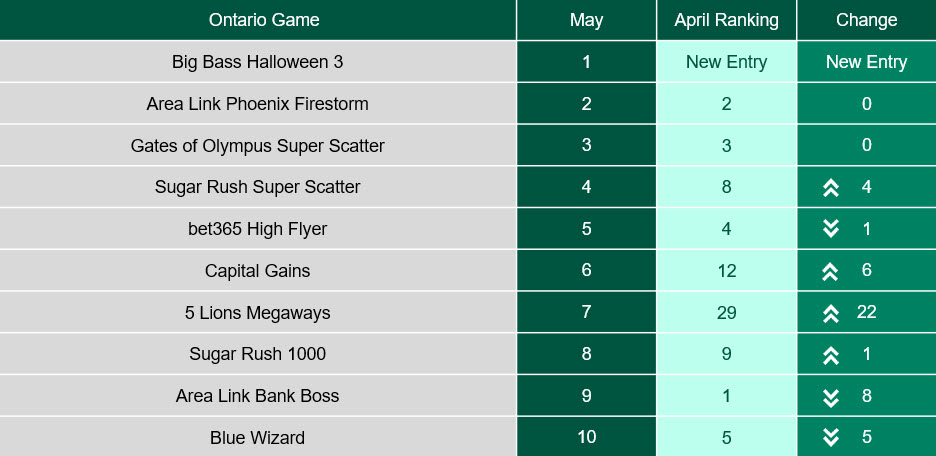
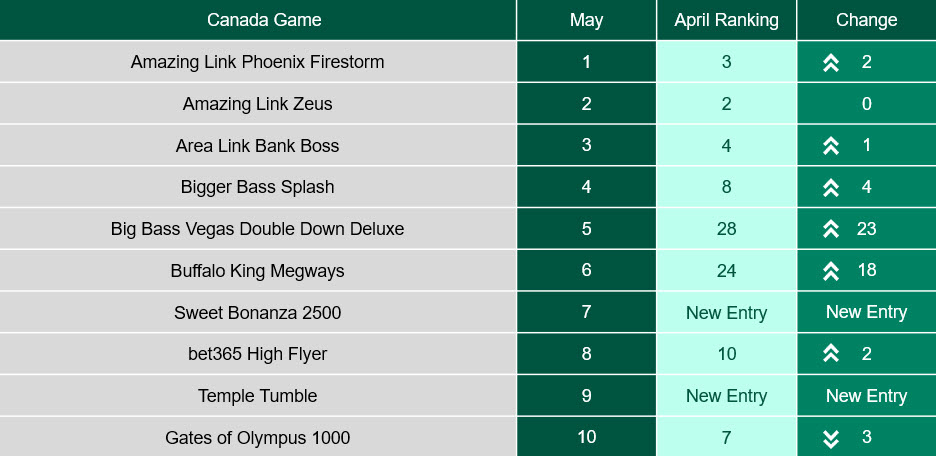
Features such as Amazing Link from SpinPlay Games and Area Link from Games Global exemplify this trend, with titles built around these mechanics consistently ranking among the most popular new slot releases in 2025.

Shaping social trends and their integration

There are expected to be around 14.1 million mobile casino users by 2028. This is being driven not by an endless supply of new games, but primarily by the integration of social features. To see how this has happened, you only need to look at the biggest trends of the last five years: Live casino and crash gaming. Both have incorporated social elements in different ways to great effect.

Live casino has done this through streaming technology. Allowing people to interact with a dealer has replaced a lot of the interaction that is lost in digital representations of casinos. With the chat function, this has been enhanced. A look at how popular these games are can be seen at any time using a live player tracker. At the time of writing, Evolution’s Crazy Time has 23,178 players around the globe.

Crash gaming has done this in a slightly different way. It has added an element of gamification. These include leaderboards and features not dissimilar to arcade high scores. As people often bet on the same event, they have an advantage, almost providing a communal experience like betting on a sports game.

Personalization at an in-game level

Personalization behind the scenes takes many different forms. People are used to having Netflix and Spotify suggest things they will like based on previous likes and dislikes. However, finding personalization within games themselves, particularly casino titles, is a harder thing to pin down.

Developers are beginning to attempt this, and it is generally working. This all links back to the unique mechanics people are looking for in slot games. Certain choices can now influence the game’s outcomes, much like a console title. This can often be through character selections. A perfect example is a title like Cash Crusade Assembl’Em. As the game unfolds, different characters can be unlocked, which then allows the player to choose between different bonuses.

The biggest threats to online casino growth

The biggest threats to the growth of online casinos come from the global economy itself. Tourism has slumped, particularly in places such as Las Vegas, which rely on casino traffic. In one way, this could keep Canadians playing at home. On the other hand, it could signal more competition.

To bring in Canadians, Derek Stevens, the owner of Circa Resort & Casino in Las Vegas, introduced an initiative to welcome Canadians back. This will involve going “at par” and making the exchange rate for Canadians equal at his hotels and select bars. That means $1 CAD will be equivalent to $1 USD. While this seems generous, it is a sign that former gambling meccas that are struggling are not going down without a fight. These reductions and their competitive outlook will continue, and could actually drive people away from online casino usage in Canada.

So, when choosing games, don’t opt for the flashy headlines. The trends people are looking for are something much more human than AI integration and VR. Instead, they want social features, along with choice. This enhances the replayability of a game, providing it with longevity. This means it will keep being played long after the initial excitement, ensuring you get the most from your purchase or license.

Nevada Congresswomen introduce legislation to boost Canadian tourism to US

Two U.S. Congresswomen have each introduced proposed legislation that would mandate the creation of a multinational tourism working group aimed at strengthening the relationship between the U.S. and Canada.

Sen. Catherine Cortez Masto and Rep. Dina Titus are the respective authors of the USMCA Travel and Tourism Resiliency Act in the Senate and the House of Representatives. The bills were filed this month.

The effort to strengthen tourism and travel between the U.S., Canada and Mexico comes amid a significant and sustained drop in Canadian tourism to Las Vegas.

‘President Trump has alienated Canada’

Cortez Masto and Titus’ legislation would direct the U.S. Trade Representative to convene a working group to develop new travel and tourism strategies under the United States-Mexico-Canada Agreement that was signed during Trump’s first administration.

The working group would be co-chaired by representatives of the Canadian, U.S. and Mexican governments and comprised of officials responsible for issues related to travel and tourism. American members would include personnel from the Departments of Commerce, Labor, Transportation, Interior, State and Homeland Security. The group would also take input from trade and tourism companies.

“President Trump has alienated Canada and Mexico through his words and policies,” Titus wrote in a press release. “We need to rebuild our relationships with two of our largest tourism partners to restore travel to Las Vegas and other destinations. Our tourism economy declined in 2025, costing us jobs and revenue. Half of our international visitors come from Canada and Mexico. We need to win them back.”

“As we’ve seen over the past year, tariffs, trade, and international cooperation play a large role in either promoting or deterring international travel,” added Cortez Masto in her own press release. “As partners in this historic trade agreement, it’s critical that we do what we can to invite Canada and Mexico to support the American travel industry.”

Canadians go missing from Vegas

While the legislation focuses on forging stronger tourism and travel bonds in general between the three North American countries, Cortez Masto and Titus are both Nevada Democrats and Titus is the Co-Chair of the Congressional Gaming Caucus. The context of Las Vegas rings loudly in their effort.

Canadians are historically the gaming and entertainment hub’s largest international market, and their absences have been felt.

The Las Vegas Convention and Visitors Authority (LVCVA) estimated that while the total number of visitors to Vegas between January and November 2025 dropped 7.4% year over year, visitors from Canada fell by around 24%. Canadian airlines Air Canada and WestJet reported drops of more than 20% in Canadian-originated passengers arriving at Vegas’ Harry Reid International Airport, and casino operators on the strip cited missing Canadian guests as a big factor in lower hotel occupancy and casino traffic.

LVCVA CEO Steve Hill and other tourism leaders visited Canada last year to discuss ways to rectify relationships and entice Canadian tourists back to the resort city.

Meanwhile, Circa Casino and Resort owner Derek Stevens recently came up with his own novel way of trying to attract Canadians back: Offering a dollar-for-dollar “At Par” promotion wherein the three Vegas casinos owned by Stevens are treating Canadian loonies as if they were U.S. bucks across select gaming, hotel and beverage offerings until Aug. 31, 2026.

Gaming Corps strikes Ontario deals with St8 and High Flyer Casino

Swedish casino games developer Gaming Corps has signed multiple partnerships in recent days as it looks to pick up speed in the Ontario iGaming market.

The licensed supplier extended its existing collaboration with casino games aggregator St8 to cover both the Ontario and UK markets, a deal that it said supports its continued focus on scaling distribution through trusted aggregation partners.

St8 helps operators streamline integrations and accelerate growth and connects operators to hundreds of game providers across multiple verticals. It will distribute a broad selection of Gaming Corps’ content to Ontario operators, including a range of slots, crash, mine, table and plinko games.

“Extending our agreement with St8 to cover the UK and Ontario is a meaningful step in reinforcing our position in two of the most established gaming markets in the world,” said Gaming Corps Chief Commercial Officer Graham Greensmith. “By deepening this relationship, we can bring more of our latest and most distinctive content to a wider audience through a partner that understands the operational and compliance demands of highly regulated environments.”

Gaming Corps takes High Flyer partnership airborne

Gaming Corps has also partnered with licensed operator High Flyer Casino and will roll out a portfolio of games to players on High Flyer’s platform in the province, including 3 Pigs of the Caribbean, part of the 3 Pigs franchise, and Savannah Stacks.

Slots-focused High Flyer Casino is operated by Ellipse Entertainment Ltd. and currently offers a portfolio featuring more than 100 exclusive games. It also operates the Reel Jackpot brand, Money Spinner titles and a range of progressive slots.

“High Flyer Casino has carved out a clear position in Ontario with a focused slots strategy and a strong understanding of what local players are looking for,” said Gaming Corps Chief Revenue Officer Adam Pentecost. “Bringing our most recognizable titles to their platform allows us to place our games in front of a highly engaged audience in a market that continues to set the pace in North America. This agreement is another important step in broadening our distribution with operators that value distinctive content and long-term portfolio development.”

Deals follow BetMGM exclusivity period

Gaming Corps received its supplier license from the Alcohol and Gaming Commission of Ontario (AGCO) in April 2025.

Its latest partnerships follow a landmark agreement with BetMGM in Ontario that was announced last month. That deal made BetMGM the first operator to launch Gaming Corps’ full range of games in the province and included a period of exclusivity.

Gaming Corps said at the time of its licensure that it had already signed agreements with “several of the most well-known” Ontario operators, and added that it particularly hoped to partner with those that have licensed rights to well-known sports brands. In other markets, the company works with other renowned operators such as bet365.

As well as its standard portfolio of content, the company also offers market-specific content in Ontario with a focus on popular sports such as hockey and basketball, such as Shootout Champion and Hoop Champion.