Search
Choose a style
Dark
Light

Ontario Liberals seek to ban online gambling advertising via new legislation

A group of Liberal Members of Provincial Parliament (MPPs) in Ontario have authored legislation that would ban most online gambling advertising in the province.

MPP Lee Fairclough’s Bill 107, titled the “Stop Harmful Gambling Advertising Act,” was introduced in the Legislative Assembly of Ontario on Monday. It arrives in addition to a federal effort to rein in sports betting-specific advertising, S-211, which has passed the Senate and currently sits in the House of Commons.

MPPs target all online gambling ads, not just sports

Unlike that federal Private Member’s Bill (PMB), which aims to establish a national framework for regulating sports betting ads, Fairclough’s PMB proposes an explicit ban on online gambling advertising at large. It would amend Ontario’s Gaming Control Act of 1992 to prohibit any of the province’s almost 50 online sportsbooks and online casinos from advertising or otherwise promoting their sites or products in the province.

The bill includes some carveouts, including one for certain ads originating outside Ontario, but would effectively prevent licensed Ontario operators from advertising via several channels. Any iGaming company convicted of an offence under the proposed bill could be fined up to $1m, and could have its provincial operating license revoked upon a second or subsequent conviction.

Etobicoke—Lakeshore MPP Fairclough, who is the Liberal Party critic for mental health, addiction and homelessness, presented the bill in the Assembly on Monday. She specifically cited broadcast media, social media and paid sponsorships as the kind of promotional avenues that she wants to cut off.

“Addiction to online gambling is an emerging public health crisis in Ontario – the only province that has privatized online gambling in the country,” states the introduction of the legislative text, citing data that points to higher incidence rates of problem gambling. “The proliferation of gambling advertising normalizes gambling and corrupts the integrity and culture of sports. Banning the advertising of electronic gambling sites is therefore in the public interest to protect public health.”

Bill 107 was advanced at its first introductory vote on Monday, which ordered it for second reading.

Partisan bill may face uphill struggle

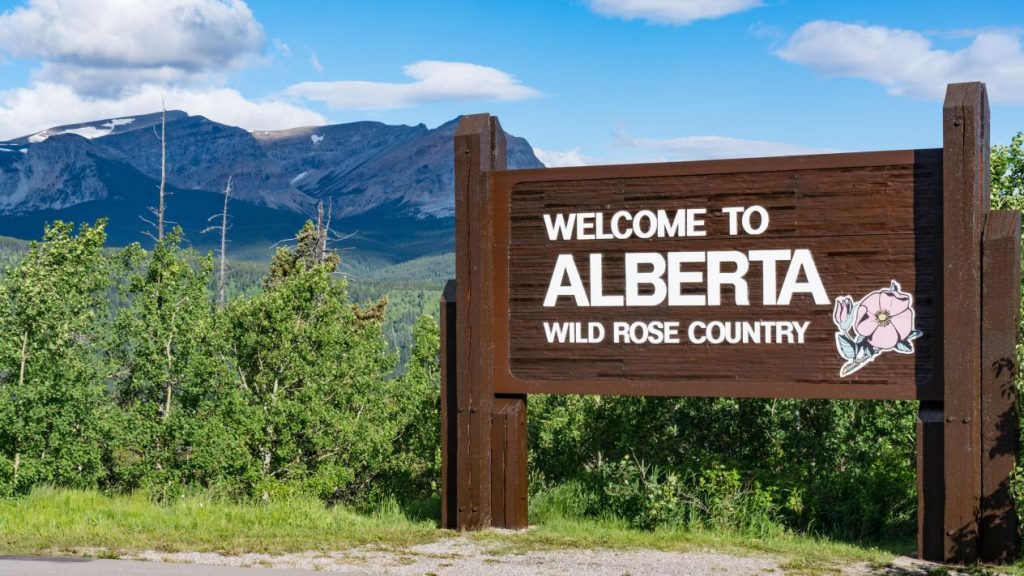
Ontario Premier Doug Ford’s provincial Progressive Conservative Party paved the way for Ontario to launch regulated iGaming in April 2022, which was the first time a Canadian province opened a license-based, regulated online gambling market. Alberta since legalized commercial iGaming and has set July 13 as the launch date for its own market this summer.

Fairclough’s Bill 107 has three co-sponsors, all of whom are also Liberal MPPs:

  • Interim Ontario Liberal leader and Ottawa South MPP John Fraser
  • Orléans MPP Stephen Blais
  • Kingston MPP Ted Hsu

In a partisan statement announcing the bill, Fairclough again labeled online gambling as a public health crisis.

“We cannot ignore the impact that Doug Ford’s privatized online gambling is having on people across Ontario,” wrote Fairclough. “Ontario is the only province in the country that has privatized online gambling. The scale and harm of online gambling advertising is out of control.”

Given the partisan nature of the bill, the incumbent PC government holding a majority of 80 seats in the Ontario Assembly, and Liberals occupying just 14 seats, Fairclough’s bill likely faces a battle for traction.

CGA says Bill 107 poses risks to players

In a statement issued on April 22, the Canadian Gaming Association (CGA) said that it and its licensed members stand in respectful opposition to MPP Fairclough’s Bill 107, pointing to Ontario’s existing iGaming advertising restrictions.

“Ontario enforces some of the most rigorous marketing regulations in North America,” said the industry association, noting that operators cannot advertise promotional bonuses or incentives outside of their own websites, apps, and customer outreach and that they are prohibited from marketing to high-risk cohorts, minors, or self-excluded players.

“Licensed advertising is closely monitored by compliance teams, including thinkTV and the Alcohol and Gaming Commission of Ontario (AGCO),” added the CGA. “Bill 107 essentially allows illegal operators to flood social media with posts, making it impossible for Ontarians to identify licensed providers while weakening the authority of the AGCO. This fails to safeguard vulnerable people or minors; on the contrary, it actually puts them at greater risk.

“Ontario has worked hard to make its market safe – we urge the government to continue to put its players first.”

Canadian legislators take up arms against ads

The Ontario bill is the latest indicator that online betting advertising has become a top-of-mind issue for lawmakers in Canada.

Bill 107 comes not only as Alberta gears up to welcome commercial iGaming operators into the province, but as Canadian politicians at the provincial and federal levels shine a harsh spotlight on gambling advertising.

A multi-year federal effort in Canadian Parliament has seen the Senate pass a national framework bill in both 2024 and 2025. The second version, S-211, is sponsored by Sen. Marty Deacon of the officially non-partisan Independent Senators Group. It is scheduled for a second reading vote in the House of Commons this week, a stage it never reached last year amid political turmoil and Justin Trudeau’s eventual resignation as Prime Minister.

Deacon said during debate of her bill last fall that she would support a blanket ban on sports betting advertising in principle if she thought it was a realistic prospect.

“While that is what I would love to see … I believe that if I had sought a complete ban through this legislation, it would certainly have had a much rougher ride,” she said during one session before the bill passed the Senate last October.

Deacon subsequently co-authored a letter to Prime Minister Mark Carney in November, in which more than 40 senators urged the federal government to ban all advertising for sports betting websites and apps nationwide, “similar to the advertising ban for cigarettes, and for the same reason: to address a public health problem.”

Meanwhile, former MP Brian Masse, who was the original bill sponsor driving the legalization of single-event sports wagering in Canada that ultimately passed into law in 2021, made headlines earlier this month when he said that the way in which some provinces (referring without name to Ontario) have implemented that law is “deplorable”.

Endorphina gains iGaming supplier license in Ontario

Online slot games provider Endorphina Limited has successfully obtained a gaming supplier license in Ontario, making it the latest European company approved to begin providing content to authorized operators.

The Alcohol and Gaming Commission of Ontario (AGCO) granted the Prague-based company registration effective April 16, 2026. The firm said in a release that the milestone marks an important step in its long-term expansion strategy, which is focused on establishing a presence in regulated markets worldwide, as well as particularly strengthening its presence in North America.

“Securing approval in Ontario is a significant achievement for Endorphina,” said the company’s Head of Compliance, Džangar Jesenov. “It confirms the quality of our products, the strength of our compliance framework, and our readiness to operate in highly regulated environments.”

Endorphina stated that with Ontario registration, it is well-positioned to expand partnerships with licensed operators and further solidify its visibility and reputation as a B2B supplier in the global iGaming industry.

More than 6,000 operator partnerships worldwide

Endorphina added that it will continue to invest in developing proprietary online slot games with the intention to deliver innovative content tailored to the evolving requirements of international markets such as Ontario’s saturated, highly competitive, multi-billion-dollar online casino market.

With a portfolio of 200+ slots, the company has built partnerships with 6,000-plus operators worldwide and has an active presence in over 50 jurisdictions and regulated markets across Europe, Latin America, and beyond.

Its operator partners in various regions include the likes of bet365, FanDuel parent Flutter, BetMGM co-parent Entain, Betano owner Kaizen Gaming, and more. It also works with other suppliers and providers, such as Light & Wonder, Toronto-based Bragg Gaming Group, Relax Gaming, EveryMatrix, and many more.

Wave of new Ontario entrants keeps flowing

Endorphina is the latest in a string of suppliers that have been approved recently by the AGCO to pursue attempts to start supplying to Ontario’s 46 licensed commercial operators.

The likes of Digitain, Platipus Gaming, Imagine Live, Amusnet, St8, TaDa Gaming, Aviatrix and more have all either gone live in Ontario with one or more operators in recent months or been approved to do so whenever they execute partner agreements with iGaming platforms.

Mobinc pulls Conquestador online casino out of Ontario

Another European iGaming operator has decided that Ontario just does not work for its business anymore and shut down play in the province.

Maltese company Mobinc withdrew its Conquestador online casino brand from Ontario’s regulated online gambling market effective April 13, as confirmed by a notice on the platform’s Ontario site.

“Conquestador’s closure is part of a business decision to discontinue our operations in the Ontario market,” added the notice. “This decision is not related to any regulatory, compliance, or legal issues. We remain committed to operating in full compliance with all applicable regulations and appreciate the support of our Ontario players during this time.”

Conquestador will still accept and fulfil legitimate withdrawal requests for six months beyond April 13.

Mobinc launched Conquestador in Ontario at the start of 2023. It also holds Malta Gaming Authority (MGA) and UK Gambling Commission licenses and runs other iGaming brands such as JackWin. As well as running its own B2C online casino site, it works as a platform provider of turnkey and white-label iGaming solutions and offers operator partners the chance to use its cloud-hosted gaming platform.

While Conquestador’s Ontario-facing site now shows a shutdown notice, there is a wider Canada-facing site which says that the brand offers play in other parts of the country under an MGA license.

Canadian Gaming Business reached out to Mobinc for more information on the Ontario exit but did not receive a reply.

Casumo also heading for exit door …

Conquestador completed its Ontario shutdown days after another Malta-based operator, Casumo, confirmed it is shutting down all play on its Ontario platform and pulling out of the province.

Casumo will end Ontario wagering on April 30 and close all player accounts in the province on May 14. While it is leaving Ontario, Casumo also offers online casino gaming to Canadians in AlbertaBritish ColumbiaQuebec, and the Maritimes.

Conquestador and Casumo follow other iGaming brands that have left Ontario’s saturated market, including Kindred Group’s Unibet in early 2024, British sportsbook Fitzdares in spring 2025, the Wildz group of brands in October 2025, Aristocrat Interactive’s Betiton and MagicRed Casino in late 2025, and Toronto-based Rivalry in February 2026.

… But others are still arriving

iGaming Ontario lists 48 licensed operators running a total of 82 authorized online gaming sites, although that list still includes both Casumo and Conquestador.

Meanwhile, the most recent new arrival, Goldrush’s BetNovalaunched on April 9. Others including DAZN Bet and absolutebet have been approved to enter by the Alcohol and Gaming Commission of Ontario (AGCO) but have not begun taking wagers as of the time of writing.

Ontario hosts $9bn in monthly wagers

The recent changes show that even after four years of Ontario’s open market, the exact makeup of the participants continues to evolve.

Ontario’s regulated iGaming market encompasses about $9bn in wagers on a monthly basis. In February, the most recent month for which data was available at the time of writing, iGaming Ontario (iGO) reported $8.74bn in cash wagers and $342.4m in non-adjusted gross gaming revenue, up around 22% year over year. Approximately 1.3 million player accounts were active during the month.

Some $7.65bn of the $8.74bn handle was from online casino gaming.

iGO’s revenue numbers do not include online gambling activity hosted on Ontario Lottery and Gaming (OLG) sites.

mkodo announces new Managing Director ahead of Alberta expansion

Geolocation technology specialist mkodo has announced a change of leadership as it looks towards working with licensed operators in Alberta’s iGaming market.

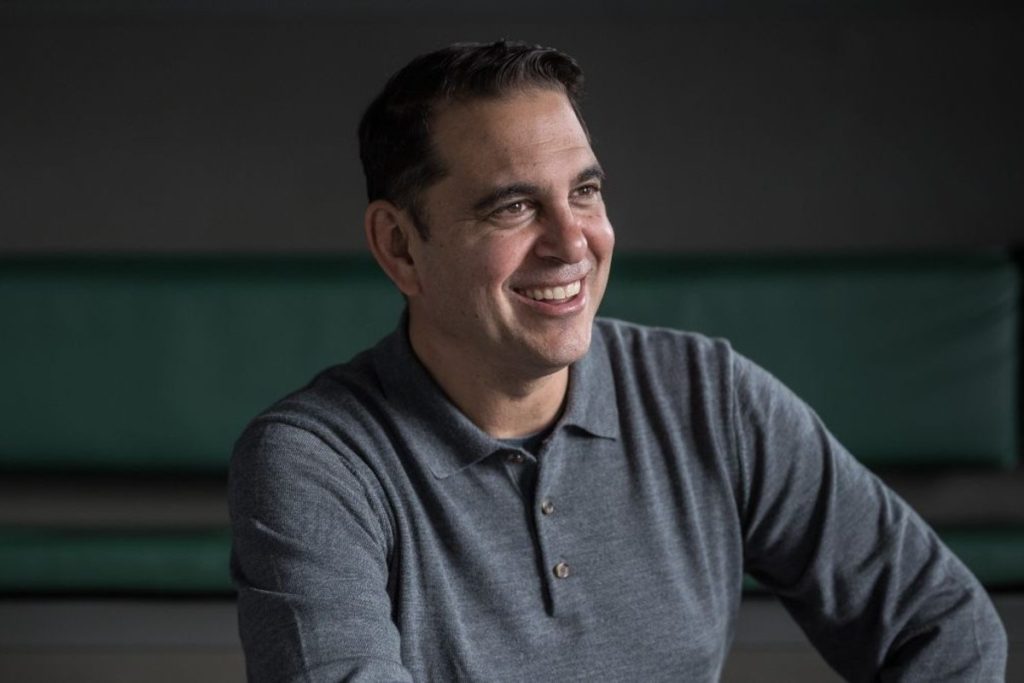
The UK-based company, which is owned by Winnipeg-headquartered lottery giant Pollard Banknote, is marking its 25th anniversary with a major leadership transition. mkodo Co-Founder Stuart Godfree has stepped down as Managing Director and David da Silva has replaced him in the role, effective April 16.

Godfree led mkodo’s growth from early mobile innovation to become a globally recognized technology partner.

“Reaching 25 years is a proud milestone for mkodo,” said the departing MD. “The business is in a strong position, with proven technology, long-standing partnerships, and an exceptional team. David’s leadership will ensure mkodo continues to innovate while staying focused on reliability, compliance and player experience in the world’s most regulated markets.”

mkodo deepens its Canadian iGaming footprint

mkodo has a large multi-provincial presence as a solutions supplier in Canada and is a member of the Canadian Gaming Association.

The company’s Canadian operator partners include provincial lottery corporations such as Ontario Lottery and Gaming (OLG), British Columbia Lottery Corporation (BCLC), and Western Canada Lottery Corporation (WCLC), as well as Ontario-licensed commercial operators like Betty Gaming, Casino Time, Maverick Games, soon-to-be Betsson-owned Casino Days and more.

mkodo noted in a press release that tools, including mobile-first front-end technology, compliant digital engagement platforms, and its GeoLocs geolocation solution, have become more important as iGaming continues to boom in Canada and elsewhere and operators look to meet and keep up with increasingly complex compliance demands.

mkodo said da Silva will lead its next phase of growth, with a focus on expanding its core product suite, including GeoLocs, as more jurisdictions adopt regulated gaming frameworks globally, including Alberta’s July 13 launch.

“Markets like Brazil and parts of North America, most recently Alberta, Canada, show just how quickly regulation is evolving,” da Silva said. “That creates both opportunity and complexity. Our role is to help operators scale with confidence — delivering experiences players love, while meeting the highest compliance standards behind the scenes.”

“iGaming is, at its core, an entertainment product — but one that now operates under intense regulatory scrutiny. The operators that succeed in the next phase will be those who can deliver both seamless, engaging experiences and robust, automated compliance. That balance will define the winners.”

IGP Chair Michael Peters: Things are changing for First Nations gaming

Times are changing for First Nations gaming in Canada, as Michael Peters knows well.

Peters is the Chair of Indigenous Gaming Partners (IGP), a group of five Nova Scotia First Nations working with casino operator and management company Sonco Gaming. He is also the Chief Executive Officer of Glooscap Ventures, the economic development and investment arm of IGP member Glooscap First Nation.

After multiple high-profile acquisitions over the last 18 months, IGP now owns a portfolio of seven brick-and-mortar casinos in Alberta. Ahead of speaking at SBC Summit Canada in Toronto in May, Peters stopped by to talk about the movement that’s happening across Canada in First Nations gaming right now.

Parts of this interview have been condensed for length.

Michael Peters

CGB: Michael, for those who may not know, what is IGP’s mission statement? And where does Glooscap come in?

Peters: At its core, IGP brings together Indigenous ownership, strong governance and experienced operators to build a portfolio of high-quality gaming and hospitality assets across Canada. For me personally, this work goes far beyond business opportunities. It’s about building an economic foundation that allows communities to make more of their own decisions; to invest in their people and ensure that future generations have greater opportunity.

That’s the lens we bring. Our model ensures Indigenous communities have meaningful ownership in a major Canadian industry. It’s a collaborative approach, with all five Nations and their respective board representatives working together to guide decisions and shape the direction of the partnership.

Our vision is to build equity and take a leadership role in the sector, while delivering long-term value for our member communities: Glooscap First Nation, Millbrook First Nation, Annapolis Valley First Nation, We’koqma’q L’nue’kati, and Paqtnkek Mi’kmaw Nation. It reflects a broader shift toward economic self-determination. Glooscap Ventures plays a key role in that; our mandate has been to build a diversified portfolio of businesses that generate reliable, recurring revenue. We’ve taken a disciplined approach, focusing on strategic partnerships and investments in sectors that can provide stability and create a resilient economic base that supports the community over time.

Gaming fits directly into that broader strategy. It adds scale, diversification and access to a well-established industry with strong operating fundamentals. But more importantly, it aligns with our long-term objective: building economic strength in a way that supports housing, education, infrastructure and opportunities for future generations.

CGB: It’s been more than a year since IGP purchased the operating assets of Pure Canadian Gaming, a well-established casino operator in Alberta. Can you fill us in on the work the group has done since that acquisition?

Peters: It’s been a really exciting year. It has really been about building a solid foundation. Through Pure Casino Entertainment Limited Partnership, IGP owns and operates Pure Casino Edmonton, Pure Casino Yellowhead, Pure Casino Calgary and Pure Casino Lethbridge. Collectively, those properties employ more than 1,200 people and welcome millions of guests each year.

Since that acquisition, the work has focused on operational excellence, governance and long-term planning. We have worked to support the teams already in place, maintain a strong guest experience and make sure the transition to Indigenous ownership is backed by the right structures and the right partners.
We are also investing back into the properties. A major renovation is underway at Pure Casino Calgary, and we’re looking forward to welcoming guests into a newly updated facility later this year.

From my perspective, the first year has also reinforced something we already believed: gaming can provide stable revenue when it is approached with discipline. At Glooscap, we have tried to build a portfolio where different sectors serve different purposes but all contribute to long-term resilience. Gaming fits that model very well.

CGB: Just a few weeks ago, Pure announced an agreement to acquire more Alberta casinos. How did that opportunity arise? Will IGP and Pure look to make similar strategic M&A moves elsewhere?

Peters: Pure has entered into a definitive agreement to acquire all the issued and outstanding common shares of Gamehost, and the deal is expected to close in mid-2026. If and when finalized, it would cement Pure’s position as Alberta’s largest casino operator, with seven casinos and three hotels spanning the province’s biggest regional markets.

It was a strategic fit. We’re looking for quality assets in a stable jurisdiction, and this opportunity aligned with that. It reflects IGP’s continued growth and focus on high-quality gaming assets across Canada, and it’s also significant because it would represent a rare example of a First Nations-led group taking a public company private in Canada.

As for future acquisitions, our approach remains the same: We are looking for assets that are well-run, market-leading where possible, and capable of generating stable long-term value. Do they strengthen the portfolio and create dependable value that can flow back to community priorities? For our communities, the value is in ownership. This is revenue tied to real assets and long-term value creation for our community.

To that end, the Pure acquisition has done what we set out to do. It’s created a new source of own-source revenue and added additional diversification for our partner First Nations. The first year has been focused on integration and stability. We’re now starting to see the value of scale. Bringing multiple properties together gives us a stronger platform for disciplined growth.

CGB: Outside of IGP’s work with Sonco Gaming, a notable trend has emerged in B.C. of First Nations buying land-based casinos, citing similar economic and self-determination motivations. Are we witnessing something of a fundamental shift in the landscape?

Peters: I think we are seeing First Nations move beyond participation into ownership. That is significant, because ownership changes the conversation. It creates long-term revenue, provides more influence over decision-making, and allows for more room to align business goals with community priorities.

First Nations have a long history of being involved in gaming and have operated casinos successfully. What we are seeing now is an expansion of those opportunities beyond reserve lands and into broader commercial markets.

So, yes, I do think gaming is part of a larger economic story. Indigenous communities increasingly have the governance capacity, the capital partnerships and the strategic experience to lead major transactions. That is good for our communities, and it is also good for the industry as a whole.

CGB: As things continue to progress for First Nations gaming interests across the country, how can the rest of the industry collaborate in a meaningful manner to the benefit of all parties?

Peters: Meaningful collaboration starts with recognizing Indigenous groups as long-term business partners and as leaders, not as stakeholders to be consulted. That means making room for equity participation, building partnerships that create opportunities for Indigenous businesses across procurement, services, construction, security, hospitality and operations.

It also means investing in our people. One of the things I care about deeply is making sure young Indigenous people can see themselves in all of Canada’s industries as employees, as managers, as executives, as entrepreneurs, as tradespeople, and as owners. The same principle applies in gaming. Economic participation should lead to career pathways and leadership pathways.

The best partnerships are built on respect, honesty and a long-term vision for the future. The gaming industry has an opportunity to work with First Nations in a way that strengthens businesses and creates broader social and economic value at the same time. When that happens, everyone benefits: operators, communities, employees, regulators and the provinces where these businesses operate.


Michael Peters will be speaking at SBC Summit Canada 2026 on May 21 on a panel titled ‘Building Sovereignty: The Rise of First Nations Ownership and Innovation in Western Canada’s Gaming Sector’.

To catch this panel, along with the full conference program and everything else that SBC Summit Canada has to offer, secure your ticket here. Affiliates and operators qualify for complimentary passes.

DraftKings confirms plan to launch on day one of Alberta iGaming

In what is possibly the least surprising news you will read today, DraftKings intends to be live with online sports betting and casino in Alberta’s regulated market from the get-go.

The sports betting and gaming giant confirmed on Thursday that, pending licensure and regulatory approval, it plans to be available on the province’s July 13 launch date. Like several other operators, it has opened pre-registration in the province ahead of its expected launch.

“We’re excited about the opportunity to expand DraftKings’ footprint in Canada and bring our online sportsbook and casino experiences to customers in Alberta,” said DraftKings Executive Vice President and General Manager of Sports Greg Karamitis in a statement.

“With the anticipated launch aligning with the World Cup — hosted right here in North America — it’s a particularly exciting moment for sports fans in the province to engage with our platform.”

Alberta would be DraftKings’ 34th online sports betting market in North America and its seventh for online casino.

It already offers both verticals in Ontario, and last summer launched its Golden Nugget Online Casino brand as a standalone platform in that province. Canadian Gaming Business reached out to DraftKings to ask if the plan is to launch both DraftKings Sportsbook & Casino and Golden Nugget Online Casino in Alberta, but the company declined to share any further information.

While this is the official public announcement regarding DraftKings’ Alberta plans, executives have previously touched upon the opportunity that awaits in the province.

Chief Executive Officer Jason Robins said on the company’s Q4 2025 earnings call on Feb. 13 that launching in Alberta, as well as Maine’s upcoming online casino market, had been factored into the company’s full-year 2026 guidance.

Long queue forming at Alberta’s door

DraftKings is one of more than a dozen operators that Canadian Gaming Business has confirmed are seeking registration in Alberta, a group that also includes the likes of:

  • Bet99
  • BetMGM
  • BetRivers
  • Betty
  • Caesars
  • FanDuel
  • High Roller Technologies
  • PointsBet
  • PowerPlay
  • Soft2Bet
  • Super Group
  • theScoreBet
  • TonyBet

As of last month, more than 55 operator sites had expressed an interest in registering to launch in the province, according to a document published by the market regulator, Alberta Gaming, Liquor and Cannabis (AGLC). Companies including Caesars, Rush Street Interactive’s BetRivers, PointsBet Canada and PENN Entertainment’s theScore Bet are all already open for pre-registration in Alberta. like DraftKings.

It’s uncertain exactly how operators are actively undergoing the process as of today, and the 55 sites will not equate to 55 operators, given that some companies such as Caesars and Super Group intend to launch multiple brands in the market, as they did in Ontario.

Alberta Minister Dale Nally told the Edmonton Journal on Thursday that at least 32 companies have applied to be a part of the market, and 20 have already paid a $150,000 deposit to register.

The commercial brands that do go live in Alberta will compete with AGLC’s own government-run platform, Play Alberta.

SBC Summit Americas strengthens startup focus with BettingStartups

SBC Summit Americas has teamed up with BettingStartups to strengthen its support for early-stage companies, with a clear focus on helping founders connect with investors and bringing fresh ideas to the forefront of the Americas market.

As part of the strategic partnership, BettingStartups will be the official host of the Startup Zone at SBC Summit Americas 2026. The space will feature 13 exhibition booths and a dedicated lounge, giving startups a strong presence on the show floor and direct access to key decision-makers.

Known as a key player in the early-stage gaming ecosystem, BettingStartups has built a reputation for supporting founders through its media platform, podcast, newsletter, events, and investment arm. By tapping into this network, the partnership will bring a curated group of startups to the event, giving attendees the chance to discover and engage with the next wave of innovation shaping the industry.

First Pitch applications deadline is April 17

A central highlight of the Startup Zone programming will be the First Pitch Americas Competition, taking place on Thursday, June 11, at 2 p.m. on the Leaders Stage.

Hosted by BettingStartups founder Jesse Learmonth, the competition will see five standout startups pitch live to a panel of leading investors and executives. Participants will compete for a grand prize package valued at $108,900, designed to accelerate their growth and industry visibility.

The prize includes a 3x3m exhibition booth at SBC Summit Americas 2027, alongside additional contributions from Are You Watching This?!, MetaBet, AWS, GameOn, Royer Cooper Cohen Braunfeld LLC, Square in the Air, and Vegas Kings.

The judging panel includes:

  • Paris Smith, Founder and CEO, Defy the Odds
  • Javier Altamirano, Global Head of Startup, Sportradar
  • Evan Meyer, Managing Partner, Astralus Capital Management
  • Scott Secord, Partner, Cardinal Sports Capital
  • Meredith McPherson, CEO and Managing Partner, DRIVE by DraftKings

Applications for the First Pitch Competition are due by April 17, and selected participants will be notified by May 4. The 2025 edition saw B2B social sports betting software provider Wager Games take home the top prize.

Startup-focused educational content

Complementing the competition, attendees will also benefit from dedicated educational content, including the ‘Fundraising 101: Win Your First Round workshop, taking place on Thursday, June 11, at 11 a.m. Led by Shaun Gold, Chief Evangelist at OpenVC, the session will provide founders with a practical, no-nonsense roadmap to securing early-stage investment.

The partnership positions SBC Summit Americas as a must-attend event for startups, investors, and operators active in the region. By combining SBC’s global reach with BettingStartups’ specialized ecosystem, the collaboration aims to attract high-potential companies, generate pre-event momentum, and deliver unique startup-focused content.

Through curated participation, targeted marketing campaigns, and dedicated programming, BettingStartups will also support delegate growth, with a goal of driving significant new registrations from its engaged community.

“This partnership strengthens our commitment to innovation and to supporting the next generation of companies shaping the future of gaming in the Americas,” said SBC Founder and CEO Rasmus Sojmark. “BettingStartups brings a highly engaged community and deep understanding of the startup ecosystem, which will elevate both the quality of exhibitors and the overall experience for attendees.”

“SBC Summit Americas is a key meeting point for the industry in the region, and we’re excited to play a central role in building out its startup offering,” added Learmonth. “Our focus is on bringing the most exciting early-stage companies to the event and giving founders a platform to be seen, heard, and funded.”


About SBC Summit Americas 2026

SBC Summit Americas is a leading industry event bringing together key stakeholders from across the North and Latin American gaming and sports betting markets.

Taking place June 9-11 at the Broward County Convention Center in Fort Lauderdale, the event continues to evolve its offering with a strong focus on business outcomes. This year, SBC introduces the SBC Connections networking program, featuring eight new ways for attendees to connect, alongside a new five-tier ticketing system designed to give participants greater control over their experience based on their business priorities.

Startups and industry professionals are invited to secure their place at SBC Summit Americas 2026.

Apply for the First Pitch Competition

Bally’s Intralot signs new lottery services contract with BCLC

The British Columbia Lottery Corporation (BCLC) has signed a new contract with its long-term partner Bally’s Intralot, focusing on integrated Shared Services.

Bally’s subsidiary Intralot Canada will deliver end-to-end operational and technical support across BCLC’s lottery and technology operations, as well as a roadmap for ongoing enhancements and integration of new capabilities.

“This collaborative Shared Services model represents a significant advancement in BCLC’s digital transformation journey,” said BCLC President and Chief Executive Officer Pat Davis. “BCLC looks forward to continuing its partnership with Bally’s Intralot in service of a more efficient, streamlined and resilient operating framework that delivers an elevated experience for our players across both our retail and digital channels.”

“This contract builds on the long-standing successful partnership between BCLC and Bally’s Intralot, and enhances our presence in the Canadian market,” added Bally’s Intralot Group CEO Robeson Reeves. “We are committed to delivering our best-in-class, fully integrated Shared Services model in support of the responsible growth of the Lottery and the good causes it serves across the province.

“This is an exciting new chapter for both organizations, and we look forward to the journey ahead.”

A new step for long-term partners

Intralot and BCLC have worked together for several years, beginning in 2019 on a project to replace the lottery’s legacy retail system.

In 2023, they expanded their partnership to include a retail sports betting overhaul via the Intralot Orion platform. The following year, they began a project to migrate BCLC’s retail lottery system to Intralot’s Lotos X Omni ecosystem, which made the lottery one of the first in the world to integrate a fully cloud-based system.

The partners announced in late 2024 that they would next work on a new online lottery platform, as well as advancing the digitalization of the crown corporation’s existing land-based network. As of that time, Intralot powered roughly 8,000 terminals across 3,400 retail locations in B.C.

A BCLC spokesperson told Canadian Gaming Business that the new contract formalizes Intralot’s role as the crown corporation’s primary delivery partner for lottery technology and operations by leveraging Intralot Canada’s local, on‑shore team to operate the Lotos X system on behalf of BCLC.

Bally’s and Intralot begin new North American chapter

The latest step in the collaboration is one of the first deals that Bally’s Intralot has signed since Bally’s Corporation and Intralot officially launched their new merged brand for their North American lottery technology operations in March.

That rebrand followed Intralot’s multi-billion-dollar acquisition of Bally’s Interactive assets in July 2025 in a deal which also made Bally’s a 58% majority shareholder in Intralot.

Bally’s Intralot’s focus in North America has remained the same: targeted B2B activities focused on U.S. state and Canadian provincial lotteries like BCLC.

“What has changed is the strength behind us,” said the firm in March. “By connecting Bally’s digital capabilities and the Vitruvian data platform with Intralot’s trusted lottery infrastructure, we’re positioned to deliver even more innovation and value to the market.”

iGaming Ontario unveils BetGuard centralized self-exclusion platform

Gamblers in Ontario will soon be able to cut themselves off from all licensed iGaming sites in one move. iGaming Ontario (iGO) formally unveiled its new centralized self-exclusion system (CSE) on Wednesday.

The BetGuard CSE tool is not live and operational yet. But this week’s brand reveal at the Responsible Gambling Council’s RGC Discovery conference in Toronto brings a years-long initiative in partnership with Integrity Compliance 360 and Dataworks (formerly IXUP) closer to fruition.

“I think there’s a recognition that we’re overdue for this system,” iGO President and Chief Executive Officer Joseph Hillier told Canadian Gaming Business. “We need to live up to our commitment to ensure that all of the responsible gambling tools that we can offer players and operators are available. And our centralized self-exclusion system is a key cornerstone of that.

“BetGuard is such an exciting development for our market. It’s a pretty sophisticated piece of technology. We’ve got great vendor partners with DataWorks and IC360. I’m confident about the look and feel of it. It will be ubiquitous and accessible and will truly facilitate players opting out from all operators in a streamlined, low-time-intensive way. That’s where you’re going to see the substantive impact.”

An all-in-one tool

Once BetGuard is live — and its website teases a May 2026 launch — it will enable online gamblers in Ontario to voluntarily exclude themselves from all 82 regulated iGaming sites in the province (as well as Ontario Lottery and Gaming’s online platforms) through a single, streamlined process. Every single authorized operator will be mandated to participate.

“If we don’t have all the operators included, we don’t have a centralized self-exclusion program, right?” added Hillier. “Ensuring that all operators are participating in this program is critical.

“We worked closely with all of them to make sure that the system aligns with their systemic needs. A lot of them have two- to three-year plans on technology, and the data situation of one operator could differ very significantly from that of another, so we’ve really tried to take that direct one-on-one approach.”

Ontario’s licensed operators are already required to maintain their own site-specific self-exclusion program, and that will continue once BetGuard is fully up and running. But BetGuard removes the need for players to self-exclude across different operators individually.

AGCO lays out ground rules

Earlier this month, in a bulletin posted on April 2, the Alcohol and Gaming Commission of Ontario (AGCO) updated its iGaming standards in an effort to more clearly outline what is expected of operators around BetGuard.

“The main intent of this requirement is to ensure that players who have chosen to centrally self-exclude are not able to access gaming sites — even during a service disruption,” wrote the regulator.

At a minimum, operators will be required to:

  • Ensure BetGuard is well promoted on their sites
  • Offer several term lengths, including six-month, one-year and five-year options
  • Log centrally self-excluded players out of their accounts and ensure they cannot either access those accounts or create new accounts
  • Prevent any marketing materials or incentives from being sent to centrally self-excluded players
  • Cancel and refund all outstanding wagers placed more than 24 hours before the person self-excluded, and refund all unused funds

BetGuard is just one piece of the responsible gambling puzzle in Ontario, where operators are held to stringent standards by iGO and the AGCO and other benchmarks, such as the RGC’s RG Check certification process, set a high bar. Adding centralized self-exclusion adds another layer to the province’s safeguards.

Hillier reiterated that iGO has recognized the need for CSE for a while now, and it has kept coming up as a player protection recommendation since the agency commissioned IC360 and Dataworks to develop the tool in mid-2024.

“I’ve been at a couple of conferences recently where centralized self-exclusion has been broadly recognized as a critical tool in a responsible gambling space,” iGO’s CEO noted. “It’s a further opportunity for players to feel supported in the most critical moments and understand, when they’ve made the assessment that they need to explore their options to take a break, what that can look like. Players can make those informed choices and have those tools at their fingertips.”

Ontario and Alberta, mutually exclusive?

While Ontario is preparing to fully launch BetGuard live in the coming weeks, Alberta is preparing to launch its own regulated, commercial iGaming market on July 13. When it does, Minister Dale Nally and other Alberta gaming stakeholders have promised that the province will have its own centralized self-exclusion system in place from the start.

Alberta Gaming, Liquor and Cannabis (AGLC) lists integration with a CSE tool as a mandatory requirement for any operator that hopes to launch in the market, and a website has already been set up for CSE.

“The centralized Self-Exclusion Program is a responsible gambling feature available to casinos, racing entertainment centres (RECs) and legally operated iGaming platforms in Alberta featuring in-depth exclusion options,” states the Alberta regulator. “Operators will need to integrate AGLC’s Self-Exclusion Program into their platform to be compliant with provincial legislation.”

Alberta’s platform will provide options to exclude from all registered iGaming, from all land-based casinos and racing entertainment centres, or from all categories at once.

Although Ontario and Alberta will have their own separate markets, Hillier suggested that the two provinces could potentially look to connect their respective CSE systems down the line to ensure that gamblers traveling between provinces remain self-excluded on the regulated online sportsbooks and casinos that will be available in both markets.

“Once Alberta has its market launched and has its systems fully in place, I think we will both be in a much better position to understand what those linkage opportunities are,” added Hillier. “Our team is very much prioritized on launching BetGuard and ensuring Ontario players have that tool available, but as we see how Alberta evolves and as we engage with them on a whole host of conversations, we’ll look for those opportunities as soon as they’re available.”

Digitain secures Ontario iGaming supplier license

Online gambling solutions supplier Digitain has been approved to work with licensed operators in Ontario’s iGaming market.

The company has received its supplier license from the Alcohol and Gaming Commission of Ontario (AGCO) and is now authorized to begin providing its services and proprietary gaming content to the province’s range of nearly 50 online casino and sportsbook platforms.

“Securing authorization in Ontario is an important step for Digitain’s growth,” said Digitain Group Chief Compliance Officer Arshak Muradyan. “It shows our strong commitment to following regulations, maintaining high compliance standards and operating with integrity.

“This achievement supports our goal of building trusted, long-term partnerships and delivering safe, reliable and fully compliant gaming solutions in regulated markets around the world.”

Digitain enters key markets in Ontario and UK

Digitain said the milestone marks an important step in its strategic expansion into regulated markets around the world, further strengthening its global footprint. The firm said that it remains committed to expanding its regulated market presence, supporting partner success and upholding the highest standards of compliance and data protection.

The Ontario approval comes just two months after the Armenia-founded and Malta-headquartered company was granted a betting license by the UK Gambling Commission (UKGC), as well as an iGaming software supplier licence in the Isle of Man.

It also recently secured both manufacturer and importer licenses from Bulgaria’s gambling regulator.

Other suppliers and operators join the fray

Digitain is not the only new supplier entering Ontario’s multi-billion-dollar regulated iGaming market. Platipus Gaming also announced on Tuesday that it has obtained a license from the AGCO.

Ontario’s iGaming market is currently home to 48 operators running 82 licensed websites, as well as Ontario Lottery and Gaming’s government-run platform. BetNova was the latest online casino and sportsbook to launch in the province, going live last week after Canadian Gaming Business broke the news of Casumo’s impending exit.