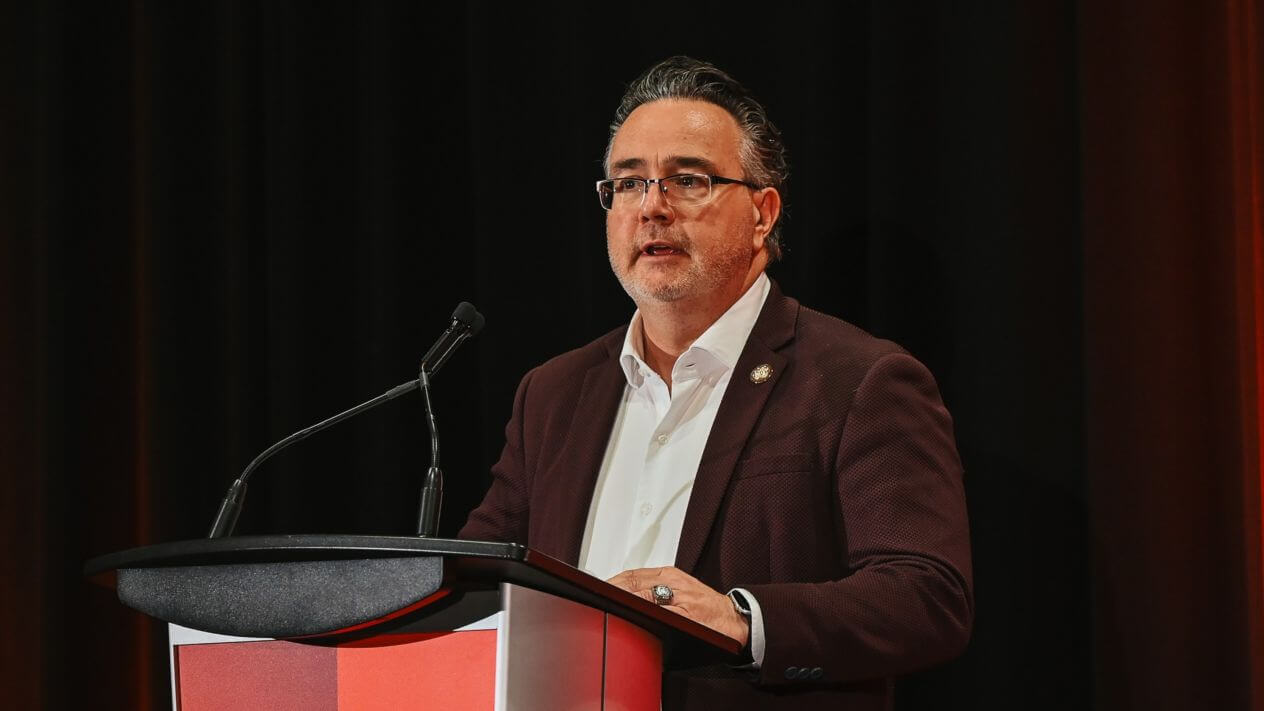
Gamblers in Ontario will soon be able to cut themselves off from all licensed iGaming sites in one move. iGaming Ontario (iGO) formally unveiled its new centralized self-exclusion system (CSE) on Wednesday.
The BetGuard CSE tool is not live and operational yet. But this week’s brand reveal at the Responsible Gambling Council’s RGC Discovery conference in Toronto brings a years-long initiative in partnership with Integrity Compliance 360 and Dataworks (formerly IXUP) closer to fruition.
“I think there’s a recognition that we’re overdue for this system,” iGO President and Chief Executive Officer Joseph Hillier told Canadian Gaming Business. “We need to live up to our commitment to ensure that all of the responsible gambling tools that we can offer players and operators are available. And our centralized self-exclusion system is a key cornerstone of that.
“BetGuard is such an exciting development for our market. It’s a pretty sophisticated piece of technology. We’ve got great vendor partners with DataWorks and IC360. I’m confident about the look and feel of it. It will be ubiquitous and accessible and will truly facilitate players opting out from all operators in a streamlined, low-time-intensive way. That’s where you’re going to see the substantive impact.”
An all-in-one tool
Once BetGuard is live — and its website teases a May 2026 launch — it will enable online gamblers in Ontario to voluntarily exclude themselves from all 82 regulated iGaming sites in the province (as well as Ontario Lottery and Gaming’s online platforms) through a single, streamlined process. Every single authorized operator will be mandated to participate.
“If we don’t have all the operators included, we don’t have a centralized self-exclusion program, right?” added Hillier. “Ensuring that all operators are participating in this program is critical.
“We worked closely with all of them to make sure that the system aligns with their systemic needs. A lot of them have two- to three-year plans on technology, and the data situation of one operator could differ very significantly from that of another, so we’ve really tried to take that direct one-on-one approach.”
Ontario’s licensed operators are already required to maintain their own site-specific self-exclusion program, and that will continue once BetGuard is fully up and running. But BetGuard removes the need for players to self-exclude across different operators individually.
AGCO lays out ground rules
Earlier this month, in a bulletin posted on April 2, the Alcohol and Gaming Commission of Ontario (AGCO) updated its iGaming standards in an effort to more clearly outline what is expected of operators around BetGuard.
“The main intent of this requirement is to ensure that players who have chosen to centrally self-exclude are not able to access gaming sites — even during a service disruption,” wrote the regulator.
At a minimum, operators will be required to:
- Ensure BetGuard is well promoted on their sites
- Offer several term lengths, including six-month, one-year and five-year options
- Log centrally self-excluded players out of their accounts and ensure they cannot either access those accounts or create new accounts
- Prevent any marketing materials or incentives from being sent to centrally self-excluded players
- Cancel and refund all outstanding wagers placed more than 24 hours before the person self-excluded, and refund all unused funds
BetGuard is just one piece of the responsible gambling puzzle in Ontario, where operators are held to stringent standards by iGO and the AGCO and other benchmarks, such as the RGC’s RG Check certification process, set a high bar. Adding centralized self-exclusion adds another layer to the province’s safeguards.
Hillier reiterated that iGO has recognized the need for CSE for a while now, and it has kept coming up as a player protection recommendation since the agency commissioned IC360 and Dataworks to develop the tool in mid-2024.
“I’ve been at a couple of conferences recently where centralized self-exclusion has been broadly recognized as a critical tool in a responsible gambling space,” iGO’s CEO noted. “It’s a further opportunity for players to feel supported in the most critical moments and understand, when they’ve made the assessment that they need to explore their options to take a break, what that can look like. Players can make those informed choices and have those tools at their fingertips.”
Ontario and Alberta, mutually exclusive?
While Ontario is preparing to fully launch BetGuard live in the coming weeks, Alberta is preparing to launch its own regulated, commercial iGaming market on July 13. When it does, Minister Dale Nally and other Alberta gaming stakeholders have promised that the province will have its own centralized self-exclusion system in place from the start.
Alberta Gaming, Liquor and Cannabis (AGLC) lists integration with a CSE tool as a mandatory requirement for any operator that hopes to launch in the market, and a website has already been set up for CSE.
“The centralized Self-Exclusion Program is a responsible gambling feature available to casinos, racing entertainment centres (RECs) and legally operated iGaming platforms in Alberta featuring in-depth exclusion options,” states the Alberta regulator. “Operators will need to integrate AGLC’s Self-Exclusion Program into their platform to be compliant with provincial legislation.”
Alberta’s platform will provide options to exclude from all registered iGaming, from all land-based casinos and racing entertainment centres, or from all categories at once.
Although Ontario and Alberta will have their own separate markets, Hillier suggested that the two provinces could potentially look to connect their respective CSE systems down the line to ensure that gamblers traveling between provinces remain self-excluded on the regulated online sportsbooks and casinos that will be available in both markets.
“Once Alberta has its market launched and has its systems fully in place, I think we will both be in a much better position to understand what those linkage opportunities are,” added Hillier. “Our team is very much prioritized on launching BetGuard and ensuring Ontario players have that tool available, but as we see how Alberta evolves and as we engage with them on a whole host of conversations, we’ll look for those opportunities as soon as they’re available.”