Search
Choose a style
Dark
Light

BetMGM’s Derek Jeter partnership looks different in Canada

BetMGM has swung big on signing up iconic athletes to represent its brand, and it’s added one of the biggest hitters around.

The online sportsbook and casino brand announced on Monday that New York Yankees legend Derek Jeter has signed a multi-year partnership with BetMGM that spans both Canada and the U.S.

Broadly speaking, the partnership makes the 14-time MLB All-Star and five-time World Series champion a brand ambassador for the renowned operator. But the collaboration will look pretty different depending on whether you live north or south of the border, as evidenced by the way it was presented in each country.

In the U.S., he will be featured prominently across all kinds of advertising and make appearances at exclusive VIP events. Perhaps most notably from the industry perspective, the MGM Resorts International and Entain joint venture announced that it will launch an exclusive Jeter-themed slot game, which will be the first online casino game to feature a current or former MLB player.

BetMGM Chief Marketing Officer Casey Hurbis said that ‘The Captain’ has a “universal appeal and proven track record of excellence, both on and off the field” that will be a big asset to BetMGM’s brand and player engagement. Jeter joins a BetMGM lineup of sporting partners that also includes Wayne Gretzky and former NFL MVP Barry Sanders.

I’ve got two letters for you: R and G

Buried in the U.S. release announcing the Jeter deal was a line that noted that the former Yankee will play “a key role” in promoting BetMGM’s responsible gambling initiatives in both the U.S. and Canada.

In the Canadian press release, that wasn’t so much a secondary mention as it was the entire foundation of the announcement.

“The baseball legend will appear in commercials that highlight BetMGM’s industry-leading suite of responsible gambling tools,” stated the Canadian release, which was titled “Derek Jeter to Champion Responsible Gambling for BetMGM Canada.”

The reason for the difference in tone between the two releases is that in Canada’s only regulated online gambling market of Ontario, the Alcohol and Gaming Commission of Ontario’s (AGCO) rules stipulate that active or retired athletes cannot be used in advertising and marketing, “except for the exclusive purpose of advocating for responsible gambling practices.” Ontario also has a requirement that operators must spend a certain percentage of their annual gross gaming revenue on RG-specific messaging.

Back in August 2023, just over one year into the lifespan of Ontario’s commercial iGaming market, the AGCO announced it would ban the use of athletes in online gaming advertising and marketing in Ontario. The change came into effect on Feb. 28, 2024.

“Following the first year of Ontario’s open, regulated iGaming market, the AGCO identified advertising and marketing approaches that use athletes, as well as celebrities with an appeal to minors, as a potential harm to those under the legal gaming age and is taking this step to reduce the risk,” said the regulator at the time. It banned the use of athletes, with the caveat of the RG carve-out, after consulting with stakeholders including mental health and public health organizations, responsible gambling experts, gaming operators, broadcast and marketing groups and the public.

Since then, operators have continued to partner with sports stars, basing the entire collaboration around responsible gambling measures. BetVictor, for one, recently enlisted former Toronto Raptor Tracy McGrady to serve as its face in Ontario.

The McDavid Effect

BetMGM already has impactful partnerships with former and current Edmonton Oilers heroes Gretzky and Connor McDavid, which give the brand that purports to be Ontario’s online casino market leader significant recognition and visibility not just in Ontario but across Canada.

The company’s Jeter release noted the former Yankee will join McDavid in supporting its ongoing responsible gambling campaign. BetMGM uses RG tools including GameSense, the industry-leading program developed and licensed by the British Columbia Lottery Corporation (BCLC).

At BCLC’s New Horizons in Safer Gambling conference last October, BetMGM Director of Responsible Gambling Richard Taylor detailed that the operator saw a general increase of about 10% in the use of tools such as deposit limits which it credited to the use of McDavid to promote the tools in Canada.

“This is another example of Ontario pushing us to innovate and to make our organization better across all of our jurisdictions,” Taylor said at the time. “Big credit to Ontario for that requirement because it’s pushing us to innovate and do fun things with the way we market and promote responsible gambling.”

Now, BetMGM can lean on the profile of not only Canadian hockey icons but also one of baseball’s modern greats to give it greater visibility. The first responsible gambling advertisement will air in Canada and the U.S. later this year.

As well as Ontario, it will air in Alberta, which is slated to launch commercial online gambling in the first quarter of next year and where BetMGM intends to have a similarly significant presence. How Alberta approaches RG measures such as the use of athletes will be revealed in due course as the upcoming market’s regulations are developed.

New CEO Dallas McCready outlines hopes and aims for Atlantic Lottery

By Viktor Kayed

Dallas McCready stepped in as the new CEO of the Atlantic Lottery Corporation (ALC) at a landmark time, as the organization finds itself on the brink of its 50-year anniversary in 2026.

The ALC knows there’s still a lot more to offer to the people of Atlantic Canada. Whatever the challenges may be, McCready is ready to lead his team into a “transformative” new chapter for the corporation to build upon the crown corporation’s half-century legacy.

McCready’s career portfolio includes a tenure as Deputy Minister of Strategic Initiatives within New Brunswick’s Executive Council Office. This role gave McCready a crucial know-how in effective governance and strategic planning, two skillsets that would later kickstart his career with the Atlantic Lottery.

In 2022, McCready put pen to paper with the corporation, joining as its Chief Strategy Officer. The now-CEO looks back at the last few years as essential for getting him in gear for what lies ahead.

“It’s been a great experience,” he told Canadian Gaming Business recently. “I was glad to have been part of it for the last few years. It was helpful to be in and learn more about the organization and the people before settling into this new role. Obviously, there’s still some learning to do, but it’s been helpful. We have a wonderful team here.”

Big shoes to fill

McCready’s tenure at the top of the Atlantic Lottery began in January, replacing Patrick Daigle. His predecessor’s guidance was key for the smooth transition, the incumbent CEO was quick to note.

“It’s tough to follow in his shoes. He was here for 27 years. On the day of the announcement, I sent him a text saying ‘I wish you didn’t have such big feet!’ He was very reassuring and comforting on a pretty overwhelming day, as you can imagine. So I really appreciate his support.”

But the shoes are now on, and McCready’s gait shows no signs of shuffling. McCready is ready to protect ALC’s operating space, which he says should be a priority everywhere, whether you’re the only regulated operator or you have a licensed open-market model like in Ontario. To do that, he is focusing on expanding ALC’s market share through a five-year strategy to tackle the grey market, a plan he co-developed during his tenure as a CSO.

“We’re proud of our social purpose and having that game-changing impact on the people and places of Atlantic Canada,” he added. “So for us, it’s really important to capture as much of that market share as we possibly can.

“We’ll never have 100%, of course, and we wouldn’t aspire to that. But we have around a third of the market right now, which is a fairly small percentage when you consider that we’re the only legal operator. Our goal is to get up to around 50% of that share. Our strategy has a lot of key elements that will help us be the first choice for the players of Atlantic Canada.”

“For us, it’s really important to capture as much market share as we possibly can. We’ll never have 100%, of course, and we wouldn’t aspire to that.”

The Atlantic Lottery, which returns 100% of its gaming profits to the four Atlantic provinces, said last year that it loses around $200 million annually to unlicensed gambling sites. It’s an issue cited by other crown corporations across the rest of Canada, and the ALC formed the Canadian Lottery Coalition with several other provincial lotteries. McCready noted a key goal is to advocate for a regulated and safe gambling environment.

“It’s just strength in numbers to a certain extent. We all have a common interest in protecting our markets and the operating space that we have. It’s been helpful in advancing the message and getting some attention from decision makers at the federal level, but also provincially as well.”

The end goal, stressed McCready, is protecting the player.

“It’s more important how we make profits than how much profit we make. Healthy play has to come first and foremost.

The ALC’s growth goes hand-in-hand with an unwavering devotion to healthy play and, as the CEO put it, “our sustainable growth strategy allows us to take market share back.”

Time for a regulated commercial market?

This in turn shifts the playing field, McCready suggested, by placing the focus not on taking more money out of the same wallet but on bringing more wallets into ALC’s system.

This philosophy was infused into the ALC’s launch of regulated iCasino in the province of Newfoundland and Labrador last year. The result, said McCready, has been a market growth built on player trust.

“I’m really proud of how, without a whole lot of marketing, we very quickly repatriated a lot of that play from the unregulated market, which to me shows that people do trust us and our brand, and we should be proud of that.”

The government recognizes that some people are making the decision to play on illegal sites. At some point, we’re hoping they’ll allow us to compete.

The Atlantic Lottery now offers regulated online casino in every Atlantic province other than Prince Edward Island. McCready said that the ALC remains open to the idea of competing with other operators on a level playing field, but that can only come at the discretion of the local government.

“I think the government recognizes that some people are making the decision to play on illegal sites. There are conversations recognizing that activity, and at some point we’re hoping they’ll allow us to compete. But it’s a decision of the policymakers and what they think is best for their people. It’s really not my place to question or challenge that.”

One thing that is for certain is that, like in other provinces, the Atlantic Canada market continues to grow and players continue to look for ways to play. That brings competition with it. With McCready at the helm, the ALC seems ready for the challenge.

“There’s been emerging competition, but at the end of the day, it’ll be our people and their social purpose that make a difference,” he concludes. “We work very hard to operate with as much integrity and transparency as we can to protect the reputation and trust we have built with Atlantic Canadians.”

A version of this story appears in the Summer 2025 issue of Canadian Gaming Business magazine.

Ontario operators no longer need AGCO approval on responsible gambling training

Ontario gambling operators will no longer need the provincial regulator to sign off on their responsible gambling training.

In an update posted on Friday, the Alcohol and Gaming Commission of Ontario (AGCO) noted it has amended its RG training standards for employees in the gaming and lottery sectors. Henceforth, operators will not need to seek approval from the Registrar for training programs.

RG training itself is still compulsory for all staff in those sectors. But operators now have more freedom to develop and revise their own content without needing AGCO sign-off, as long as the training meets industry best practices and effectively prepares employees to recognize and respond to gambling-related harm.

The AGCO stipulates that RG training must adequately ensure that employees understand their role in promoting responsible gambling and supporting individuals who may show signs of gambling problems.

The Ontario Lottery and Gaming Corporation’s (OLG) PlaySmart program remains valid under the updated standard, confirmed the regulator.

The change is intended not only to reduce red tape but to encourage innovation within responsible gambling, maintain Ontario’s standards for player protection, and bring greater consistency between land-based gaming and iGaming.

AGCO regulator advises operators on how to spot at-risk players

This is the second time in a few weeks that Ontario’s online gambling regulator has tweaked the way it approaches responsible gambling.

In early June, it updated its comprehensive advice on how licensed operators can identify and support players at risk of harm.

While the AGCO noted its regulatory model places accountability on operators to actively shield players from gambling-related harm, its guidance helps clarify its expectations of operators and signposts ways that gambling brands can meet the province’s requirements.

At that time, the commission stressed the importance of rigorous employee training, documentation of such training and continuous assessment in upholding its standards.

Bet365 adds Greentube online slots in Ontario

Greentube games have gone live with another licensed operator in the Ontario online gaming market, with a portfolio of titles now available via Bet365.

A selection of Greentube’s most popular and proven titles including the Piggy Prizes, Thunder Cash and Diamond Cash series, are all accessible to Bet365 players through a direct integration.

For Bet365, it expands what is already a wide range of online casino games. For Greentube, the digital gaming and entertainment division of full-service gaming provider Novomatic, its deepens the supplier’s roots in North America.

Greentube already offers games to Ontario players through a variety of online casinos, including partnerships with the likes of BetMGM and Party Casino, Caesars, and Super Group’s Betway.

It also works with provincial lottery corporations such as the British Columbia Lottery Corporation (BCLC) and Loto-Quebec and has been extending its reach south of the border and recently entered the Delaware and Pennsylvania markets.

“We are excited to announce further expansion in Ontario, an important market for Greentube, through our strategic partnership with bet365,” said Greentube’s Commercial Director David Bolas (pictured). “Canada has consistently ranked among our top three growth markets over the past two years, and this collaboration marks a significant milestone in strengthening our presence in the region. We look forward to deepening our relationship with bet365 as we continue to grow together.”

“Welcoming Greentube’s impressive collection of games to our online casino in Ontario is an incredibly positive development for us,” said a Bet365 spokesperson. “Its commitment to developing high-quality, engaging content aligns perfectly with our dedication to providing our players with the best possible gaming experience. The popular games now available will resonate strongly with our Ontario players and take our casino offering forwards.”

Greentube Chief Financial Officer and Chief Games Officer Michael Bauer spoke to SBC Media in January about how the Canadian market differs from the U.S.

“Ontario is a very interesting market for us, and because it’s kind of a mixture of Europe and U.S. we see a mix of games working there that are Europe and U.S. style,” Bauer explained. “This is good for us because we have both. Canada in general works really well for us. Whatever new province comes next, we want to get a licence. Alberta is on the top of our list.”

You can watch the full chat with SBC via the video below.

Amid Ontario’s calls for action, Meta changes rules on gambling ads

Ontario’s online gambling market regulator recently urged media companies to stop advertising unlicensed gaming sites in the province and beyond. The Canadian industry may be keenly interested in the fact that Meta has quietly updated its requirements for gambling adverts on Facebook and Instagram.

Effective immediately, in order to promote any form of online gambling on those two platforms, written permission must be obtained from the company and would-be advertisers must provide significant documentation.

Meta’s definition of gambling includes “betting, lotteries, raffles, casino games, fantasy sports, bingo, poker, skill game tournaments and sweepstakes,” and the policy applies to any paid-entry games in which anything of monetary value is included as part of the prize.

“Meta defines online gambling and gaming as any product or service where anything of monetary value is included as part of a method of entry and prize,” noted the company.

Rules impact influencers and affiliates too

The new requirements don’t just apply to direct advertising of gambling but also to ads with landing pages that contain promotions for online gambling, even if there is no opportunity to gamble directly on that page, such as aggregator or affiliate sites.

They also target influencer marketing. For a creator to publish a gambling advert themselves, they must register with Meta, obtain approval as an affiliate and show a signed agreement with the gambling operator they are advertising.

As for what the policy does not apply to, social casinos and free-play games that do not offer anything of monetary value are exempt. However, there is a strict ban on targeting users under 18, and that aspect does apply to ads for free-play content as well as real-money gambling.

Applications for permission to advertise gambling must be submitted through Meta’s “Permissions and Verifications” portal in its Business Suite. Meta’s internal teams will manually review submissions, and approvals are account-specific, with additional business profiles having to go through a separate approval process.

Credentials, please

Perhaps most notably, any entity applying to advertise real-money gambling must be able to provide evidence “that the gambling activities are appropriately licensed by a regulator or otherwise established as lawful in territories that they want to target.”

Would-be advertisers will have to submit detailed paperwork, including current gambling licenses and certifications of compliance with law in all regions where the adverts are being shown, as well as corporate details, screenshots and a list of ad accounts.

While it creates more red tape for operators and their affiliates, it will surely please the Alcohol and Gaming Commission of Ontario (AGCO).

Two months ago, the province’s gambling regulator stated that it had written to a host of traditional and digital media platforms to urge them to stop advertising unregulated online gambling sites in the province. Specifically calling out offshore operator Bodog, the AGCO said that legitimate media companies offer unauthorized operators “a veneer of legitimacy” by allowing them to promote themselves through various channels.

The AGCO did not confirm at the time whether Meta was one of the platforms it had written to. Canadian Gaming Business reached out to the AGCO seeking confirmation and comment.

Talk of the town

While the AGCO didn’t name Meta, the Canadian Gaming Association (CGA) has done so publicly on several occasions. The industry association has questioned whether social media sites, led by Meta, should be taking a harder stance. CGB also reached out to the CGA for comment.

The AGCO, the CGA, research firm Ipsos, gambling company executives and others have all suggested that too much confusion remains among consumers as to which gaming sites are legitimately authorized and which are not. They argued a glut of adverts for unlicensed sites sitting alongside the marketing of licensed platforms only exacerbates the problem.

Meanwhile, as all this is happening, a federal discussion of whether or not to start nationally regulating betting adverts in Canada (and if so, how) is back on the agenda in Parliament for 2025.

Sen. Marty Deacon’s Bill S-211, her re-fired version of last year’s S-269 which passed the Senate but never made progress in the House of Commons, has had two readings in the Senate and is awaiting committee debate.

Betty and Bragg team up on online casino content in Ontario

Toronto-based gaming supplier Bragg Gaming Group and Ontario-focused online casino operator Betty Casino have announced a new content partnership in the province.

Betty players now have access to a portfolio of online slots and games featuring Bragg’s game concepts and mechanics.

This launch adds content from Bragg’s renowned in-house studios, Atomic Slot Lab and Indigo Magic, as well as its Powered by Bragg partner studios, including Bluberi, King Show Games, Incredible Technologies and Sega Sammy Creation.

Bragg said in a LinkedIn post that the partnership solidifies its position as a leading provider of premium online casino content in the Ontario market.

“By delivering a diverse and captivating gaming experience, we are deepening our footprint in Ontario and catering to discerning players who seek the ultimate in online slot entertainment,” said the company.

Betty joins Bragg’s growing roster of operator partners in Ontario and beyond. The fast-growing company works with big-name brands including FanDuel, DraftKings, BetMGM, Caesars, Rush Street Interactive’s BetRivers and Fanatics in the U.S.

Bragg, which reported earlier this year that its U.S. revenue soared by 150% year-over-year, this week appointed Sportradar senior vice president Luka Pataky as its new executive vice president of AI and innovation.

Meanwhile, the supplier isn’t the only partner in this new deal with big ambitions.

Betty has operated in Ontario since early 2023 and, until recently, Canada’s only regulated commercial online gambling market was its sole focus. Between the start and the end of 2024, the company’s total number of active monthly players in the market increased eight-fold.

Now, the company is looking both westwards and southwards, after Group CEO Justin Park announced a shift to a decentralized, franchise model that he said could make Betty the “McDonald’s of iCasino.” Betty’s Ontario business has been rebranded as Betty Canada, the first franchise, with plans for further franchises in the U.S. and Latin America down the line. Another intention is for Alberta operations to be added to the Betty Canada franchise when that market opens, touted to be early 2026.

Betty co-founder and Betty Canada CEO Chavdar Dimitrov spoke to Canadian Gaming Business in depth about those plans, Betty’s progress so far in Canada, and why potential expansion into retail gaming appeals for the currently online-only brand.

ToonieBet continues Canadian sports drive with CFL deal

ToonieBet online casino and sportsbook has secured another high-profile Canadian sports partnership.

Soft2Bet’s Canadian-focused B2C gaming brand is now an official sports betting and online casino partner of the Canadian Football League (CFL) through a new multi-year deal.

The agreement also makes ToonieBet an official partner of the Grey Cup, the 112th edition of which will be played at Winnipeg’s Princess Auto Stadium in November.

Through the deal, which also designates ToonieBet as an official authorized gaming operator of the CFL, Soft2Bet will be able to use official CFL data and statistics to sports fans and sportsbook users across Ontario through the ToonieBet platform. ToonieBet users will get access to in-game and futures betting markets and CFL-branded online casino experiences.

ToonieBet will also be the presenting partner of CFL Fantasy and the Game Tracker in Ontario on CFL.ca and LCF.ca, in addition to being the CFL’s odds provider on the league’s digital scoreboard.

“Together with ToonieBet, we will unlock exciting avenues of entertainment, delivering new products, responsible gaming options and unique activations, to better serve the future of fandom,” said Tyler Keenan, the CFL’s chief revenue officer. “In the stadium, at home or online, we’re doubling down on engagement and innovation like never before.”

ToonieBet hopes to cash in on cachet

ToonieBet joins a list of CFL gambling partners that also includes the likes of FanDuel, as well as crown lottery corporations in various provinces including Ontario Lottery and Gaming (OLG).

Soft2Bet Chief Business Development Officer Martin Collins said in a release that the partnership is about building relevance for the ToonieBet brand, as well as establishing a real connection with fans.

“Aligning with one of Canada’s most trusted leagues allows us to strengthen our bond with Ontarians and deliver a best-in-class sports betting and gaming experience through ToonieBet.”

“Partnering with the CFL will elevate our robust offerings in the Canadian market and allow us to continue building our passionate sports and online gaming community in Ontario,” added Steve Spindler, ToonieBet’s Canadian country manager. “Our team at ToonieBet is deeply committed to building a premium fan experience, while delivering exceptional customer hospitality and ensuring both responsible and safe gameplay.”

Canadian by name, Canadian by nature

Soft2Bet describes ToonieBet as a brand purpose-built for the Canadian market.

“When we created ToonieBet, we wanted to speak to the local culture,” Collins told Canadian Gaming Business last month. “A ‘toonie’ is a Canadian $2 coin, so from the start, we are creating something unique and applicable to the region.”

Soft2Bet obtained an operator’s licence from the Alcohol and Gaming Commission of Ontario (AGCO) in March 2024, registered under Canadix Limited, and it debuted in the province in late 2024. It has ramped up its efforts in the province recntly.

The partnership with the CFL is the brand’s second Canadian sports partnership within the last three months, after ToonieBet became the official online casino partner of the NHL’s Ottawa Senators in April.

ToonieBet recently expanded with a full sportsbook offering, launching a new sports betting app in May in Ontario and introducing a sportsbook section on its official website, with access to over 85,000 live events each month and more than 70,000 pre-match events across a wide range of sports.

The Malta-based company intends to launch a new online gaming brand in New Jersey’s online casino market in the near future, which Collins called “a major step in our growth as a leading iGaming turnkey solutions provider.”

BetMGM starts selling branded gift cards at Ontario retailers

Ontario shoppers can now pick up a BetMGM gift card for themselves or a friend or family member who enjoys laying down a few bucks on sports or online casino.

BetMGM has become the first sportsbook to begin selling single-branded gift cards through retailers in Canada. The cards are available from 2,500 retail locations throughout the province via a partnership with payment solutions provider TAPPP.

The operator’s gift card program allows BetMGM customers to fund their sportsbook or online casino accounts using a unique PIN included on a physical gift card. The scheme has seen significant popularity in the U.S. since it launched in September 2021 and is now offered in partnership with retailers in 15 states and the company touts a 99% redemption rate south of the border.

In Ontario, it will follow the Alcohol and Gaming Commission of Ontario’s (AGCO) regulatory standards, such as player identity verification before depositing and responsible gambling controls including offering deposit limits.

BetMGM has also chosen to implement a $250 weekly deposit limit for players using prepaid cards, which is not an AGCO requirement.

“Ontario has proved to be a robust market for sports betting and iGaming with BetMGM as one of the top-tier operators,” said the company’s Chief Revenue Officer Matt Prevost. “We are proud to be the first to debut sportsbook-branded gift cards and offer players another convenient way to fund their accounts.”

“We are constantly seeking new ways to increase the accessibility of our clients’ gift card products,” added Sandy Agarwal, TAPPP founder and CEO. “Securing the distribution of BetMGM gift cards in Ontario is another exciting first for us as it opens up an entirely new country for BetMGM and its retail customers.”

BetMGM touts market leadership position

Already one of the most recognizable and renowned gambling brands doing business Ontario, BetMGM will hope that extending its gift card program into the province will provide even further visibility and engagement.

Back in late April, BetMGM’s CEO Adam Greenblatt said the company is the online casino leader by revenue share in Ontario’s regulated iGaming market.

“We have increased our market share,” Greenblatt revealed on an earnings call looking back at the first quarter of 2025. “I won’t tell you what it is, I’m not in a position to do that, but we have increased our market share in both sports and iGaming, and we remain the market leader in iGaming.”

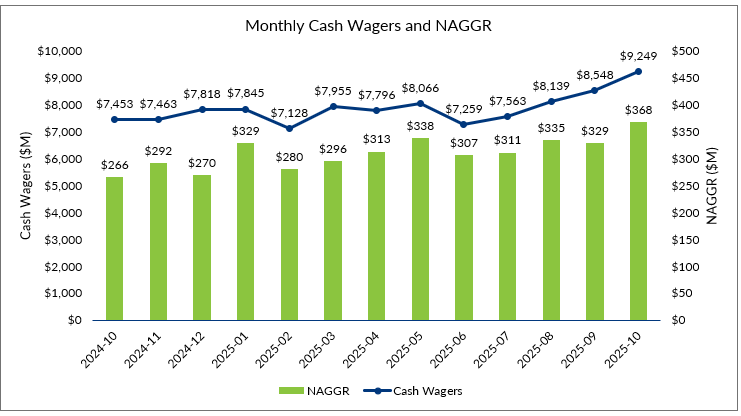
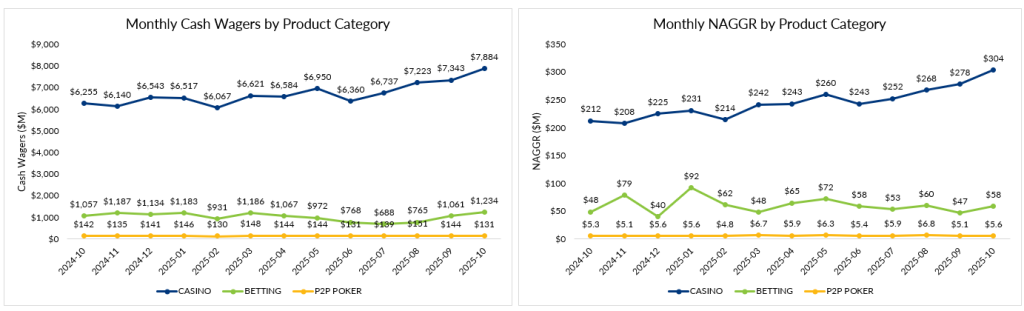
By iGaming, Greenblatt means online casino gaming, which makes up the vast majority of regulated online gambling activity in Ontario. In May, the market’s most lucrative month in history, a new all-time record of $6.95 billion was gambled on online casino, 86% of total gambling activity on licensed platforms. Operators made $259.8 million in revenue from iCasino, 77% of their total gross gaming revenue.

At last year’s SBC Summit North America in New Jersey in May 2024, Greenblatt told CNBC’s Contessa Brewer in a keynote speech that “we are the number one gaming operator in Ontario with 22% market share” across both online casino and online sports betting.

BetMGM expects to hold similar status in Alberta once that province begins allowing commercial operators to do business, slated to be in early 2026.

“Alberta is an area that should play to BetMGM’s strength given its operations in Ontario, which increased market share in the first quarter,” Greenblatt said on Monday. “[We’re] particularly excited for Alberta, which looks still to be on track for a Q1 [2026] launch of both sports betting and iGaming. That should be a province where BetMGM really does flex its muscles, given the strength of our business in Ontario … So we’re really excited, really optimistic for Alberta next year.”

Super Group quitting US, focusing on Canada in North America

Super Group and its various online sportsbook and casino brands have a large Canadian footprint. That will soon be its only online gambling presence in North America.

The company, which owns brands such as the Betway sportsbook and online casinos such as Jackpot City and Spin, announced on July 8 that it will be ending its remaining operations in the U.S. market.

Super Group is making this decision after it shut down Betway’s sports betting south of the border last year, citing a lack of profitability. The parent group retained a U.S. presence by offering online casino gaming via Jackpot City and subsequently also Spin in New Jersey and Pennsylvania.

But, in a statement on Tuesday, the company said that it has decided to complete a full withdrawal from the country after a review of its global priorities, regulatory developments and the U.S. unit’s financial performance. The company is evaluating its strategic options for the exit.

Super Group does not expect the U.S. shutdown to impact its operations in Canada.

“This is a difficult decision, particularly because our U.S. team has worked hard and made progress over recent quarters,” said CEO Neal Menashe in a statement.

“Nonetheless, recent regulatory developments combined with ongoing assessment of capital allocation requirements have led us to believe that our stringent hurdle for return on capital will likely not be met in this market any time soon. We therefore intend to focus capital and resources on markets where we see the greatest opportunity for scalable, sustainable, profitable super growth, with a disciplined emphasis on operational efficiency.”

Across the great divide

Whereas Super Group’s leaders evidently feel that pursuing profitability in the U.S. was no longer viable, north of the border, things are very different for the company.

The company said on Tuesday that it expects the quarter ended June 30 to be the strongest in the company’s history, and it raised the guidance for its ex-U.S. revenue and adjusted EBITDA accordingly.

While it is yet to break down financials by market for that quarter, we know from the previous quarter’s reporting that most of Super Group’s North American revenue is Canadian, and Canadian revenues grew 13% year-over-year in the three months ended March 31.

In Ontario’s regulated market, where it runs Betway and four online casino brands, its revenue grew 2%. In the rest of Canada, where Super Group is reputedly the commercial market leader outside of Ontario, per H2 Gambling Capital data shown to Canadian Gaming Business, revenue climbed 16%. Menashe noted late last year that Jackpot City in particular “continues to be a leading brand across [Canada].”

Super Group is planning to apply for a licence in Alberta when that province begins regulating commercial iGaming in early 2026.

“We learned how we migrate our customers’ databases from Ontario and we’ve learned what maybe we didn’t do correctly,” Menashe told investors and analysts on an earnings call in May. “We will never make the same mistake twice, and that’s how we’ve always been. So, we wait for it. The product’s being built ready, we wait for all the regs [regulations] and we know exactly what we need to do there.”

Canadian gaming supplier Bragg appoints new AI and innovation chief

Bragg Gaming Group has appointed Sportradar senior vice president Luka Pataky as its new executive vice president of AI and innovation.

The Toronto-headquartered gaming supplier said in a release that the hire reflects its commitment to leveraging data, advanced analytics and AI to enhance user experience, player engagement, maximize revenue potential and drive smarter, more efficient online gaming operations.

Pataky will work closely with Bragg’s technology teams to develop a 360-degree AI strategy that integrates artificial intelligence into product development and design, user experience, external communications, safer gambling initiatives and internal processes to drive growth and efficiency.

Pataky joins Bragg from Sportradar, where he spent more than a decade and rose to the position of senior vice president of automated content. In that role at the sports data and content firm, he led the construction and implementation of a production-ready, scalable system that now powers 300,000 sports events per year. Bragg noted he was also instrumental in revolutionizing sports content creation and integrating acquired tech businesses.

Bragg already has a robust AI technology suite, including its AI-powered Games Recommendation System in its Fuze marketing and promotional toolset. It also extensively uses AI to more effectively identify and support at-risk gamblers.

CEO Matevž Mazij called Pataky “the ideal hire” to help Bragg take its AI use to the next level.

“His extensive experience of being at the forefront of this game-changing technology and innovation will help springboard Bragg into the next iteration of our growth,” added the chief executive.

“Bragg has always struck me as a company where technology and innovation are key drivers,” added Pataky. “This is a company which is always pushing the boundaries, using its extensive knowledge and the skills of its teams to create and set new trends. It sits on vast amounts of user data and insight, which we can turn into intelligence that will power next-generation player engagement. Introducing AI at all levels of product and operations will make it perfectly positioned for future growth.”

Fanatics content deal builds on surging US growth

Pataky is Bragg’s second major hire in the space of a few weeks. In early June, the fast-growing supplier recruited experienced former Aristocrat Leisure executive Scott Milford as its new executive vice president of group content. Milford now oversees casino game development and strategy across all of Bragg’s in-house gaming studios and its external content partnerships, with a focus on fueling the company’s growth in the U.S. and beyond.

Bragg reported earlier this year that the company’s U.S. revenue soared by 150% year-over-year, hugely outstripping its overall revenue growth of 7%. The surging growth is largely a result of Bragg significantly deepening and broadening its footprint in the American online casino market.

In January, it announced a partnership with Caesars that includes an exclusive game development collaboration. Last month, Caesars launched the first title under that collaboration in New Jersey.

Last week, the company announced it would be launching its full catalog of online casino games on Fanatics Casino’s platforms in New Jersey, Michigan and Pennsylvania.

Fanatics players in the three states can now play Bragg’s online casino content, including proprietary titles from Atomic Slot Lab, Wild Streak Gaming and Indigo Magic, as well as from Bragg’s multiple studio partners including Incredible Technologies, Bluberi, King Show Games and Sega Sammy Creation. In addition, Boomerang Studios, Four Leaf Gaming and Reflex Gaming will all launch titles on the Bragg RGS later this year.