Search
Choose a style
Dark
Light

Alberta enters the chat in Supreme Court about Ontario player pooling

Alberta wants a say in the Supreme Court case assessing whether Ontario can offer international liquidity for certain forms of iGaming.

The Attorney General of Alberta has asked to intervene in the Supreme Court appeal concerning whether or not Ontario is allowed to pool players of peer-to-peer gaming like online poker and daily fantasy sports (DFS) with other jurisdictions.

Canadian Lottery Coalition members appealed in December

Back in November, theOntario Court of Appeal issued a decision that it would be legal under Canada’s Criminal Code to allow Ontario’s online gambling market to connect players of P2P games with users in other countries.

Weeks later, Manitoba Liquor and Lotteries (MBLL), the British Columbia Lottery Corporation (BCLC) and the Atlantic Lottery Corporation (ALC) all appealed in Canada’s highest court in December. As members of the Canadian Lottery Coalition (CLC), MBLL, BCLC and ALC were intervenors in the reference question that was posed to the Ontario appeals court in early 2024.

Ontario’s online poker and paid DFS play is currently fenced in within the province, but Ontario’s AG, the Canadian Gaming Association (CGA), GGPoker owner NSUS, and FanDuel and PokerStars parent Flutter asked the Ontario court whether Ontario is legally blocked from changing that.

The Ontario court judges determined that international P2P play would be legal. Their interpretation of the Criminal Code’s language also left open the possibility that the Ontario government could strike deals with other provincial governments to allow gamblers to play against each other.

This affects our iGaming plans, says Alberta

Currently, that would mean that iGaming Ontario (iGO) and the Ontario government would have to broker an agreement with another province’s government-run lottery corporation to do so, which seems unlikely.

But Alberta is reputedly mere months away from becoming the second province to open a regulated, commercial iGaming market. iGO President and Chief Executive Officer Joseph Hillier implied to Canadian Gaming Business last fall that Ontario and Alberta could discuss the idea once the latter province’s market is up and running, suggesting “that will be very much a topic of conversation at the table.”

In a formal motion to intervene that was filed in the Supreme Court case last week, legal representatives for Alberta AG (AGAB) Mickey Amery wrote that the AGAB has “a significant interest” in this issue because of the iGaming Alberta Act, the legislation that was enacted last May to allow Alberta to launch regulated iGaming.

“The iGaming Alberta Act allows for provincial regulation of a lottery scheme similar to the ‘proposed model’ in Ontario, which gave rise to the reference question underlying this appeal,” reads Alberta’s filing. “Under the iGaming Alberta Act, individuals outside of Canada are not prohibited from participating in an internet-based gaming site operated by a regulated agent of Alberta, provided that individual is permitted to do so by the laws of their jurisdiction.

“Consequently, this appeal will have a significant impact on determining the legality and operation of the iGaming Alberta Act … The issues relate to the legality and operation of validly enacted provincial legislation.”

Alberta AG intends to argue in favour of cross-border play

The AGAB stressed that its views should be considered by the Supreme Court and that its perspective would be “relevant, useful, and different”.

It stated that when faced with a potential conflict between valid federal and provincial legislation, the legal preference is for a federal statute to be properly interpreted in a way that avoids such a conflict.

“Alberta and Ontario have exercised their constitutional legislative authority to enact provincial internet-based gaming schemes,” Alberta added. “In the absence of clear and express language to the contrary, harmonious interpretations that allow federal and provincial laws to coexist should be favoured.”

Ultimately, Alberta’s AG argued in the motion that it has a fundamental interest in the case because the Supreme Court’s interpretation of the Criminal Code would significantly affect the legality and operation of the iGaming Alberta Act and the duties of the AG’s office.

It also signposted that, if it is granted leave to intervene, it will argue that the relevant section of the Criminal Code should be interpreted “in a flexible and broad manner” so that it does not conflict with valid provincial legislation regulating gaming. “The AGAB’s submissions with respect to these issues will be useful to the court and be different from those of the parties because they will address the effect of this court’s decision outside of Ontario,” added Alberta’s motion.

Like iGO’s Hillier, Alberta Minister Dale Nally has previously voiced a desire to explore pooling players with Ontario.

“We have filed an intervention application and look forward to participating in that process to provide our insights,” Nally told Canadian Gaming Business about the AG’s court motion. “This matter is not expected to impact the timing of Alberta’s iGaming market launch.”

Lotteries claimed nefarious behaviour from Ontario licensees

Alberta’s move to insert itself in the case comes a month after the Atlantic Lottery, on behalf of the CLC, filed a factum on Feb. 13 in which it claimed that Ontario’s idea of international liquidity “flouts” the Criminal Code.

The CLC-member provincial lotteries, which are the only government-authorized online gaming platforms in their respective provinces, also alleged that Ontario-licensed iGaming brands advertise heavily in other provinces despite having no legal recognition as licensed sites in those provinces.

“While the issue today is international liquidity, the next case may involve a province seeking to assert authority to conduct lottery schemes that extend across the country,” said the ALC/CLC filing. “And indeed, even if that is not what Ontario proposes de jure at this time, it is what it proposes de facto given the ubiquity of illegal gambling using international sites among Canadians outside Ontario.

“There is every indication that Ontario means to partner with the international affiliates of current iGO operators who today operate the international sites that illegally solicit Canadians outside Ontario … The undisputed evidence shows that the private gambling operators with whom Ontario has already joined hands use their legal platforms in Ontario as springboards to promote illegal international websites to Canadians outside Ontario.”

The CLC appeal is supported by the Atlantic provinces, B.C. and Manitoba. Loto-Québec filed a motion to join the other three crown corporations as an appellant on March 12.

Ontario has no representation in the CLC. Alberta Gaming, Liquor and Cannabis (AGLC), which will soon be both the regulator and the Play Alberta operator in Alberta’s open market, was an initial member of the coalition when it was created in 2022, but has left in 2024 as the province first began taking firm steps towards launching regulated iGaming.

Higher casino traffic drives small uptick in Loto-Québec revenue

Loto-Québec reported that higher traffic at its casinos and gaming halls was a contributing factor in a small year-over-year increase in revenue through the first three quarters of its 2025-26 fiscal year.

The crown corporation’s financial results for April 1 to Dec. 29, 2025, show that its total revenues reached $2.30bn, up 2.6% from the same period last year. Consolidated net income was flat, up $7.1m (0.6%) to $1.14bn.

The casinos and gaming halls accounted for the largest chunk of the revenues at $976.6m, ahead of lottery games at $721.0m and gaming establishments – which refers to sports betting, video lottery terminals (VLTs), bingo and Kinzo gaming offered outside its gaming halls – at $616.4m.

“Attendance has increased in our casinos and gaming halls, as well as on our gaming website,” said Loto-Québec President and CEO Jean-François Bergeron. “The average spending at our casinos remains stable at around $100 per visit.”

That segment will likely be boosted further in the future, as Loto-Québec announced in December that it will open a new gaming hall in the city of Saguenay in 2027. Gaming lounges are smaller than full-blown casinos, typically offering VLTs, interactive casino games, live entertainment and bar service. The Saguenay location will be the fourth, after similar facilities in Trois-RivièresQuébec City and Rimouski.

Loto-Québec expects $1.5B profit for FY 2025-26

While the casinos and gaming halls segment posted the largest growth of any of those three categories, at 7.7%, lottery segment revenue declined $11m compared to the same period last year. Loto-Québec stated that the decline was partially offset by the “strong performance” of its online gaming arm.

Bergeron said in an interview with CTV News that he expects Loto-Québec will again report a net profit of around $1.5bn for the provincial government by the end of the fiscal year.

“Since coming out of COVID-19, we’ve really seen solid net results,” Bergeron said. “We’ve surpassed the $1.5bn mark for four years running. It’s stable, with steady growth. We’re going to hit the targets we set for ourselves. With just a few weeks left in our financial year, we’re not worried about our targets.”

That echoed the bullish comments Bergeron made in December after the crown corporation’s last financial update. He also emphasized three months ago that Loto-Québec’s online gaming growth is not cannibalizing its land-based gaming operations.

New deals and ventures for Loto-Québec

Loto-Québec reported its latest financials after announcing several new partnerships in recent months.

In December, it unveiled an iGaming deal with Finnish lottery Veikkaus subsidiary Fennica Gaming that will span online casino and einstant lottery games.

Then, in February, it struck a deal with Incentive Games to launch the supplier’s real-money crash and arcade real-money games in Canada for the first time via the company’s distribution deal with Light & Wonder.

Lottery and Québec coalition trade blows

Loto-Québec’s latest modest growth report comes weeks after the Québec Online Gaming Coalition (QOGC) again called on the provincial government to follow Ontario and Alberta in allowing commercial brands to enter the province to compete with the crown corporation. The QOGC claimed Québec is losing out on around $300m in annual tax revenue and doing a disservice to provincial players by not opening up iGaming.

“As more and more Canadian provinces will shift away from the model of a state monopoly, which is completely obsolete when it comes to online gaming, Québec will be isolated and its position will weaken,” QOGC spokesperson Ariane Gauthier told Canadian Gaming Business. “The multiple examples of success in other provinces should pressure Québec to modernize its regulation of online gaming.”

In a statement to Lottery Daily, Loto-Québec Head of Media Relations Renaud Dugas accused the coalition of pushing for online gaming regulation for the purpose of benefiting private out-of-province companies under the pretence of protecting players, and claimed the coalition’s operators are offering products “illegally”. In response, the QOGC accused Loto-Québec of “spreading inaccurate information”, stating that the coalition’s members do not currently operate in Québec and so cannot be labeled illegal.

The QOGC is comprised of U.S. gaming giant DraftKings and FanDuel owner FlutterBetMGM co-parent and Sports Interaction owner Entain, leading Super Group brand BetwayBetRivers owner Rush Street InteractiveCanadian operator Bet99, major supplier Games Global and Apricot Investments.

Betsson buys Casino Days operator Rhino Entertainment Group

Swedish gaming operator Betsson is set to significantly expand its cross-Canada online gaming portfolio and its regulated iGaming business in Ontario by acquiring several brands already active in the country.

The company announced on Thursday that it has agreed to buy the Canadian B2C assets of Rhino Entertainment Group for approximately C$100m, including the Ontario-licensed online casino platform Casino Days.

As well as Rhino’s B2C business in Canada, Betsson will acquire Rhino’s proprietary front-end and middleware technology assets, which it expects to strengthen its B2B offering and drive incremental licensing revenue.

The total value of the deal is €64.5m, equivalent to around C$101m.

Two Ontario iGaming brands, eyes on Alberta?

Through the deal, Betsson also takes ownership of other Canadian-facing Rhino brands LuckySpins and Big Boost casino. Those two sites do not accept players in Ontario but are available elsewhere in Canada underKahnawake Gaming Commission licenses.

In Ontario specifically, Betsson will now have a two-pronged B2C approach, as it has offered the Alcohol and Gaming Commission of Ontario-licensed Betsafe brand in the province since 2023 via a subsidiary.

Betsson said the Rhino business acquisition positions it well to expand into additional Canadian provinces as local regulatory frameworks continue to evolve. Alberta is expected to launch its own regulated iGaming market in mid-2026.

The company forecasted that the acquisition, which it anticipates will close in Q2 or Q3 2026, will help it scale up in Canada and generate an estimated €13.7 million (C$21.5m) in adjusted EBITDA on a proforma basis.

Rhino divesting entire B2C operations

Rhino Entertainment Group stated on LinkedIn that the deal is a part of a decision to divest its entire B2C operations to Betsson and Alta Group.

“For Rhino, this transaction unlocks significant value from the B2C business we have built while allowing us to sharpen our focus on the next phase of growth and value creation,” said the company.

SBC Summit Canada 2026 prepares the industry for big changes ahead

As Canada’s gaming landscape enters a decisive period of expansion and reform, SBC Summit Canada 2026 will bring leadership, regulation and commercial strategy into sharp focus.

Taking place at the Metro Toronto Convention Centre from May 19–21, the rebranded summit will feature a three-stage conference program, with tracks dedicated to Sports Betting & iGaming, Affiliates & Advertising, Cybersecurity, Land-Based & Lottery, Player Protection and Payments & Compliance.

Across two days, the program will bring together leading operators, affiliates, suppliers and regulators to address the most pressing challenges facing Canadian gaming. Sessions will tackle preparing for Alberta’s imminent market launch and the national implications of Bill S-211, as well as the recalibration of betting advertising. It will also examine the growth opportunities presented by the 2026 FIFA World Cup and whether Ontario will ultimately be allowed to offer international peer-to-peer gaming liquidity.

“2026 marks a pivotal moment for the Canadian market. Global sporting events, potential new launches, and national regulation are set to reshape the industry in ways never felt before,” said Rasmus Sojmark, CEO and Founder of SBC.

“This year’s conference ensures the industry is ready for what’s coming; providing the clarity and commercial guidance businesses need to turn this moment of change into an opportunity for growth.”

Regulation at the core

Regulation will sit at the core of the discussions, both from a policy perspective and in terms of its commercial impact. 

On the policy side, panels will examine Alberta’s progress towards a framework modelled on Ontario’s regulated market, unpacking proposed tax structures, enforcement priorities and the practical realities of launch. Experts will also dive into Bill S-211, the proposed national sports betting advertising act being debated in Parliament, and discuss whether the Canadian Gaming Association’s Code for Responsible Gaming can deliver clearer standards and greater long-term stability for the market.

On the commercial side, sessions will focus on what changes to advertising policy mean for operator and affiliate strategy, how brands can navigate platform restrictions on Meta and Google, and what the ultimate future of Bill S-211 may mean for affiliates.

A market primed for strong growth

The agenda will also explore some of the most significant growth opportunities currently available to Canadian operators.

The 2026 FIFA World Cup, co-hosted in Canada, will be examined in depth not just as a short-term acquisition opportunity, but as a platform for building long-term player retention. Additionally, sessions will explore the growing opportunity in daily fantasy sports and the implications that could follow if Ontario is permitted to pool poker and DFS players across borders.

The summit’s dedicated Player Protection Symposium will examine how brands can use data insights and AI to increase protections for at-risk players. Sessions will also explore whether Canada’s province-by-province regulatory model is creating unintended competitive pressures that benefit grey market operators, and how personalized game mechanics are testing the limits of existing player protection frameworks.

Offering an overview of Canada’s payment landscape, the Payments & Compliance track will explore how companies can introduce faster payment flows without compromising anti-money laundering standards, fraud prevention or regulatory compliance, while the Cybersecurity Symposium, produced by the Ontario Lottery and Gaming Corporation (OLG), will focus on strengthening system resilience and protecting customer data against evolving threats.

Leaders take to the stage

Industry leaders taking the stage include Jared Beber (CEO, Bet99), Paul Burns (President/CEO, Canadian Gaming Association), Johnny Capo (CEO, Betstamp), Duncan Hannay (President & Chief Executive Officer, OLG), Joseph Hillier (CEO, iGaming Ontario), Dallas McCready (CEO, Atlantic Lottery Corporation) and Minister Dale Nally (Minister for Service Alberta & Red Tape Reduction).

SBC Summit Canada will convene over 3,000 senior executives from across the Canadian gaming ecosystem. Across three days, delegates can expect focused networking events, executive-level discussions and a busy exhibition floor designed to facilitate real commercial connections.

Secure your tickets to SBC Summit Canada

VIP Event Pass– Offers access to the show floor, all conference sessions, and evening networking sessions for C$995

Group VIP Pass– Get VIP Passes for just C$795 each when you buy three or more passes – perfect for bringing the team!

Operators and affiliates can apply for complimentary passes.

Wazdan expands Ontario reach with Maverick Games launch

Online casino games developer Wazdan now supplies content to licensed operator Maverick Games in Ontario.

Via a partnership with North American platform provider Green Brick Labs (GBL), which owns Maverick Games, the platform will launch a slate of Wazdan’s top-performing games, facilitated by an integration with GBL’s aggregation platform.

Titles such as Mighty Fish: Blue Marlin, 36 Coins, Mighty Wild: Panther Grand Diamond Edition and Mighty Wild: Gorilla will launch on the licensed online casino site. Maverick Games also gets access to Wazdan’s engagement-boosting mechanics such as Cash to Infinity, Sticky to Infinity and the Hold the Jackpot bonus game.

“Going live with Maverick Games through our partnership with GBL marks an exciting moment for Wazdan in Ontario,” said Wazdan Head of Account Management Magdalena Wojdyla. “Our innovative titles and engagement-boosting features are designed to deliver memorable experiences for players, and we are confident this collaboration will help Maverick Games strengthen its position in one of North America’s most dynamic markets.”

Green Brick Labs UX/UI and Product Manager James Gummerson added that the launch demonstrates how the firm’s technology helps supply operators with diverse and quality online casino content seamlessly, thereby accelerating the growth of both suppliers and operators and providing a better experience for players.

Wazdan seals marquee FanDuel deal

Wazdan supplies mobile-first games to operators in more than 30 regulated markets and releases 40+ unique slot titles annually. It has been licensed as an iGaming supplier in Ontario since 2022 and first launched its games in the province in April 2023 with Caesars. In 2024, it expanded into Québec through a deal with Loto-Québec.

The company’s latest operator partnership in Ontario comes on the heels of a new collaboration with FanDuel Casino in the province (as well as the state of Michigan) that uses Light & Wonder’s aggregation platform.

Wazdan also works with the likes of bet365, Fanatics Casino, NorthStar Gaming, PlayStar and Rush Street Interactive in various North American markets.

Maverick Games settles into Ontario

Meanwhile, for Maverick Games, the Wazdan partnership is the latest move to solidify its presence in Canada’s only regulated open iGaming market.

The company received an operator’s license in May 2025 and added an online sports betting platform in the province, powered by Delasport’s technology. It teamed up with mkodo’s GeoLocs last year for geolocation compliance services in Ontario.

Great Canadian selling Elements Casino Surrey in eighth First Nations deal

Great Canadian Entertainment has agreed to sell Elements Casino Surrey in British Columbia to the Semiahmoo First Nation, its eighth sale of a B.C. casino to an Indigenous group in the last two years.

Semiahoo’s SE-MI-AH-MU Development Corporation has entered into a definitive agreement of purchase for the casino, which stands adjacent to the Fraser Downs racetrack. While Fraser Downs stopped running races last August, the casino remained open with 500 slot machines.

Great Canadian’s board of directors unanimously approved the transaction, but it remains subject to financial commitments and approval from authorities and the City of Surrey, which owns the casino’s real estate.

First Nations turn to gaming as part of their future

As it did for its other First Nations sales, Great Canadian will provide transition services to SE-MI-AH-MU for up to one year post-closing.

“Today’s announcement marks the eighth agreement we have executed with B.C.-based First Nations for the sale of our B.C. operations,” said Great Canadian Chief Executive Officer Matt Anfinson. “We are thrilled that the Semiahmoo First Nation is eager to enter the province’s casino sector with the purchase of Elements Casino Surrey. Our next step will be to continue to work with the SE-MI-AH-MU team to timely close this transaction and then work with SE-MI-AH-MU and the Elements Casino Surrey team members for long-term success.”

Semiahmoo First Nation is the home of the Semiahma people, who have lived along the shores of Semiahmoo Bay on what is now the border of B.C. and the U.S. state of Washington for thousands of years. Its traditional territories include parts of Surrey and White Rock, B.C., and northwestern sections of Washington.

The First Nation’s Chief Harley Chappell said that the acquisition marks a pivotal step in strengthening Semiahoo’s economic opportunity and self-determination.

“Through this new venture, we look forward to creating meaningful benefits for our people, supporting employment opportunities in the region, and contributing to the long-term well-being and prosperity of our community,” added Chief Chappell.

Great Canadian winding down BC operations

One of Canada’s largest brick-and-mortar gaming companies, Great Canadian operates a dozen casinos in Ontario as well as two in Nova Scotia and one in New Brunswick. At the start of 2024, it had nine B.C. casinos under its umbrella, but it has either already sold or agreed to sell eight of those.

The Vancouver Island-based Snuneymuxw First Nation has bought five Great Canadian properties: Casino Nanaimo, Elements Casino Victoria, Chances Maple Ridge, River Rock Casino Resort, and Great Canadian Casino Vancouver, agreeing to buy the last of those in December. That quintet of acquisitions will establish Snuneymuxw as Canada’s largest Indigenous-owned gaming operator by revenue.

To Chief Chappell’s point, Snuneymuxw’s Petroglyph Development Group’s CEO Ian Simpson told Canadian Gaming Business as far back as fall 2024 that he expected to see other First Nations follow Snuneymuxw’s lead by buying casinos to reclaim their traditional land and drive economic growth for their communities.

“Other nations in B.C. and even across Canada can follow that same path that we’ve gone down to acquire these gaming assets for the benefit of their own nations,” said Simpson 18 months ago. “I’m quite confident we’ll see that in the not-too-distant future.”

Since then, Great Canadian has also agreed to sell the casino operations and real estate at Hastings Racecourse & Casino to the Tsleil-Waututh Nation. Like Fraser Downs last summer, Hastings ended racing operations in December after more than 130 years, following the provincial government’s announcement that it was pulling funding for horse racetracks.

Great Canadian is also selling off Element Casino Chilliwack to the Ts’elxwéyeqw Tribe.

Will Great Canadian retain any BC presence?

Founded in B.C. more than 40 years ago, Great Canadian began its life as a casino operator in Vancouver and Richmond before expanding across B.C. and into other provinces to the east. But, five years after the then-publicly listed company was acquired by private equity firm Apollo Global Management in 2021, the Surrey sale will eliminate Great Canadian’s presence in the Metro Vancouver area.

Assuming all its outstanding deals close, the Chances Dawson Creek casino in the remote northeastern B.C. municipality on the border with Alberta will be Great Canadian’s only remaining property in the province.

If there are any plans for Great Canadian to sell the Dawson Creek location and end its operations in B.C. entirely, they have not been made public.

Betty moves into iBingo with Ontario bingo hall acquisition

Online slots operator Betty is expanding into peer-to-peer online bingo in Ontario.

Betty Canada announced on Tuesday that it has acquired Kirkland Lake Bingo Hall in Northern Ontario to support its strategic move to add regulated online bingo to its online casino operations. The transaction closed late last year and Kirkland Lake Bingo will continue to operate under its existing name, with all current employees retained.

Betty said that owning a long-standing, community-rooted bingo hall enables it to operate within Ontario’s regulated charitable bingo framework.

“This acquisition is a strategic step as we launch our iBingo offering in Ontario,” said Betty Canada Chief Executive Officer Chavdar Dimitrov. “We’re excited to be innovating in a regulated space in a way that lets our growth translate into meaningful charitable funding for local communities.”

Betty Canada CEO excited by iBingo opportunity

Speaking to Canadian Gaming Business at the end of January, Dimitrov signposted the expansion into iBingo, which he had referenced as a possibility for Betty as far back as mid-2025.

“It’s a new vertical that we’ll be launching,” Dimitrov said in an interview. “It’s going to put us in a different space, the charitable space. We’re pretty excited about it. We worked hard on that for the last 12-18 months. This could be another big breakthrough for Ontario.

“We are actively exploring the retail market, especially in the context of the charitable gaming space. I know it’s somewhat limited in terms of what’s available out there and granting licenses, so we’re working on how we can penetrate that space as well. But we’re definitely interested in diversifying our portfolio.”

The acquisition positions Betty to compete with Ontario’s two existing charitable gaming-affiliated iBingo operators: Delta Casino, the online arm of Delta Bingo and Gaming, and Casino Time.

Betty’s iGaming revenue will support charities

The Kirkland Lake Bingo charitably gaming hall has been serving the Kirkland Lake community since 1998. An undisclosed portion of all of Betty’s iGaming revenue (not only iBingo revenue) in Ontario will be directed to Kirkland and Area Bingo Association licensed charities under the province’s regulated charitable gaming framework.

Proceeds generated through Betty’s charitable gaming will be distributed locally in Kirkland Lake, supporting community organizations across health, youth, service, and recreational sectors.

“This is a long-term investment in the Kirkland Lake community,” added Dimitrov. “It’s about keeping a community institution open, supporting local charities, and making sure bingo remains relevant and accessible for the next generation of players.”

Alberta awaits for Betty

Dimitrov was speaking to Canadian Gaming Business shortly after Betty Canada reported that the slots-first online casino brand roughly tripled its net revenue (up to C$13m) and its active player base (134,000) from January to December 2025.

On top of that Ontario momentum, Betty has applied for an iGaming operator license in Alberta. Dimitrov said that while Betty will lead with its slots-first mix there, as it did in Ontario, it is interested in establishing some kind of omnichannel gaming experience.

“We have a proven formula for Ontario, slot-first, and I don’t think we’re gonna enter the [Alberta] market with any new mix of verticals,” Dimitrov told Canadian Gaming Business.

“But we think there is room for innovation there as well, that we can bring our know-how from the online business into retail. The physical spaces allow for interactive entertainment. But this is still early stages, one of our projects for 2026. I don’t think in Alberta we’re going to try to do it from the get-go, because they’re still figuring out how the regulation works. If we put retail in the mix, it gets even more complicated.

“But, definitely, the retail angle is something we’re interested in. Who knows, maybe Alberta will make it easier to enter that space, and we might get ahead of ourselves and do Alberta first? There are some conversations that are happening as to what our offering could look like.”

OLG’s iGaming posts strong growth, but what is its market share?

Ontario Lottery and Gaming Corporation (OLG) finally reported its 2024-25 fiscal year results, and it was pleasantly surprised by how well its iGaming division fared amid dozens of licensed competitors.

OLG has three major lines of business: retail lottery at more than 10,000 retailers across the province, land-based gaming at 30 casino facilities and 37 charitable gaming centres, and digital gaming, which includes iCasino, online sports betting, and iLottery through OLG’s online and mobile platforms such as OLG.ca and PROLINE+.

OLG misses bottom-line targets

Although it is now March 2026, OLG’s new reporting covers fiscal year 2024-25, the 12-month period from April 1, 2024, to March 31, 2025.

Across that time, combined proceeds for those three lines of business were $9.31bn, down by a hair from the $9.32bn in 2023-24. Total revenues were $4.8bn, up $108m or 2% compared to the prior year. OLG’s net profit to the province (NPP) fell 5% year over year to $2.25bn, although the report stressed that it would have been up 3% when adjusted for a one-time provision “related to an ongoing legal matter.”

Those total proceeds, total revenues and NPP all fell short of what was budgeted for 2024-25. Proceeds missed target by $585m (6%), revenues were off by $286m (6%) and NPP was 14% lower ($376m) than expected. Even without the legal provision, net proceeds to the province still would have been $187m (7%) below budget.

As well as its $2.25bn in NPP, OLG contributed around $1.3bn to various sectors of the community last year, including to lottery retailers, First Nations, municipalities and the federal government. OLG also reported a new annual record in charitable gaming proceeds and NPP ($458m and $38m, respectively), which yielded record annual payments to Ontario charities of $111m.

iGaming performs above expectations

Other than its billion-dollar contributions, OLG’s biggest shining light was the growth of its digital gaming operations. While the crown corporation’s overall revenue and contribution to the province were flat, its iGaming and iLottery division beat expectations to report record revenues.

Proceeds on OLG.ca and PROLINE+ increased $132m or 18% to a new record of $882m. That includes net win from online casino and digital sports betting and iLottery sales before the deduction of prizes. OLG noted that performance was 8% above the target it had set for the 2024-25 year.

iGaming revenue grew 16% year over year to $731m (7% above projections) and NPP soared 27% to a new high of $417m (23% over budget).

The crown corporation credited higher player counts and the launch of several new iCasino products as factors in the jump. Between April 1, 2024 and March 31, 2025, OLG launched more than 300 new games on OLG.ca and also rolled out several initiatives such as a new ‘Arcade’ online casino category, and the number of average monthly active digital players rose by 19% year over year.

Ontario Lottery looks to level up amid competition

OLG stressed that its iGaming growth came despite “continued pressure” to compete for players in Ontario’s highly competitive market against internationally recognized, multi-jurisdiction brands. As of the time of writing, Ontario hosts 48 licensed commercial operators, running a total of 82 approved gaming sites.

But while OLG appears to be acquitting itself well in North America’s busiest regulated iGaming market, the crown corporation says it will continue to strive for improvement.

“As we look to engage the next generation of players — who are more digital-savvy and socially conscious — we are also developing more personalized proactive supports that meet players where they are,” said OLG President and Chief Executive Officer Duncan Hannay. “We are growing our business by introducing new products and improving speed-to-market across all digital categories.”

Reflecting on OLG’s land-based gaming dip, wherein proceeds fell 3% to $3.82b (10% below the budgeted target) and the revenue and NPP missed projections by 10% and 11%, the crown corporation cited numerous “risks to casino gaming”, such as economic pressures, increased competition for in-person players’ time and money, the growth of iCasino.

To try to mitigate those risks, the lottery stressed it is continuing to pursue omnichannel opportunities and partnerships that connect land-based gaming with online play. OLG’s report directly cited an intention to focus on certain game categories such as live casino that have “mass appeal,” as well as ensuring it can offer games from as many major suppliers in Ontario as possible.

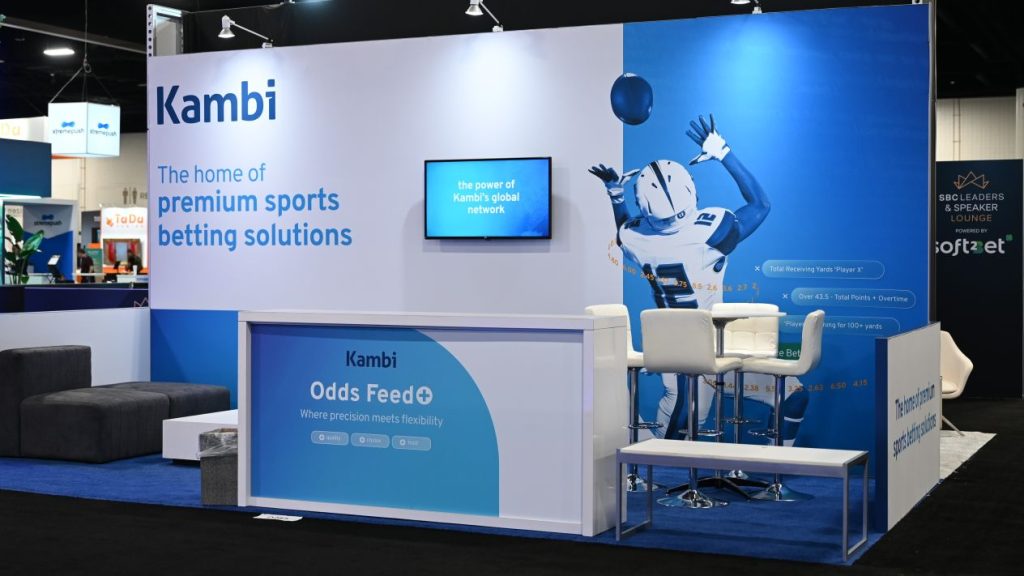
At the back end of the 2024-25 fiscal year, OLG announced that global online betting technology supplier Kambi would take over from La Française des Jeux (FDJ) as its omnichannel PROLINE sportsbook provider, although the revamped sportsbook did not ultimately launch in the market until late last month.

What is OLG’s iGaming market share?

Officials from both Kambi and OLG have said that they believe the PROLINE upgrade will help OLG not only stay competitive in the provincial iGaming market but even grow the lottery’s sports betting market share.

As for what that market share is now, it’s difficult to say. Comparing the Ontario lottery’s reporting with the wider iGaming Ontario (iGO) commercial online gambling market is tough for several reasons.

While OLG’s reporting is nearly 12 months out of date, iGO’s last update two weeks ago gave numbers for January 2026. OLG’s licensed competitors took more than $98bn in wagering volume from Jan. 1 to Dec. 31, 2025, and made more than $4bn in non-adjusted gross gaming revenue. There’s also the fact that OLG’s digital category includes iLottery, which iGO operators do not offer.

Removing iLottery, OLG’s gross gaming revenue from iGaming was $585m from April 1, 2024, to March 31, 2025. iGO reported a total of $3.8bn in non-adjusted gross gaming revenue for the same period, which would peg OLG’s rough market share at around 15%. That is down from an estimated 20% for the previous-year period via the same crude calculation method.

bet365 named official sports betting partner of UFC in Canada and US

British sportsbook bet365 is the new official sports betting partner of Ultimate Fighting Championship (UFC) in Canada and the U.S. in a deal that will tie the two brands closely together across North America.

The Ontario-licensed online sportsbook and casino has signed a multi-year deal with the mixed martial arts organization that will integrate bet365 into every UFC event through broadcast and digital channels and social media, where UFC has more than 330 million social media followers across various platforms. The sports betting operator will also have a presence at live fights and other events.

“This partnership with UFC marks a defining moment for bet365 as we accelerate our growth globally and deepen our commitment to sports where live action and fan engagement are inseparable,” said bet365 Head of Development Trip Stoddard. “UFC’s always-on event calendar and highly engaged global fanbase create a powerful environment for real-time betting, and our industry-leading product depth uniquely positions us to elevate how fans experience every fight.”

The partnership will officially launch this weekend with UFC 326: Holloway vs. Oliveira 2 on Saturday, March 7, at T-Mobile Arena in Las Vegas. The main card will be available live in Canada on Pay-Per-View starting at 9 p.m. ET, with the late prelims airing on Sportsnet and TVA Sports at 7 p.m. ET. In the U.S., UFC began an exclusive long-term broadcast agreement with Paramount+ this year.

In-stream betting, where available

UFC said in a press release announcing the bet365 deal that its fight-by-fight format “naturally drives in-play wagering and live odds engagement” and that MMA continues to rank as one of the world’s most-bet-on sports.

In jurisdictions like Ontario and the various U.S. states in which bet365 is authorized and licensed as a gambling platform, live bet365 odds and betting tickers will be integrated within UFC streams. These kinds of sports streaming betting integrations have become more popular in the U.S. in recent years, with the likes of the NBA and the PGA Tour embracing live odds in partnership with major sports betting operators in recent times.

UFC already has a betting partnership, of sorts. Its parent company TKO Holdings signed a U.S.-facing deal with leading prediction market company Polymarket in late 2025 that included a feature allowing Paramount+ stream viewers to interact with real-time fight market changes.

Now, it has its official sports betting partner.

“bet365 is a natural fit for UFC because they understand fight fans and how they engage with the sport in real time,” said TKO’s Senior Vice President of Global Partnerships, Nicholas Smith. “This partnership enhances the viewing experience by providing fans with deeper insights, dynamic odds, and more ways to engage responsibly with every bout, from the opening bell to the final decision.”

UFC’s complicated relationship with betting

UFC’s betting and prediction markets partnerships and streaming integrations come while its own fights have been placed under intense scrutiny on more than one occasion in recent times.

Just weeks before it announced the Polymarket partnership in November, UFC cut ties with fighter Isaac Dulgarian after he was accused of throwing a fight against his underdog opponent Yadier del Valle amid suspicious betting activity spotted by integrity watchdog Integrity Compliance 360. Although he was the firm favourite, Dulgarian lost via submission in round one.

Then, in late January, UFC Chief Executive Officer Dana White canceled a bout on the UFC 324: Gaethje vs. Pimblett undercard after the matchup between Alexander Hernandez and Michael Johnson was also flagged for match-fixing concerns.

Ontario’s gambling regulator, the Alcohol and Gaming Commission of Ontario (AGCO), briefly banned betting on UFC fights in late 2022, stating that UFC did not meet its betting integrity requirements as it did not prohibit all insiders from betting on its events. The AGCO began allowing bets on UFC again weeks later after the UFC announced it had tightened its insider betting policies.

Circa’s ‘At Par’ $1 offer attracts 15,000 Canadians to Vegas in a month

When the owner and Chief Executive Officer of Circa Resort & Casino, Derek Stevens, launched his “At Par” promotion in January, he had one clear goal in mind: Bring Canadians back to Las Vegas.

It seems to have gone pretty well so far.

On Wednesday, Circa announced that the program, which treats Canadian dollars as if they were U.S. dollars with a $1-for-$1 exchange rate, attracted more than 15,000 visitors in its first month to Stevens’ three casinos, which also include the D Las Vegas and Golden Gate Hotel & Casino.

A spokesperson for Circa told Canadian Gaming Business that all 15,000 people showed an active Canadian passport or Canadian driver’s license to claim the offer. The spokesperson added that the three properties would normally see about 4,000 to 5,000 visitors per month.

Those 15,000 Canadian visitors translated into around 2,700 hotel room bookings.

“‘At Par’ has created real momentum with our Canadian guests right out of the gate, and that means a lot to me personally given my lifelong connection to Canada,” said Stevens, who grew up in Grosse Pointe, Michigan, just across the Detroit River from Windsor, Ont. “The turnout has been terrific.”

Vegas misses Canadians

The “At Par” commitment runs until Aug. 31 on select gaming, hotel, beverage and entertainment offerings and allows people to use Canadian dollars as if they were U.S. dollars. So, instead of the real exchange rate, which would currently get you 73 U.S. cents for every $1 Canadian dollar, the promotion offers US$1 for C$1.

The offer also allows Canadian guests who show valid ID to redeem up to C$500 at the slots and spend it as if it were US dollars. Currently, C$500 would get you around US$367 in a standard exchange, so Canadians are effectively getting a discount of more than 25%.

Stevens introduced the offer amid the highly publicized drop in tourism from Canada to Vegas.

The Las Vegas Convention and Visitors Authority (LVCVA) estimated that while the total number of visitors to Vegas between January and November 2025 dropped 7.4% year over year, there was a roughly 24% decline in visitors from Canada, which has historically been Vegas’ largest international market. Other Nevada casino operators such as Caesars and MGM Resorts have lamented the comparative lack of Canadians in public statements numerous times over the last nine months or so.

“Tourism has slowed down, some of it has to do with the cost of flights, the exchange rate,” Stevens told Canadian Gaming Business in January, at the time he introduced the offer. “We miss Canadians. Even if we get a few people, we just want to make sure all Canadians know that we miss you and we want you back.”

So far, so good.