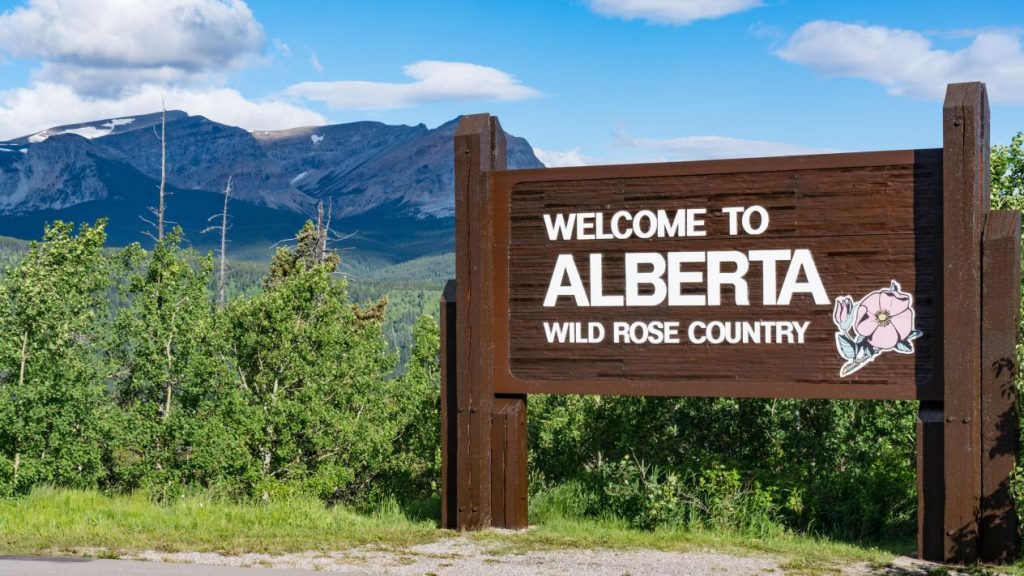
The commercial Alberta iGaming market launched on July 13, and a total of 22 online gambling sites run by 15 different operators entered Canada’s second regulated online gambling province on day one.
Ultimately, dozens of companies will launch online sports betting or online casino to compete with the government-run Play Alberta platform, in a similar market model to the one Ontario has operated for the last four years.
For more information about Alberta’s market, from regulatory set-up to tax rate, advertising, and more, check out our Alberta iGaming explainer.
Which Alberta online casinos and sportsbooks are licensed?
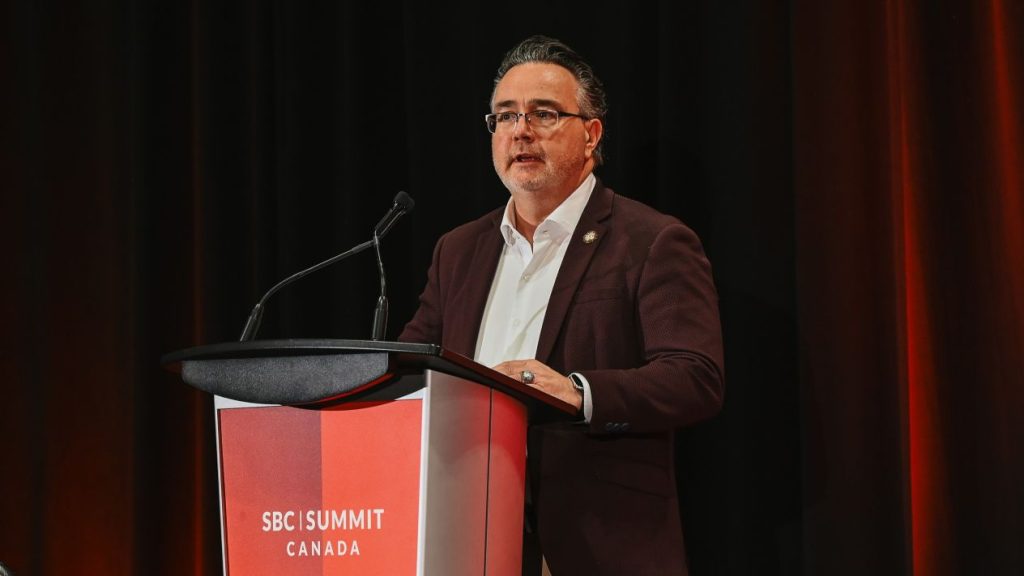
Alberta Minister Dale Nally said at SBC Summit Canada in May that he believes as many as 70 operator sites have expressed interest in being in the market.
As of July 10, 2026, the market regulator Alberta Gaming, Liquor and Cannabis (AGLC) lists a total of 50 registered operators, including the government-owned Play Alberta site run by AGLC. The newest additions include names such as 888, PENN Entertainment’s Hollywood Casino, TonyBet, and most recently Kaizen Gaming’s Betano
It’s worth noting that the regulator lists several brands that share a parent company and others that will offer multiple sites. The number of operating companies is hovering slightly above the 30 mark, while the number of individual licensed sites is more than 50.
The list includes numerous big-brand giants of U.S. and Canadian sports betting and iCasino, European companies looking to enter the fray, smaller Ontario market players, multiple First Nations brick-and-mortar casinos, and more.
Here’s the full list of which operators are registered, as of the latest update:
Apollo Entertainment (seven brands: Captain Cooks Casino, Casino Classic, Golden Tiger Casino, Grand Mondial Casino, Luxury Casino, Yukon Gold Casino, and Zodiac Casino)
Bally’s (two brands: Bally Bet and Monopoly Casino & Sportsbook)
Which gaming suppliers are approved to work in Alberta?
As well as the 50ish operator sites, dozens and dozens of gaming content and technology suppliers have been approved to work with Alberta operators, including (but by no means limited to):
Since the province confirmed the July 13 launch date at the end of March, executives at numerous gaming companies have spoken publicly about their hopes and their Alberta iGaming launch plans on earnings calls:
BetRivers to target online casino players
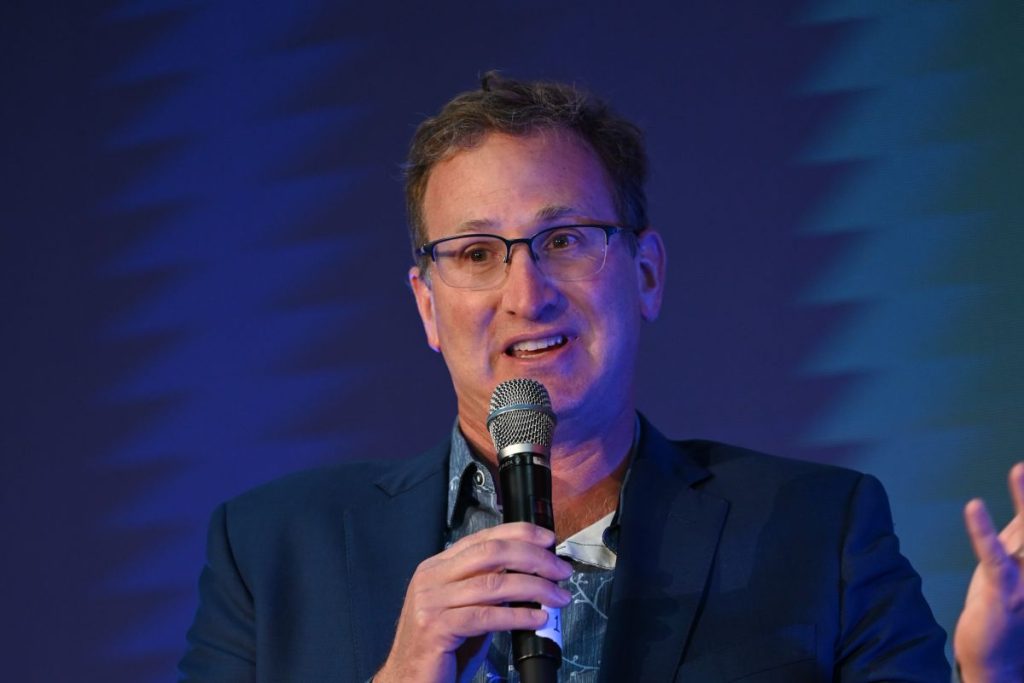
Rush Street Interactive (RSI) took BetRivers live on day one on July 13. RSI Chief Executive Officer Richard Schwartz said on an April 28 earnings call that Alberta iGaming represents a significant expansion opportunity for the online casino-focused BetRivers operator. He added that RSI will take a “deliberate, measured approach to market entry”, focused on sustainability.
The company does not expect Alberta to be profitable in 2027, but Schwartz suggested the new market will add “some modest revenue” in the back half of the year. RSI has already baked the projected impact of its Alberta launch into its increased revenue and EBITDA guidance for the full year 2026.
Schwartz added that RSI expects to begin investing in Alberta-related marketing and brand-building in the coming weeks, and that the company is planning “significant investments” in the province.
RSI CEO Richard Schwartz. Image: SBC
Meanwhile, RSI President and Chief Financial Officer Kyle Sauers added on the call that RSI is expecting Alberta iGaming to be very competitive, given the number of interested operators and existing grey-market brands. But the company is confident that its position in Ontario sets it up well for success in Alberta.
“Ontario has been a great market for us, we’ve grown really nicely,” Sauers added. “We’re taking share there, but we’re still relatively small in the scope of the entire market. That’s probably a good target for us early on. I think one of the benefits for us, even though we’re growing much faster than the industry, is that there are a lot of players who still don’t know who BetRivers is in North America. There’s a lot of opportunity for us to go after players who maybe haven’t played iCasino before.”
Caesars to launch triple-pronged attack
Caesars launched three online gaming brands in Alberta on July 13: Caesars Palace Online Casino, Caesars Sportsbook & Casino and Horseshoe Online Casino. It already offers all three in Ontario and four U.S. states. Caesars Palace and Horseshoe are standalone iCasino apps.
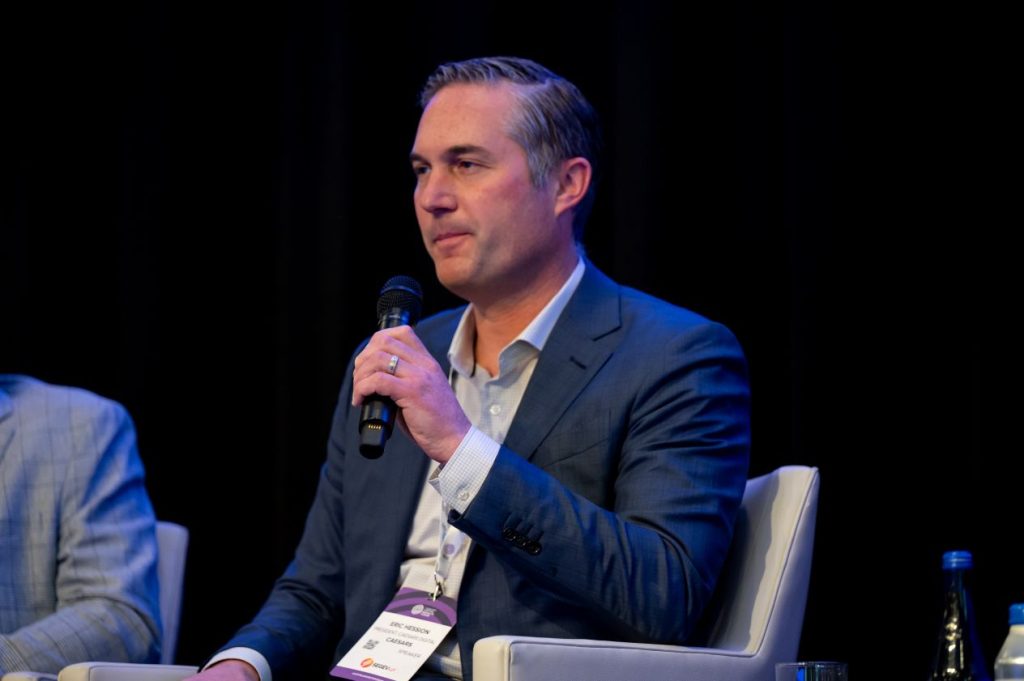
Caesars Digital President Eric Hession said on an April 28 earnings call that Caesars’ mobile products are in a much better place now than they were when Ontario launched four years ago. Throw in the fact that all three will launch at once in Alberta, unlike the staggered rollout that occurred in Ontario, and Hession suggested that the company knows exactly how it wants to attack Alberta iGaming.
“It’s a good opportunity,” Hession said. “[Alberta] actually has a fairly high average wealth per person, but it is on the smaller side in terms of the size of the province. That said, it’s both sports and iCasino, so we’re very optimistic that it’ll be a great market.
“I would say, in terms of our performance in Ontario, it’s kind of been middle down the road. Our app is significantly improved from when it was when we launched in Ontario. We’ll be putting a much more comprehensive launch plan together that will really go after the sports as well as the casino market, and we’ll launch with the Horseshoe and Caesars Palace brands. It’ll be a much more significant plan.”
Caesars Digital President Eric Hession. Image: SBC
theScore Bet expecting more Day 1 competition than Ontario
PENN Entertainment extended theScore Bet and theScore Casino to a second province, taking advantage of the fact that the brand is already well-known in Alberta (and elsewhere) as a sports media app.
“We feel really good about our launch there,” PENN Chief Technology Officer Aaron LaBerge said on an earnings call on April 23. “Obviously, theScore brand in Canada is very strong. It’s the number one media sports brand in market.”
PENN CEO Jay Snowden divulged that PENN is budgeting for a loss of roughly C$27m in 2026 directly attributable to the Alberta launch. Ontario is PENN Interactive’s strongest market in North America in terms of market share and contribution margin, said Snowden, who said he expects similar results in Alberta.
LaBerge did stress, though, that he knows that Alberta iGaming will be significantly more competitive on day one of the market than Ontario was. Around a dozen operators went live on the April 4, 2022, launch date in Ontario.
“When we launched in Ontario, it was a lot less competitive,” said the CTO. “There are a lot more applicants and people in market for Alberta. Of course, leaning on the theScore brand is going to help us break through some of that noise. We’re going to leverage all of our assets and we’re expecting a very successful launch.”
In addition, PENN also introduced Hollywood Casino to Alberta, the online casino brand that uses the name of one of PENN’s U.S. brick-and-mortar casino groups. Hollywood Casino launched in Ontario earlier in 2026, something that then-PENN Interactive Vice President of OperationsJason Birney told Canadian Gaming Business last year could be on the cards.
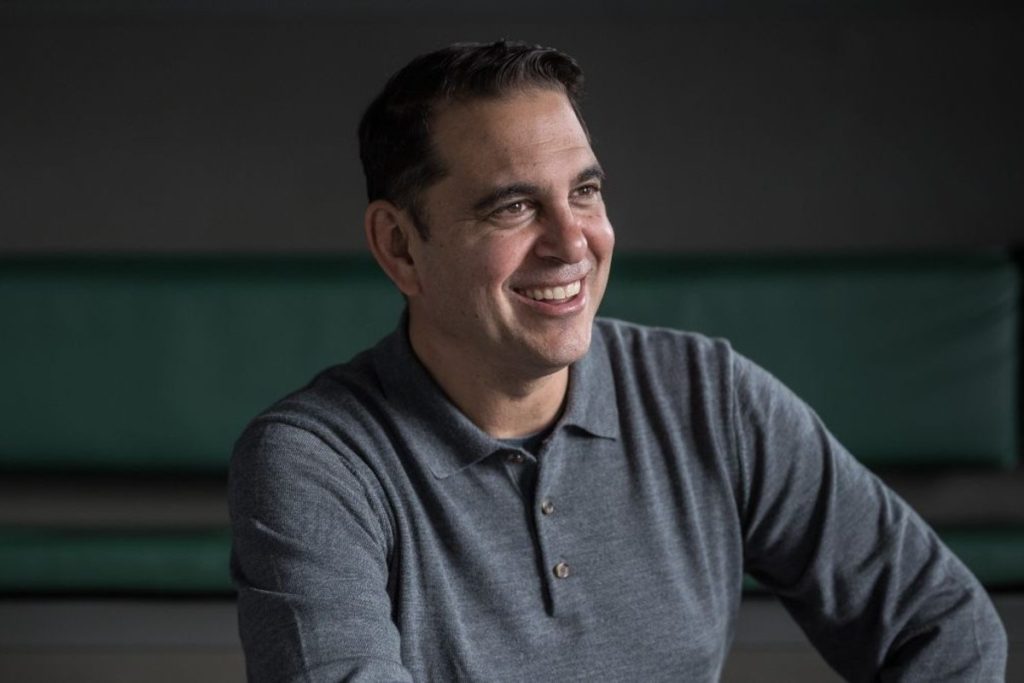
Super Group CEO Neal Menashe. Image: SBC
Super Group ready to transition five grey-market brands
Super Group, the multi-brand operator that has a longstanding grey market presence in Alberta, is gearing up to launch all five of its Ontario-licensed brands in the Western Canada province, including the Betway sportsbook and casino and iCasino platforms such as Jackpot City and Spin.
However, none of those five sites are currently listed as registered regulated operators. Under AGLC rules, Super Group has until a final deadline of October 13 to transition to the regulated market. It has not confirmed on what date it intends to do so.
“It’s very different, Alberta regulation, to Ontario,” said CEO Neal Menashe on an earnings call on May 12. “Ontario was what we call the ‘big bang’ approach. You had to move all your existing customers over to the new software on day one before you could even market the new software.
“In Alberta, you can market the new software first and have a period of three months or so to be able to move your existing customers over. So that, for us, is a massive, massive difference. We tried for that in Ontario but it didn’t happen at the time, but now it can happen in Alberta.”
To stay updated on Alberta iGaming and all things Canadian gambling, why not sign up for our weekly Canadian Gaming Business newsletter, sent directly to your inbox every Friday?
A notice on the sportsbook and casino operator’s site states that it will no longer be able to offer its services in the western province “due to changes in Alberta’s iGaming regulations.” The planned exit was first reported by Covers‘ Geoff Zochodne on X.
Alberta launches regulated commercial online gambling on July 13. Coolbet’s notice informs customers that it has already stopped accepting new sign-ups or further deposits and will block Albertan access to its sportsbook or casino on Sunday, July 12. Users can withdraw remaining funds until Aug. 31.
Coolbet quit Ontario in 2023 due to intense competition
European brand Coolbet currently operates across Canada, with the exception of Ontario. Partnered with the PGA of Canada and formerly having deals with the likes of Canadian Olympic track star Andre De Grasse, it works as an unregulated grey-market operator in provinces where the respective crown lottery corporations are the only provincial government-approved online gambling operators.
It transitioned to the regulated market in Ontario when that province became the first in Canada to license online gambling outside of the government operator in April 2022.
However, it pulled out of the Ontario market after just one year. Parent company GAN Ltd. subsequently stated that intense competition and heavy promotional spending from dozens of other operators blocked its path to profitability in the province.
Coolbet was one of the first licensed operators in Ontario to reevaluate their presence in the market and ultimately withdraw, but numerous others have also decided to quit the province since it went live four years ago, including:
Betiton
Casumo
Conquestador
Fitzdares
Rivalry
Unibet
Wildz Group
Some of those operators cited similar reasons to Coolbet for opting out of the saturated Ontario market.
While operators queue up for Alberta, others opt out
Alberta’s iGaming regulations state that every operator that applies for a license for the province’s market must end any and all unregulated play by July 13 (or by October 13, in some limited exceptions) as part of their registration process. Once the market is open, the Alberta government and regulators may make a proactive effort to forcibly shut down any grey-market brands that do not apply for registration and continue operating without a license.
Canadian Gaming Business reached out to Coolbet staff to get more information about the reasoning behind its Alberta shutdown, as well as whether it applied for registration with Alberta Gaming, Liquor and Cannabis (AGLC).
Coolbet’s confirmation comes days after MGM Resorts International-owned LeoVegas, which has been operational in Ontario’s regulated market for years, told Canadian Gaming Businessthat it decided not to proceed with Alberta licensure.
LeoVegas offers both its eponymous online casino and sportsbook and the Royal Panda casino brand in Ontario, but will not operate either platform in Alberta.
“We continuously conduct strategic reviews of our business to ensure we stay competitive, that our strategy supports a clear long-term direction, and that we meet our sustainable growth ambitions,” said LeoVegas Communications Manager Daniel de Morais. “In line with this, we have decided to stop access to our services from Alberta to fully focus on growing our existing business in Ontario.”
More than 50 licensed sites in Alberta
So far, more than 30 operators have registered with AGLC to offer more than 50 licensed online casino and sports betting sites in Alberta ahead of the July 13 launch date, including:
In late April, Rivalry confirmed that a series of C-suite exits had left Salz as the last remaining board member and top-level executive at the company. Five Rivalry executives and/or board members resigned from the operator at that time:
Co-Founder and Director Steve Isenberg
Co-Founder, Director, and Chief Technology Officer Ryan White
Co-Founder, Director, and Chief Operating Officer Kevin Wimer
As of the time of writing, Rivalry’s website still lists Isenberg, Rigby, White, and Wimer in their board and executive roles.
What happened at Rivalry Corp.?
Salz’s exit as CEO is the latest upheaval at Rivalry, which previously offered a range of gaming products in multiple jurisdictions, including casino gaming, sports betting, and esports in Ontario’s regulated iGaming market.
Steven Salz. Image: Rivalry
In the period between late 2024 and early 2026, the firm undertook a sweeping overhaul of its business, including an increased focus on cryptocurrency, a repositioning to better target high-value digital-first players, a revamp of its sportsbook and redesign of its casino, and more.
During that staggered process, Rivalry halved the size of its total workforce by 50% and several C-suite executives including Salz, White, and Wimmer took a voluntary 100% pay cut. Salz subsequently reduced his own salary by another 50%.
In April 2025, the Toronto-based firm announced its board of directors had decided to launch a review of “strategic alternatives” to support its long-term growth and determine the best path forward, including a potential sale.
Salz and the company maintained publicly that the strategic moves had positioned it well for the future. But, despite Rivalry reporting a record quarter for its Ontario business in December 2025 and improving its net loss by 67% last year, it began 2026 almost $2m in the red.
Rivalry’s trading troubles
Rivalry has also had issues with financial reporting. In May 2025, the Ontario Securities Commission (OSC) issued a management cease-trade order after the firm failed to file its FY24 and Q1 2025 financial statements. The OSC lifted that order in July 2025 once the company published those financials.
The OSC then issued a failure-to-file cease-trade order on May 6, 2026, as a result of the company’s failure to file audited annual financial statements and related annual filings for the year ended Dec. 31, 2025. Going further than the previous management cease-trader order, the current order bans all trading of Rivalry shares in Canada, with some limited exceptions.
In an announcement last Friday which shared the news of Salz’s resignation as CEO, Rivalry said that the TSX Venture Exchange downgraded its listing from Tier 1 to Tier 2 as of June 30, 2026, as the company does not currently satisfy the requirements for continued Tier 1 listing. Reinstatement to trading would require the cease-trade order to be revoked, which itself would require Rivalry to file all missing annual documentation.
Looking for a buyer?
At the time that it shut down play in February, the operator said it was in discussions with third parties about “potential transactions”, which could include a partial or full sale.
However, it warned that given its reduced operating scale and the ongoing strategic review, “there can be no assurance that any strategic alternative will be completed or that operations will continue in their current form.”
In its latest public announcement on July 3, Rivalry said only that it continues to evaluate strategic alternatives while it lies dormant in both the gaming industry and on the stock exchange.
Lisbon, Portugal — SBC Summit 2026 will host one of the most high-profile keynote sessions ever staged in Europe by bringing together three of the most influential figures in global sports business: Basketball icon, investor, and philanthropist Michael Jordan; Sportradar Founder and CEO Carsten Koerl; and DraftKings Co-Founder, CEO, and Chairman of the Board Jason Robins.
The headline keynote, titled “Leadership in Sports Business” and hosted by former Sky Sports News presenter, broadcaster, and journalist Kirsty Gallacher, will take place on Tuesday, Sept. 29, on the first day of SBC Summit 2026 in Lisbon. It will explore the evolution of sports, technology, media, data, and fan engagement through the perspective of three leaders who have helped shape the modern sports ecosystem.
As part of the discussion, the connection between sports betting and online casino will be examined, highlighting how the two sectors are increasingly operating in parallel and in collaboration. Broader leadership themes will also be explored, including building global businesses at scale, decision-making under pressure, and how leaders navigate change across fast-moving sports and technology markets.
SBC CEO and Founder Rasmus Sojmark described the session as a defining moment for the event.
“This is the kind of conversation that transcends our industry,” said Sojmark. “To have Michael Jordan, Carsten Koerl, and Jason Robins on stage together is something truly special. These are individuals who have each changed the way people engage with sports and business in completely different ways — through performance, technology, innovation, and vision.
“Bringing them together at SBC Summit reflects both the scale of where this industry is today and where it is heading.”
About SBC Summit 2026
SBC Summit 2026 will take place in Lisbon and is expected to welcome over 40,000 industry professionals from across sports, betting, gaming, payments, marketing, affiliation, technology, and media.
Additional details regarding the keynote session, including timing and attendee access, will be announced in the coming months. You can also visit the SBC Summit website for more information.
Since Premier Danielle Smith tasked Minister of Service Alberta and Red Tape Reduction Dale Nally in summer 2023 with exploring the potential of launching a regulated iGaming and betting market, things have kept moving, albeit slowly at times, and with some delays. The passage of the iGaming Alberta Act in May 2025 set the stage, and the curtain is finally about to rise.
The opening of a second province has been an El Dorado for Canadian gaming, particularly for those operators, suppliers, and stakeholders who have invested so much money and time in regulated iGaming in Ontario since April 2022.
But what exactly does Alberta iGaming look like now that it is up and running? Here’s what you need to know.
How does Alberta iGaming work?
In short, the basic mechanics work like Ontario’s. The Alberta Gaming, Liquor, and Cannabis (AGLC) government agency regulates the market, laying out the initial rules and regulations, altering them where deemed necessary, and holding operators and suppliers to account if required. That role is functionally similar to the Alcohol and Gaming Commission of Ontario (AGCO).
Another, separate government agency, the Alberta iGaming Corporation (AiGC) is what’s known as the conduct-and-manage agency, similar to the role iGaming Ontario (iGO) plays. Once operators are registered with AGLC, they must sign a contract with AiGC before they can go live. AiGC will handle a lot of the public- and industry-facing communications, including publishing quarterly revenue reports.
Are there any major differences from Ontario?
While leaning heavily on Ontario’s blueprint, Alberta’s iGaming market differs from that province in several ways, including:
A legal gambling age of 18, compared to Ontario’s 19
Casinos can host retail sportsbooks under the branding of a commercial iGaming partner
At a high level, one of the biggest differences is that, unlike the AGCO, Alberta’s AGLC serves a dual role as both the market regulator and an operator. AGLC continues to run the government-owned Play Alberta, which was formerly the only authorized iGaming site in the province but now has huge approved competition for players’ time and money (see below). In contrast, Ontario Lottery and Gaming (OLG) is the governmental operator in that province and is a separate entity from the AGCO.
Alberta is also taking a strict stance on operators who already exist in the province’s grey market, giving them until July 13 (with extensions to October 13 in some cases) to end any and all unregulated gaming activities in the province.
How many sportsbooks and casinos are operating?
Another big difference on July 13 was the number of iGaming sites that are immediately available to Albertans.
When Ontario opened Canada’s first regulated commercial online gambling market on April 4, 2022, around a dozen operators started taking bets on day one. In Alberta, it was around twice as many. Nally said at SBC Summit Canada in May that as many as 70 operators want to do business in the province.
Not all of the registered operators were ready to go on day one, but Alberta is shaping up to be even more competitive at the get-go than Ontario was four years ago.
Image: Paul Brady Photography / Shutterstock.com
What products can operators offer?
Like Ontario, Alberta allows operators to offer both online sports betting and online casino, either in an all-in-one platform or on separate sites/brands. While there are some small differences (like the prohibition on election betting), it’s broadly a like-for-like comparison. You’ll see sports wagers, thousands of different online slot games, casino table games, and live dealer options.
In Ontario, iCasino is king, with more than 80% of iGaming play on casino games on an ongoing basis. Whether a similar pattern will emerge in Alberta remains to be seen.
What about poker and daily fantasy sports?
Operators can offer peer-to-peer online poker, as they can in Ontario. But, like Ontario, there’s a big caveat: Play is ring-fenced within Alberta, meaning Albertans can only compete against other Albertans. In the U.S., for example, a multi-state agreement allows operators to pool players across several states, facilitating a more competitive and potentially lucrative product. That is not currently available in Canada.
Daily fantasy sports (DFS) is allowed in principle, but the ring-fencing, licensing, and taxation requirements of Alberta’s market mean it’s unlikely to take off anytime soon. Case in point: DraftKings confirmed that it shut down its pre-existing DFS operations in Alberta once the regulated sports betting market opened, as it did in Ontario.
The situation for both products could change in the future. For P2P games like poker and DFS, Alberta and Ontario can choose to pool their players together if both provinces want to, and AiGC CEO Dan Keene confirmed at SBC Summit Canada that is the plan actively being worked on.
We’re currently working on a memorandum of understanding with Ontario about interprovincial liquidity, so we’ll try and get that done as quickly as we can with our friends in Ontario.
AiGC CEO Dan Keene
Meanwhile, a Supreme Court of Canada appeal process is playing out that could potentially lead to international player pooling getting the green light. File this one under “wait and see.”
How much tax do operators pay in Alberta?
Ask most people this question, and you’ll be told it’s 20% of gross gaming revenues. That’s what Ontario charges its sportsbooks and online casinos, and Alberta did indeed replicate that rate. But there’s a difference.
Alberta’s government system means that before the 80-20 split is applied, 2% of all gross gaming revenue from iGaming is dedicated to the province’s First Nations communities and another 1% towards social responsibility initiatives. That makes the real tax rate more like 22% in Alberta.
As for other costs, operators must pay a one-time $50,000 application fee, as well as a $150,000 annual operator registration fee for every site that they offer to Albertans. Suppliers’ fees are $15,000 for platform providers and $3,000 for other services.
A ban on the public advertising of inducements such as sign-up bonuses and free bets, except on operators’ own sites or through direct marketing to users who have opted in to receive it.
A ban on marketing targeting minors, whether by direct exposure or by dissemination in places or media that could reasonably be expected to appeal to children. The use of cartoons, influencers, or celebrities who would likely be expected to appeal to minors is also banned.
A limit on using active or retired athletes, who can only be utilized to promote responsible gambling concepts or tools.
Alberta also bans any marketing that “promotes excessive play”, that suggests that a player’s skill affects their chances of winning, or that implies that any offers increase a player’s odds of winning. And operators are responsible for the third-party marketing partners they use; of particular note, operators must ensure that none of their partners are offering similar services for unlicensed sites in Alberta.
What’s Alberta’s main goal here?
People like Minister Nally and AiGC CEO Keene continue to reiterate that legalizing commercial online gambling is not simply about generating more money for the province. And there is some credence to that, because a key goal is protecting players.
When Ontario launched in 2022, it did so with several major goals:
“Channelize” play over from the unregulated market to licensed and regulated platforms
Implement stringent consumer protection measures under regulatory oversight
Make responsible gambling tools and problem gambling supports more available and accessible
Offer users more choice and foster a competitive market
All of these are targets for Alberta, too. But it would be foolish to pretend that generating millions of dollars in extra revenue for the government isn’t a nice bonus that will have been on Premier Smith’s mind as far back as 2023, too.
Alberta Minister Dale Nally. Image: SBC
What’s a realistic channelization target?
This is an interesting question, and we should preface it with two pieces of data.
First, estimates suggest that in excess of 70% of all current online gambling play in Alberta is on unregulated platforms, with perhaps as little as around 20% on the regulated Play Alberta platform.
On its website, AiGC sets its own bar lower, at least in the early days:
Our goals include a 70% channelization rate after year one, and a 75% channelization rate of the current illegal iGaming market into the regulated Alberta market by year two of operations.
AiGC
That’s probably lowballing it. Ontario was reputedly at more than 80% channelization at the end of its first year, and Albertans may have even more prior knowledge of big-name brands than Ontarians did at launch, after four years of cross-provincial advertising bleed.
“The best way to deal with the illicit market is to have a healthy, responsible legal market,” Nally said at SBC Summit Canada. “And the more successful that market is, the harder it is going to be for the repugnant operators that don’t embrace these safety standards to participate. Success will look like a black market that has been minimized as close to non-existent as possible.”
Just how much money could Alberta iGaming generate?
This is a tough one. There are a bunch of factors at play here; as just two big examples, Alberta’s population is less than one-third of Ontario’s, but the average income is higher.
The Alberta government’s public target is $76m in tax revenue in year one, as Nally told the Edmonton Journalrecently, slightly lower than Ontario made in Year 1. If we’re doing a very crude calculation based on a rough 20% tax rate (again, bear in mind the pre-split deductions), that would equate to a ballpark of $350m to $400m in gross gaming revenue for operators in Alberta’s first year.
Whatever the publicly stated target, Alberta officials will be eyeing Ontario eagerly; in that now-mature market, operators collectively made $4bn in gross gaming revenue in 2025, yielding more than $800m in tax revenue for the Ontario government.
On July 13, Alberta will join Ontario as the second Canadian province to launch a regulated iGaming market, and all eyes are now on the Great White North. As more jurisdictions could soon follow the lead of the first two, John Isaac, editor at online-gambling.com, breaks down the current state of the local market for Canadian Gaming Business and explores the opportunities emerging across the country.
Alberta will be the second Canadian province to license private operators after Ontario opened its market in April 2022. For an industry that has spent four years debating whether Ontario was a one-off or a template, a big question is: Where else will follow, and on what terms?
The honest answer is that no province is rushing. The map of Canadian iGaming is filling in slowly and unevenly, and the gaps say as much about the next phase as the two open markets do.
Two models, not one
Ontario built something genuinely unusual in North America. Through iGaming Ontario, the province acts as the “conduct and manage” counterparty for dozens of competing private brands rather than running the casino itself. The provincial agency sets the rules and takes a share; operators fight for players.
Alberta has now adopted a broadly similar competitive structure, with its own distinct conditions.
The rest of the country still does the opposite. Outside Ontario and Alberta, online gambling runs through a single provincial Crown corporation, and that contrast, open competition versus a government storefront, is the real fault line in every “who’s next” conversation. The questions Alberta’s regulator wrestled with were, in large part, the same ones Ontario answered first.
Reading the rest of the country
British Columbia remains the clearest test case. PlayNow, run by BCLC, has operated online for well over a decade and generates real revenue, which cuts both ways: it gives the province a working product to protect and a reason to be cautious about inviting competitors that would split the take.
Quebec sits in a similar position with Loto-Québec’s Espacejeux, layered over a long and unresolved fight about whether the province can lawfully block unlicensed offshore sites. Atlantic Canada’s shared operator, ALC, serves four provinces at once, which makes any move toward a competitive model a four-government negotiation rather than one. Saskatchewan is the wild card: its online platform launched in partnership with the Saskatchewan Indian Gaming Authority, and First Nations gaming rights, contested for years from Kahnawake onward, will shape what any expansion there can look like.
None of these is a straightforward flip from monopoly to open market. Each carries its own revenue, politics, and Indigenous-rights dimension.
What Alberta’s terms signal
Alberta’s choices, overseen by the Alberta Gaming, Liquor and Cannabis (AGLC) regulator, are worth reading closely because they amount to a second data point.
The province launched with centralized self-exclusion in place on day one, letting players bar themselves across every licensed site at once, rather than retrofitting it later. It set a 20% tax rate, directed 1% of gross gaming revenue toward social-responsibility initiatives, and earmarked a further 2% for First Nations communities. Player-protection infrastructure of the kind championed by the Responsible Gambling Council was treated as a launch requirement, not a follow-up.
For whichever province moves next, those terms become a reference point operators will expect and regulators will be measured against.
Outside of North America, Canada’s province-by-province approach is an outlier. Online-gambling.com tracks these markets internationally and notes that most jurisdictions license online play at the national level, with a single regulator and one rulebook for the whole country, a structure that a country-by-country guide to online gambling regulation illustrates. Canada’s federation hands gambling to the provinces, so the country is effectively running more than a dozen separate experiments at once, each free to copy, ignore, or improve on its neighbours.
What to watch over the next 18 months
Three things will tell the story. First, channelization: how much play each open market pulls away from unlicensed offshore sites. Against a backdrop of global online gambling revenue that firms such as H2 Gambling Capital track as still climbing, that figure is the argument competitive provinces make to the monopoly holdouts. Second, tax and fee settings, where Alberta’s 20% becomes the number every finance ministry now compares against. Third, whether a third Crown-monopoly province feels enough competitive and channelization pressure to seriously study opening up.
The map is filling in. Ontario proved a competitive market can work here; Alberta is testing whether the template travels. The provinces watching will decide less on ideology than on which approach demonstrably keeps players, revenue, and protection inside the regulated perimeter.
Sports streaming giant DAZN now has an online sports betting and casino platform to compete with the best and the rest in Ontario.
The company’s DAZN Bet platform went live in the province on Tuesday, marking DAZN’s first North American gambling market entry. Alberta will be its second, when that province opens its emulation of Ontario’s commercial iGaming market on July 13.
The iGaming platform offers a sportsbook “tailored to Canadian preferences” as well as a full-suite casino of popular slots, table games, and live casino.
Canadian Gaming Businessfirst reported in April 2022 that DAZN was preparing to launch its gaming app in Ontario via a platform partnership with Pragmatic Play. Last December, DAZN EVP of Growth Markets Daniel Bertholdtold Canadian Gaming Business that the company hoped to satisfy all regulatory and other obligations in Ontario as soon as the first quarter of 2026.
After receiving an Alcohol and Gaming Commission of Ontario (AGCO) license in January, it has taken a little longer than hoped, but is now live as the regulated Ontario iGaming market’s latest entrant. iGaming Ontario currently lists 47 licensed commercial operators running 81 iGaming sites in the province.
DAZN Bet intends to be ‘meaningful player’
DAZN Bet is operational in numerous European markets, including:
Germany
Italy
Spain
The UK
Now, it has made its North American debut, and it intends to bring something different to the table in Ontario in its quest to “become a meaningful player in the region.”
DAZN Bet CEO Valery Gelfman stressed that the operator intends to enter the province “with a product that is designed for long-term sustainability”, as well as a local mindset and a customer-centric approach.
Image: Shutterstock
“Ontario is an important moment for DAZN Bet and a market where trust matters deeply to players,” added the operator’s Managing Director of Canada Richard Rawlinson. “We are combining the strength of a global sports entertainment brand with a localized product that is built for Canadian customers.
“Our focus is on responsible growth, strong compliance, and a customer experience that feels distinctly Canadian. This is the beginning of a long-term commitment to the country.”
DAZN a well-known sports name
In an Ontario market with nearly 50 operators, ranging from U.S. and European online gaming giants to digital arms of land-based casino companies to smaller Canadian-bred brands and more, DAZN Bet will bring something different.
DAZN Group CEO Shay Segev said at DAZN Bet’s initial European launch four years ago that “the convergence of sports media and betting is the future,” and the platform is built on that idea as its foundation.
In Canada, DAZN Bet may be new, but the name of the parent company is hardly unfamiliar. It has established itself as a go-to destination for live sports, holding exclusive or non-exclusive streaming rights to the NFL, MLB Network, English Premier League (via an agreement with primary broadcaster Fubo), all UEFA soccer competitions (until 2027), major boxing events, LIV Golf, and more.
Gelfman said that the operator intends to offer a gaming experience that reflects “the trust and credibility” that the company believes sports viewers already associate with the streaming platform.
Image: nickj / Shutterstock.com
“In a way, we are almost a little bit of a different beast in the standard of online betting companies, because we’re coming in as a broadcaster,” Segev said at ICE 2026 in Barcelona in January. “We don’t want to create just another betting site.”
Betting integration to follow?
In its European markets, where allowed, DAZN integrates live odds and betting functionality into its live streams, allowing viewers the choice to directly tie together their sports-watching experience with gambling. In-play odds appear alongside live streams, statistics, highlights, and social features.
“When you go to DAZN, you go because you like sports,” added Segev at ICE. “If you want to bet, it’s completely optional … But if they can only watch it on DAZN, they should be able to bet on DAZN. So this is where we’re going with that.”
That approach is not entirely novel in Ontario. As two examples, anyone watching the 2026 FIFA World Cup on TSN in the province this summer will have seen FanDuel splashed across broadcasts and a FanDuel odds functionality in the TSN app, and PENN Entertainment has integrated theScore Bet odds into the legacy theScore sports media app for a while now.
But no brand has yet delivered a unified, global watch‑and‑bet platform in Ontario.
As of the time of writing, only DAZN Bet’s website is available in Ontario, with no such streaming integration. But based on DAZN’s model for its iGaming approach, that kind of cross-promotion between the sports side and the betting side seems inevitable for the company in Canada at some point.
DAZN Bet will also launch in Alberta
Ontario is DAZN Bet’s first stop in Canada, but it will not be the last.
The brand received its Alberta iGaming operator license in late May and is one of roughly 50 sites registered to do business when that province launches regulated iGaming on July 13.
DAZN Bet confirmed on Tuesday that it will expand into Alberta and become one of the early movers in the market “in the near future.”
July 2026 wasn’t when anyone involved initially expected regulated Alberta iGaming to launch.
It’s been three years since the provincial government started its initial exploration of the idea, and initial hopes to launch the provincial market as early as the start of 2025 were pushed back by mutual agreement during the government’s consultation process.
The July 13, 2026, date was ultimately set earlier this year, even though Minister Dale Nally said candidly at the recent SBC Summit Canada in Toronto that he wanted to cut the ribbon and fire the starting gun in May.
“We were ready to launch earlier, we were going to go in May, but it was the operators who said to us that they wanted us to hold back,” Nally told SBC’s Managing Director Andrew McCarron in late May. “So, through consultation with industry, we landed on July 13 as being that sweet spot.”
Now, after what for many big-name gaming companies has been years of preparation, they’re on the cusp. It’s fair to say most operators who go live on or after that date will just be happy to be there.
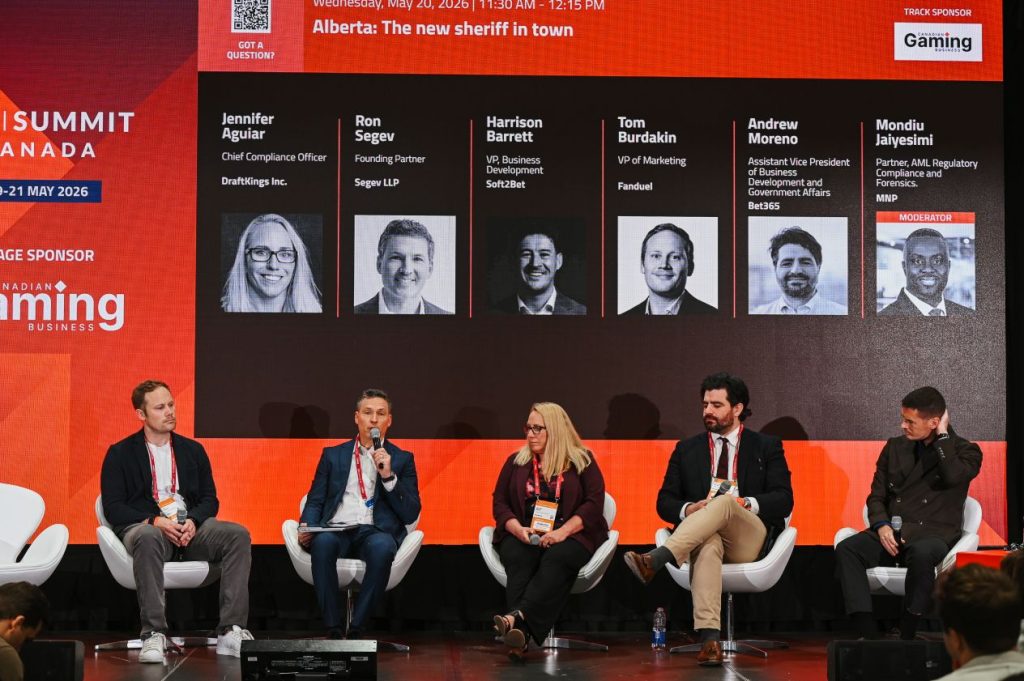
“We are so excited to enter regulated Alberta,” FanDuel Vice President of Marketing Tom Burdakin said on an Alberta-focused panel at SBC Summit Canada. “We’ve been talking about it so long it almost doesn’t feel real.”
Much better late than never
The July date means Alberta missed NHL and NBA playoff season this spring, and will not get the full benefit of the frenzy of activity that is the FIFA World Cup. But sportsbooks in the province will be taking bets just in time for the semi-finals and final of that tournament, and will then get a summer of feet-finding (carried along by summer events like the CFL and Toronto Blue Jays baseball) before the new hockey and NFL seasons start.
It could all come together very nicely.
“There’s always a sports tentpole, no matter the launch time,” added Burdakin. “The World Cup has the potential to really take the nation by storm, there’s a lot of opportunity here, and I think it’s a great chance for sports fans to really get involved in taking part in the action in a way they haven’t been able to do in the past.
“I also appreciate that it’s happening right after [the Calgary] Stampede, so people might be at home in the dark for a couple days with their phones. It’s perfect timing.”
Image: SBC
For everyone involved, from Nally’s office to the Alberta Gaming, Liquor, and Cannabis (AGLC) regulatory body to the Alberta iGaming Corporation (AiGC) conduct-and-manage agency, it’s a date long in the waiting.
“It’s quite a journey and it’s been exciting to see it come together,” AiGC CEO Dan Keene told ‘Safe Bet Show’ host Martin Lycka on a separate SBC Summit Canada panel. “July 13 is what we’re focused on. We’re trying to make the market as seamless for the industry as possible, commercially viable and successful, and always keeping in mind responsible gaming and what we need to do for Albertans.
“It’s all coming together and certainly it’s not without a lot of work and a lot of effort.”
Alberta heads into the light
The Alberta government is expecting to make around $76m from iGaming in the first year of the market, Nally recently told the Edmonton Journal.
His office, though, has posited repeatedly that while revenue is a bonus, protecting players by offering a range of responsible gambling-mandated platforms and moving existing grey-market iGaming play under regulatory oversight are the key goals here. Per multiple market assessments, the general consensus is that at least 70% of all current online gambling in Alberta is done on unregulated sites; in Ontario, where the regulated market has been open for four years, that proportion is reputedly about 10%.
“Broadly speaking, the success of any market is really going to come down to a number of different factors,” noted bet365 Assistant VP of Business Development and Government Affairs Andrew Moreno on the panel with Burdakin. “It’s not going to just be about the revenue. We view it as a balancing act that needs to be struck between consumer protection, a sustainable commercial model and sustainable financial model, and the ability of the market itself to channel players away from the unregulated operators.”
Moreno, Burdakin, and their fellow panelists — DraftKings Chief Compliance Officer Jennifer Aguiar, Soft2Bet VP of Business Development Harrison Barrett, and Segev LLP Founding Partner Ron Segev, all agreed that Alberta has been right to replicate many aspects of Ontario’s regulated market.
“Alberta’s emulated Ontario in lots of ways,” noted Barrett. “It’s important when new markets go live not to try and reinvent the wheel too much, but ultimately find new innovative ways, working with some of the more experienced operators, to fine-tune what’s been the situation before.”
Alberta is not Ontario; Calgary is not Edmonton
Aguiar’s DraftKings, Burdakin’s FanDuel, Moreno’s bet365, and Barrett’s Soft2Bet (which runs the ToonieBet brand) are four of the roughly 50 operators that are already registered and ready to go when the starting pistol is fired. For many of them, it’s nothing new; Aguiar noted during the discussion that DraftKings is in more than 40 jurisdictions at this point.
But each one is different and comes with its own priorities and focuses, and its own local language that needs to be spoken. As Moreno noted, what works for bet365 players in Missouri doesn’t necessarily work for bet365 players in New Jersey, and vice versa.
Segev perhaps put it best.
“There’s a difference between Edmonton and Calgary,” said the gaming lawyer. “That’s critically important to understand. And Western Canada is a different Canada.”
Edmonton, Alberta. Image: Adobe Stock
For operators wanting to make a big impact from the get-go, that will mean sports markets that appeal to Albertans as a cohort, not just Canadians; branding and marketing that leans on imagery and ideologies (and sometimes high-profile athletes) that Albertans are familiar with; and, wherever possible, boots on the ground.
“I think one thing we learned from Ontario is the degree to which Canadians really value amplifying authentic local moments,” explained Burdakin, whose FanDuel has numerous Canadian sports partnerships with the likes of TSN and the CFL and has been running free-to-play promos in Alberta as it pre-registers customers.
“You’re going to see a lot of emphasis on ensuring that we localize marketing. The reality we’ve had to accept is that we need to meet Albertans where we are, not where they are or where we think they should be, so you’re going to see a lot of not only on-the-ground in-person activations, but also a closer connection with the Albertan people as it opens up.
“Ultimately, I think Albertans are really going to recognize the benefits of a regular regulated market, both in terms of product improvements and how the marketing differs.”
The Alcohol and Gaming Commission of Ontario (AGCO) fined Great Canadian Entertainment for alleged compliance failures, the latest penalty that Ontario’s gambling regulator has handed to one of its repeated serial targets.
The AGCO stated on Monday that it has penalized the multi-provincial casino operator to the tune of $120,000 after finding that the company allegedly used unauthorized gaming system software at four Ontario casino sites.
In what the regulator called “a serious compliance failure that bypassed requirements designed to protect the integrity of casino gaming”, Great Canadian allegedly used revoked or unapproved bill validator software in 40 instances across four locations between Feb. 20 and March 15, 2025.
AGCO references money-laundering concerns
Bill validators are components within gaming machines that process cash and help support anti-money laundering controls. Their chief use is to verify the authenticity and value of cash used on electronic gaming machines.
The AGCO said the alleged violation “weakens safeguards designed to detect and prevent unlawful conduct, including money laundering, and can undermine public confidence in Ontario’s regulated casino sector.”
AGCO CEO and Registrar Dr. Karin Schnarr stressed that casino operators are held liable by AGCO for ensuring that the systems they use are independently tested, approved and operating as intended.
“When unauthorized software is used in a live casino environment, it bypasses critical safeguards that are meant to uphold the integrity of gaming and the public’s confidence in the system,” added Schnarr. “The AGCO will continue to hold all casino operators accountable for meeting Ontario’s high standards of gaming system integrity.”
Great Canadian accepts AGCO decision
Great Canadian Entertainment has the right to appeal within 15 days to the Licence Appeal Tribunal (LAT), an independent adjudicative body that is part of Tribunals Ontario. But its Executive Vice President of External Relations and Business Development, Chuck Keeling, told Canadian Gaming Business that the operator respects the AGCO’s decision.
“We have imposed operational and compliance safeguards to prevent future similar incidents,” added an emailed statement. “Our organization remains committed to the highest standards of compliance and accountability for our operations.”
Neither the AGCO nor the operator confirmed which four Ontario locations were implicated in the alleged bill validator transgressions. Great Canadian Entertainment operates a dozen casinos of various sizes in Ontario:
Casino Ajax
Elements Casino Brantford
Elements Casino Flamboro
Elements Casino Grand River
Elements Casino Mohawk
Great Blue Heron Casino & Hotel
Great Canadian Casino Resort Toronto
Pickering Casino Resort
Shorelines Casino Belleville
Shorelines Casino Peterborough
Shorelines Casino Thousand Islands
Shorelines Slots at Kawartha Downs
Great Canadian Casino Resort Toronto. Image: Great Canadian Entertainment
The company also has casinos in British Columbia, New Brunswick, and Nova Scotia, although it has sold all but one of its B.C. venues to a range of First Nations groups in the province over the last two years. Most recently, it completed the divestiture of River Rock Casino Resort, the largest casino in Western Canada, to the Snuneymuxw First Nation and the Musqueam Indian Band.
AGCO takes firm hand with land-based and online operators
Great Canadian has been a repeated target of the AGCO.
In April 2025, the regulator fined Great Canadian Casino Resort Toronto $120,000 for allegedly failing to detect cheating and dealer collusion by two table games dealers. The following month, Great Canadian Entertainment was penalized $151,000 for allowing minors to access the casino floor and participate in “gambling activities” in four separate incidents across three Greater Toronto Area casinos.
Then, in June 2025, the regulator fined Great Canadian Casino Resort Toronto $350,000 after an electronic dance music (EDM) event hosted by German DJ Boris Brejcha at the resort in September 2024, ended in alleged assaults, overdoses, “acts of public indecency” and a spur-of-the-moment after-party taking place amid slot machines and table games on the casino floor.
It’s not only land-based gaming operators that have been held to account by the AGCO. The regulator has issued numerous punishments to licensed Ontario iGaming operators in recent times, including:
Fining theScore $105,000 last October for allegedly failing to address a user’s high-risk gambling despite “clear red flags”
Fining FanDuel Canada a record $350,000 in January for allegedly failing to appropriately identify and report unusual and suspicious betting and match-fixing activity involving Czech table tennis
Issuing a five-day suspension to PointsBet Canada in February for allegedly failing to identify and adequately report suspicious betting on now-banned NBA player Jontay Porter.
BetMGM’s name carries a lot of weight with Canadian customers. So does its choice of partners.
The operator has a leading position in Ontario’s dual online sports betting and iCasino market, which was its first expansion outside the U.S. Imminently, Alberta will become the Entain and MGM Resorts International joint venture’s first new online casino market in four years; BetMGM is signing up customers in that province ahead of regulated Alberta iGaming beginning on July 13.
As both Ontario and Alberta expect and demand from their online sportsbooks and casinos, BetMGM continues to serve customers with access to a range of responsible gambling resources and tools. More than most competitors, the brand has recruited some bona fide Canadian star power to showcase the company’s commitment to player protection.
Enter Edmonton Oilers captain and Canadian hockey icon Connor McDavid.
The puck-themed campaign promotes BetMGM’s suite of responsible gambling tools and leverages the talents of two high-profile brand ambassadors. Featuring three-time Hart Memorial Trophy winner McDavid, ‘Mullet Over’ also enlists the talents of actor and former Montreal Canadiens left wing Terry Ryan to bring the campaign to life.
“From the start, our goal was to deliver responsible gambling information in a way people would genuinely pay attention to—and to meet fans where they are,” says BetMGM Director of Responsible Gambling Richard Taylor. “Connor McDavid and Terry Ryan were natural partners for this campaign because they bring authenticity and cultural credibility.
“The public listens to people they know and admire, and as a three‑time Hart Memorial Trophy winner and one of the most recognizable athletes in hockey, Connor has a unique ability to make sure an important message truly lands.”
Ryan also brings his own flavour to BetMGM’s responsible gambling efforts as a brand ambassador who bridges the gap between entertainment and player protection.
“Ryan complements McDavid’s credibility with his own presence and personality within hockey culture. As a former NHL player turned actor, he brings humour, relatability, and a deep connection to the sport’s traditions—including the unmistakable hockey mullet at the heart of the commercial’s concept.
“Together, their dynamic allowed us to deliver a responsible gambling message that feels memorable, culturally grounded and genuinely entertaining, without diluting the seriousness behind it.”
Know your audience
BetMGM has an all-star roster of brand ambassadors, from actor Jon Hamm to New York Yankees hero Derek Jeter and hockey’s original ‘Great One’ Wayne Gretzky. This is a brand that recognizes the benefits of using renowned figures inside and outside sports and gaming when looking for a marketing power play.
“Responsible gambling messaging only works if people actually notice it … When campaigns are visible and compelling, they can drive real, positive change.”
As Taylor explains it, BetMGM understands that its existence as an operator is simply not enough to ensure that its players and potential customers are aware of its responsible gambling resources. Star power lends a weight to the messaging that can help drive home the point.
“We’re asking players to pause, reflect and make intentional choices,” adds Taylor. “The creative must be compelling enough to capture their attention and deliver a clear, memorable takeaway.
“That’s why using ambassadors, recognizable talent and humour is so effective for responsible gambling. When familiar personalities deliver responsible gambling messages with the same creative quality, production value and visibility as any other campaign, those messages are far more likely to break through. It’s not a compromise; it’s a prerequisite for effectiveness.”
The Chosen One
Gretzky might be ‘the Great One,’ but for BetMGM, McDavid has risen to the top as the chosen one.
McDavid became a brand ambassador for BetMGM in 2022, the first active athlete from North America’s four major professional sports leagues to rep an online sportsbook and casino. After finding initial success with the Oilers man as a centrepiece, the operator has built its team around him.
Taylor recalls how the initial responsible gambling push that BetMGM deployed in 2024 featuring McDavid yielded encouraging results.
“That campaign contributed to a 38% year‑over‑year increase in the use of deposit limits and a 55% increase in the use of stake limits at BetMGM,” Taylor explains. “Those are measurable shifts in behaviour — not just impressions or clicks. They show that when responsible gambling campaigns are visible and compelling, they can drive real, positive change.”
BetMGM has yet to quantify the impact of Mullet Over, but the company is optimistic that the campaign will provide the operator with similar results.
Alberta: Feels like home
While all of this is happening, BetMGM is looking ahead to what Alberta’s commercial sports betting is offering.
Image: Shutterstock
Like all online gaming brands that take part in Alberta, BetMGM will need to adhere to a key requirement set by the Alberta iGaming Corporation (AiGC) and the Ontario-based Responsible Gambling Council (RGC): obtain the RG Check accreditation. RG Check is an independent responsible gambling program powered by the RGC. The program evaluates the marketing practices, governance and player protection standards of licensed online casino and sports betting platforms.
“We’re committed to providing a best-in-class gambling experience that is fun and sustainable,” says Taylor. “That means sharing with Albertans the many advantages that we have to offer as an operator. Highlighting a focus on responsible gambling is at the core of who BetMGM is and what BetMGM does.”
Ontario is North America’s most saturated and competitive online gambling market across both sports betting and casino. Competition in Alberta will be fierce, too, but BetMGM CEO Adam Greenblatt has said he expects BetMGM’s Ontario presence and company-wide growth in 2025 to ensure a fast-paced start in what will be Canada’s second regulated iGaming province.
In McDavid, perhaps Alberta’s most beloved adopted son and certainly one of its most bankable stars, BetMGM will feel it has an MVP on board already to make the difference.
Sticking to the game plan
In the meantime, BetMGM continues to bolster its responsible gambling efforts in Canada through campaigns that appeal to regular bettors, occasional players, and sports fans across the country.
As online gambling arrives in earnest in Alberta, continues to boom in Ontario, and grows elsewhere across the country, Taylor stresses that advocating for responsible gambling in a meaningful and impactful fashion is the real game-winner.
“Legal sports betting has become part of the entertainment landscape, and responsible gambling can’t sit quietly on the sidelines,” Taylor notes. “It needs to be delivered with the same clarity, confidence and creativity as every other message competing for a viewer’s attention. That’s why BetMGM will keep leaning into humour, fresh creative ideas and recognizable ambassadors.”