It seems as though it’s always an important time for the Canadian gaming industry these days, but Alberta opening Canada’s second commercial regulated iGaming market this month was a bona fide milestone years in the making. It was also the result of a great deal of work from provincial governments and other industry stakeholders, not least the Canadian Gaming Association (CGA).
CGA President and CEO Paul Burns will speak about Alberta and more atSBC Summit 2026 in Lisbon on a panel called ‘Canada: Province by Province Progress‘, assessing what’s happening right now in that province and Ontario, as well as what may come next for Canadian gaming.
Ahead of SBC Summit, we caught up with Burns to get his thoughts on the state of play.
Alberta is finally up and running. Why is this such an important milestone for the Canadian gaming industry at large?
Burns: The Canadian Gaming Association commends Alberta for establishing an expanded, regulated iGaming market. Alberta is now the second province in Canada to show that a market can reflect consumer preferences while delivering world-leading player protections and strong regulatory oversight.
With 10 companies launching 22 sites on day one and another 25 operators seeking licenses, Alberta will demonstrate that government can strike the right balance between taxation, regulation, and consumer protection.
How does Alberta differ from Ontario?
Burns: Since its launch, Ontario has developed into one of the world’s strongest and most comprehensive regulated iGaming markets. Alberta largely modeled its approach on Ontario’s framework, leading us to expect a similar path while introducing several unique features.
The province launched with a centralized self-exclusion system already in place, has begun public awareness campaigns to educate residents about the changes and the role of regulated gaming, and is moving quickly to help land-based casinos benefit from enhanced retail gambling regulations alongside the rollout of online gaming offerings.
Alberta is home to approximately 5.5 million people. Although its population is smaller than Ontario’s, Albertans consistently rank among the highest in the country for gaming spend per capita. Combined with a younger, growing population and relatively low tax rates, this makes Alberta a highly attractive gaming market.
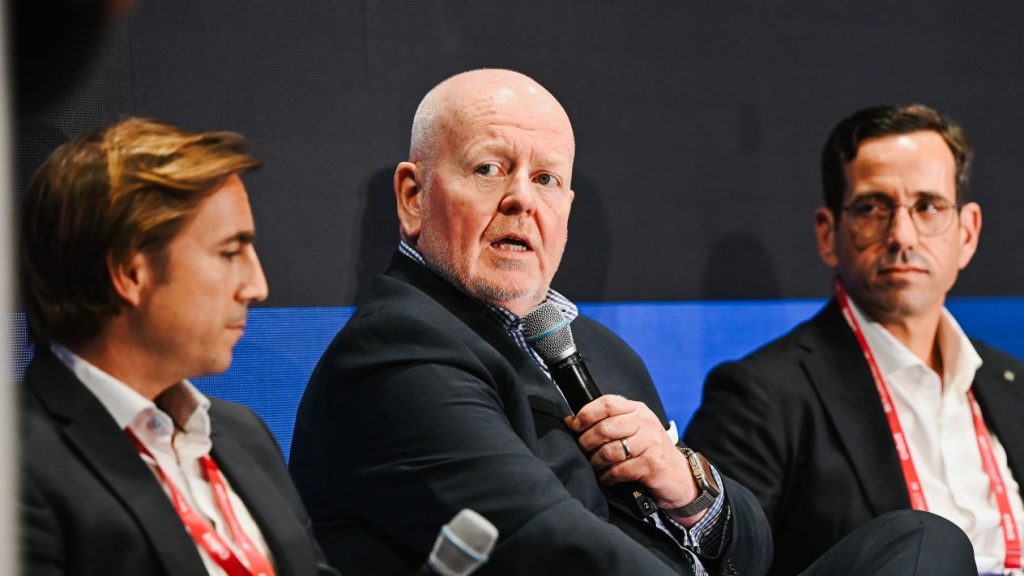
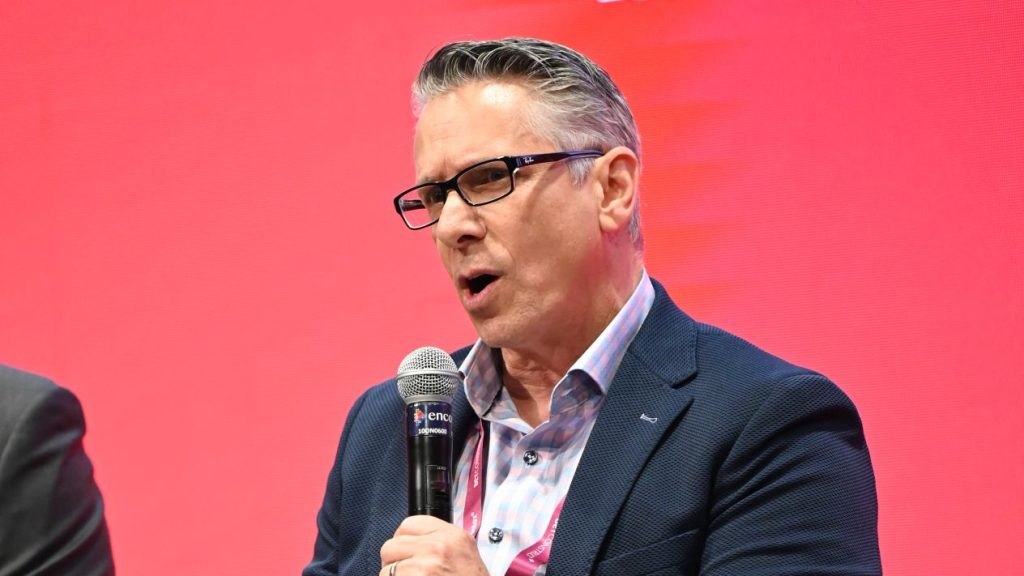
Paul Burns speaking at SBC Summit Canada in May 2026. Image: SBC
The latest research pins Ontario’s channelization rate at over 90%. Should we expect similar results in a mature Alberta market?
Burns:Alberta has said it aims to reach a 70% channelization rate in its first year and a 75% rate in its second year, and we are optimistic the province can exceed that target.
Over in Ontario, the government is reviewing its own gaming sector from the top down. What’s the aim there?
Burns: The Ontario government’s gaming review has focused on reducing duplication and overlap between regulatory agencies and industry stakeholders.
The CGA and its members have actively participated in the review and look forward to working with the province on measures that streamline processes, improve efficiency, and lower industry compliance costs.
What topic do you believe will most define Canadian gaming industry discussions over the next 12 months?
Burns: Responsible gaming will be a top priority, along with the need for the industry, regulators, broadcasters, and professional sports leagues to work together to address ongoing concerns about advertising.
We will also focus on the new Financial Crimes Agency, modernizing AML regulations, and advocating in Ottawa for stronger enforcement tools to support Canada’s regulated markets.
IGT announced on Tuesday that its IGT Canada Solutions subsidiary has signed a contract with WCLC to provide 720 Sierra27 video lottery terminals (VLTs) to Saskatchewan casinos and other establishments. The dual-display machines feature two 27-inch screens with high-definition graphics and dual bash buttons.
The Nevada-based company said it will provide a range of content as part of the agreement, including top-performing games designed specifically for players in Canada, such as:
Big City 5s Diamond
Cash Climb Garden of Hesperides
Tiki Tiki Tiki Mayhem
“As the leading VLT supplier in Canada, IGT is uniquely positioned to help WCLC enhance venue performance and player experiences with proven products and solutions backed by decades of market experience,” said IGT Vice President of Sales, Canada and Oregon, Chad Helm.
“This significant agreement with WCLC for 720 additional IGT Sierra27 VLTs reinforces the strength of our outstanding collaboration in providing games that excite and engage players.”
Just the latest Western Canada VLT deal for IGT
This marks the latest in a line of IGT’s numerous VLT rollouts in Canada, and the most recent of many occasions on which the WCLC, which oversees lottery and gaming activities for the provincial governments of Alberta, Saskatchewan, and Manitoba, has awarded the gaming technology firm a major VLT contract.
It marks the second consecutive year that IGT has been selected through WCLC’s competitive VLT procurement process.
“WCLC selected IGT through a competitive procurement process, and these additional Sierra27 VLTs will support our venue network with hardware and content designed for the Canadian market,” said WCLC VP of VLT Gaming and Operations Eric Karmark. “IGT has been a longstanding supplier to WCLC, and we look forward to continuing our work together.”
An extensive Canadian footprint
IGT has a deep footprint in Canadian gaming as both a land-based supplier of retail gaming solutions and an iGaming supplier to provincial lottery corporations and licensed commercial operators alike.
Last year, it struck a landmark eight-year deal with the Atlantic Lottery Corporation(ALC) to deploy its IntelligenEVO video lottery central system technology across Atlantic Canada provinces. The contract includes the option for multiple extensions.
IGT already provides the ALC with more than 6,000 video lottery terminals across four provinces using its advanced lottery central system. Via a separate agreement, the two organizations offer cloud-based games and features for players in the region, including a range of omnichannel games, licensed content and progressive jackpots. That agreement included a commitment to launch at least 16 digital instant games each year.
As part of SBC Media’s specialized week of content from industry suppliers about the launch of Alberta’s market, Izabela Slodkowska-Popiel, Head of Account Management for North and Latin America at Wazdan, argues that the playbook is not about simply copying what is successful in Ontario.
Instead, she noted, those operators and suppliers who understand the idiosyncrasies of the demographics and content preferences of players in Alberta will be the ones to succeed in the long term.
How important is Alberta for Wazdan’s North American strategy?
Alberta represents one of the most exciting regulatory developments we have seen in North America for several years. Opportunities to enter entirely new regulated online casino markets are relatively rare, which makes this an important milestone not only for Wazdan but for the wider industry.
For us at Wazdan, Alberta is not a standalone opportunity, it forms part of our long-term North American growth strategy. Having established ourselves across regulated markets, including Ontario, we have gained valuable experience in supporting operators through market launches, regulatory requirements and evolving player expectations. Alberta is therefore a natural progression, allowing Wazdan to build on those foundations while continuing to strengthen our presence across Canada.
How important is it for operators and suppliers to be ready to enter the market quickly?
Day one readiness is incredibly important because the opening stages of any regulated market often shape long-term success. Early launches influence everything from operator relationships and casino lobby positioning to player acquisition and brand recognition.
Preparation involves ensuring integrations are complete, portfolios are carefully selected, account management teams are aligned with partner objectives and marketing resources are available to maximize launch visibility.
Operators entering a new jurisdiction face significant operational demands, so suppliers that can provide reliability, responsiveness and proven delivery become valuable long-term partners rather than simply content providers.
Having successfully supported launches across multiple regulated markets, Wazdan has developed internal processes that allow us to approach new opportunities with confidence while maintaining the high standards of compliance and technical performance expected in North America.
Is success defined by what works in Ontario?
Ontario provides an excellent point of reference because it demonstrated the potential of a competitive regulated online gaming market in Canada. It also provided invaluable operational learnings around regulation, certification, localization and operator collaboration.
However, Alberta should not simply be viewed as ‘Ontario 2.0’. Every regulated market develops its own identity based on its player demographics, operator landscape, levels of brand awareness and competitive environment.
Our philosophy at Wazdan has always been to adapt market by market rather than applying a single formula everywhere we operate. The experience gained in Ontario gives us greater confidence and stronger operational foundations, but Alberta deserves its own tailored approach that reflects its unique opportunities and challenges.
Ultimately, successful market entry depends on understanding local dynamics while remaining flexible enough to evolve alongside operator and player expectations as the market matures.
How does the Wazdan portfolio resonate with Albertans?
While Alberta will undoubtedly develop its own player preferences over time, experience from regulated North American markets suggests that players respond particularly well to games that are immediately accessible while still offering engaging mechanics and replay value.
That is where the breadth of our portfolio becomes a real advantage. Our popular Coins™ and Mighty Wild™ series continues to perform strongly across Ontario and several US states, while feature-rich mechanics such as Hold the Jackpot™, Cash Infinity™, Chance Level™ and Volatility Levels™ give players greater control over their gameplay experience and provide operators with diverse content capable of appealing to different player segments.
Rather than focusing on one style of game, we aim to offer a balanced portfolio that combines straightforward entertainment with deeper feature-led experiences. This allows operators to build varied casino lobbies that can engage both new players entering regulated environments and more experienced audiences looking for additional gameplay depth.
What preparation work have you put in to ensure you are ready to be a go-to partner?
Preparation for a regulated market begins long before launch.
Over the past year, we have closely monitored Alberta’s regulatory progress while working internally to ensure we are positioned to move efficiently once market timelines become clearer. That preparation spans regulatory and certification planning, technical integration readiness, portfolio selection, ongoing discussions with operator partners and the development of marketing assets designed to support successful launches.
For operators, choosing a supplier is not simply about content quality. They also need confidence that games will be delivered reliably, integrations will be straightforward and commercial teams will provide ongoing support beyond launch. That is an area where we believe Wazdan offers genuine value as a long-term partner.
What are your predictions for the Albertan iGaming sector?
We are optimistic about Alberta’s long-term potential. While it is important to remain realistic about the pace at which any new regulated market develops, we believe Alberta has all the characteristics needed to become an important part of Canada’s evolving iGaming landscape.
Success will be measured by becoming a trusted partner for operators across the province, introducing a carefully selected portfolio of high-performing games and continuing to strengthen our North American presence. If we can contribute to helping operators build engaging casino experiences while supporting the healthy growth of Alberta’s regulated ecosystem, we will consider that a very successful outcome.
From spotting deepfake fraud to building your own AI assistant,SBC Summit’s new AI Academywill take delegates beyond the theory of artificial intelligence and into hands-on, practical application.
Part of the event’s premiumEducation+program, the AI Academy brings together technology specialists, cybersecurity experts, and AI leaders to help delegates understand where AI creates genuine business value, recognize the threats it poses, and leave with an AI assistant they can put to work in their own organization.
Taking place on Tuesday, Sept. 29 at Sala Tejo at Lisbon’s MEO Arena, it’s designed for anyone who wants to move past AI headlines and start applying the technology directly to their role. Across the academy, delegates will take part in live demonstrations, ask-me-anything sessions, case studies, and hands-on workshops, spanning everything from enhancing data analysis to defending against AI-driven fraud.
“The biggest mistake businesses can make with AI is treating it like a shortcut,” said SBC Founder and CEO Rasmus Sojmark. “The organizations getting the most from it are the ones that understand its strengths, recognize its limitations, and know where human expertise still matters.
“That’s the thinking behind this academy. Rather than simply talking about AI’s potential, we’re giving delegates the opportunity to test it, question it, experiment with it, and leave with skills they can immediately put into practice.”
Live AI demos and expert sessions
The academy will open with the live demonstration ‘Data and AI: Limits and Lessons.’ Behshad Behzadi, Chief Technology Officer at Sportradar, will show how AI is being used to analyze player behaviour and enrich sports data, while being upfront about where the technology adds real value and where it still comes up short.
Attention will then turn to AI agents during the session ‘When Agents Speak for You & The Future of Interaction‘.
Through a live showcase, Javier Troncoso, CEO & Co-Founder of Insightplay.ai, and Jeffrey Haas, Managing Director of ID8 Global Gaming Business Accelerator, will demonstrate and analyze voice agents in action, exploring how AI is evolving from digital assistants into autonomous representatives, and what that could mean for the future of customer interaction and decision-making.
The conversation will then move into the physical world with the session ‘AI Wearables, Robotics & Human Augmentation’. Through demonstrations of smart glasses, neurotechnology, exoskeletons, and biometric wearables, expert John Caldwell (Co-Founder, i3Soft) will show businesses how AI’s transition into the physical world could reshape the way consumers interact with digital entertainment and AI-powered products.
Trust takes centre stage in the case study ‘Trust Test: Deepfakes, AI Fraud and the New Era of Impersonation‘. In this case study, Shelley Langan-Newton (Co-Founder & CEO, SQR), Lluis Mora (Chief Security Officer, Entain), Donald Tabone (Chief Information Security Officer, Betsson), and Roberta Nicholls (Head of Chapter, AI Collective) will demonstrate how AI-generated identities, voice cloning, and deepfakes are being used to exploit trust, and how businesses can protect themselves against these emerging threats.
Delegates will then put everything into practice during the interactive workshop ‘Build Your Own AI Assistant‘, creating a practical AI assistant tailored to marketing, CRM, or analytics. Led by Mayank Pachauri (Founder & CEO, FalconDive), the workshop will guide attendees through defining workflows, refining outputs, and improving usability, leaving them with an AI assistant that can be implemented within their own business immediately after the event.
AI theme extends across wider SBC Summit agenda
AI will also feature prominently across SBC Summit’s wider conference agenda, with dedicated sessions on the Payment Expert Summitand Technology & Innovationstages exploring its impact on game design, marketing, responsible gambling, and business automation.
Beyond the conference, operators can connect directly with AI technology suppliers throughSmart Connect, SBC Summit’s pre-arranged networking program, or join the AI in Gaming Show Floor Tour, an SBC team-guided experience showcasing the event’s leading AI exhibitors and solutions.
Taking place from Sept. 29 to Oct. 1, SBC Summit will welcome 40,000 industry professionals to the Feira Internacional de Lisboa and MEO Arena for three days of networking, exhibition, and education.
Access to the AI Academy is available exclusively with an Education+ Pass.
theScore Bet will be more closely tied to the Canadian Football League (CFL) thanks to a new multi-year deal with the league.
On Monday, the PENN Entertainment-owned, Canadian-rooted sports betting and online casino platform announced a national partnership that makes the gaming brand an official authorized gaming operator of the league.
As part of the deal, which Canadian Gaming Business first discovered in June, the CFL and theScore will collaborate to deliver fan activations throughout the remainder of the 2026 season, which kicked off on June 4 and ends with the 113th Grey Cup on Nov. 15 in Calgary, and beyond.
“The CFL occupies a special place in Canadian sports culture, making this a natural partnership for theScore Bet and theScore,” said PENN Interactive Vice President of Marketing Justin Hergianto.
“As Canada’s Sportsbook, we’re proud to partner with Canada’s league to create more connected experiences for fans. Whether they’re following scores and breaking news in theScore, managing their fantasy team or placing a bet through theScore Bet, we’re making it easier than ever for fans to engage with the CFL throughout the season.”
theScore Bet began taking bets in Alberta shortly after midnight on July 13, when the province officially opened its doors as a regulated market. Around 15 separate operators went live at some point on day one.
The pact between the CFL and theScore Bet extends to Alberta and Ontario. In addition to theScore Bet, PENN also operates two online casino-only platforms, theScore Casino and Hollywood Casino, in both of Canada’s commercial regulated iGaming markets.
Alberta is home to two CFL franchises: the Calgary Stampeders and the Edmonton Elks. PENN Interactive noted in a press release that five of the league’s nine teams now play in provinces where theScore Bet operates.
Image: Marekidze / Shutterstock
“Alberta is home to some of the most passionate football fans in Canada, making this an exciting time to welcome theScore Bet to our CFL family of partners,” said the league’s Chief Revenue Officer Tyler Keenan.
“With Calgary set to host the 113th Grey Cup, this partnership creates even more opportunities for fans to engage with our game and be part of the excitement. Together, we’ll create innovative ways for fans to follow, experience and celebrate CFL football.”
The deal stretches beyond just theScore’s gambling platform; as part of the partnership, theScore’s legacy media app will also expand its CFL coverage through enhanced league content and more fan engagement initiatives,
theScore Bet tapped as presenting CFL sponsor
The official confirmation of the multi-year partnership comes less than two months after the two entities agreed to make theScore Bet the presenting sponsor of the league’s fantasy game, CFL Fantasy. The free-to-play product allows football fans to draft rosters of real-life players to compete in season-long contests in both private and public leagues.
theScore Bet is also a presenting sponsor of the forthcoming CFL app. The sponsorship facilitates scoreboard and betting odds integrations across the league’s app, theScore’s legacy media app, and theScore Bets sportsbook platform.
The CFL also has partnerships with other gaming brands in Canada.
Last year, it secured a multi-year deal with Soft2Bet’s Canadian B2C brand ToonieBet, and it also recently renewed its partnership with FanDuel Canada, expanding it to cover both Ontario and Alberta. The CFL and FanDuel Canada first agreed to a partnership in July 2023, which made FanDuel the league’s first authorized gaming operator.
As Alberta opens Canada’s second regulated commercial online gambling market, attention is turning to how the province could shape the industry’s next chapter. David Bretnitz, VP Sales Americas at Kambi, tells Canadian Gaming Business why Alberta is more than “Ontario 2.0”, how operators can differentiate in an increasingly competitive market, and what the launch could mean for the future of regulation across Canada.
How significant is the launch of Alberta’s online gambling market for the Canadian industry?
David Bretnitz, VP Sales Americas, Kambi. (Image: Kambi)
It’s a very significant moment for the Canadian industry. Alberta is only the second province to open a regulated commercial iGaming market, so there will naturally be a lot of attention on how it develops.
For Kambi, the recent announcement of our partnership with Pure Casino Entertainment, one of the province’s leading casino operators, is another sign of the momentum building in Alberta and reflects the role we believe Kambi can play in supporting a range of operators as the market takes shape.
Do you expect Alberta to follow Ontario’s trajectory in terms of sportsbook growth, or do you see the province developing its own identity as a betting market?
There will definitely be some similarities, especially because Alberta has been able to learn from Ontario’s experience. But I don’t think it will simply be Ontario 2.0. Alberta has its own character, and over time I expect the market to develop in its own way.
Alberta’s market won’t just be about online brands either. It will also be about how digital and on-property betting experiences come together for players. Ontario will remain the larger market, of course, but Alberta has the potential to become one of the most interesting regulated jurisdictions in North America relative to its size.
Having established a major presence in Ontario through OLG, what lessons from that market do you believe will prove most valuable in Alberta?
The biggest lesson is that localization really matters. Canadian players want products that feel relevant to them, whether that’s the sports they follow, the bet types they prefer or the way the experience is presented. Through our work with Ontario Lottery and Gaming (OLG) and multiple operators in Ontario, we have lots of experience about what resonates with Canadian bettors and what it takes to keep them engaged in a competitive market.
That knowledge is highly relevant in Alberta. Kambi is also unique in our ability to combine global scale with the ability to support operators locally. The power of our network is a big part of that: every partner benefits from the depth of insight, trading expertise and operational learnings we build across markets around the world. That is what gives us confidence that we can help deliver strong, localized experiences from the outset.
How can sportsbooks stand out when everyone has access to premium technology and similar betting markets?
That’s exactly the challenge operators are facing. Having strong technology is essential, but it’s not enough on its own. The real difference comes from how operators use that technology to create an experience that feels distinctive, relevant and true to their brand. In the case of Pure Casino Entertainment, as one of Alberta’s largest casino operators, they already have a well-established brand and they knew that by working with Kambi they would get a partner that would enable them to showcase that.
That is where Kambi’s suite of differentiation tools can be very powerful. For example, operators can use our rewards toolbox to create promotions such as free bets, odds boosts, profit boosts and early payout, all of which can help drive retention and player lifetime value. They can also create their own bet builder specials to support marketing campaigns and local sporting moments, while using price differentiation to shape margins and pricing at a local level. On top of that, we give partners the ability to tailor every aspect of the front end so that the look, feel and user journey reflect their brand and strategy.
Through Kambi Engage, they can also access a wide range of integrated third-party engagement solutions. Rather than every operator competing with the same UX and odds, Kambi empowers them to build something that feels uniquely theirs.
How does Kambi adapt its platform to support businesses with very different strategies and customer bases?
Flexibility is really at the heart of it. No two operators are trying to do exactly the same thing, so the platform has to support different strategies, different brands and different levels of control.
For a large international brand, that might mean a high level of customization, advanced trading capabilities and the ability to scale across multiple jurisdictions. For a regional operator, it might be more about building on local brand strength and creating an experience that speaks directly to its customer base. Pure Casino Entertainment is a good example of that second opportunity: a recognized Alberta operator with retail properties in key cities and plans to bring its PureCasino.ca brand into the regulated online market.
Our job is to give partners that choice. They can decide how much control and differentiation they want, while still benefiting from the scale, reliability and expertise of a proven sportsbook platform.
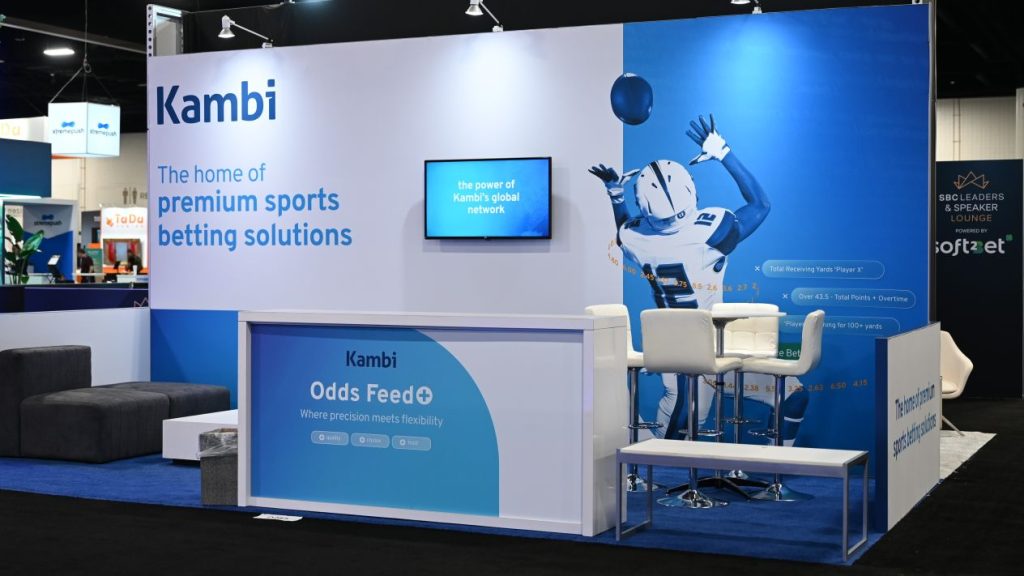
Image: SBC
How important is Canada within the company’s global growth strategy?
Canada is a very important market for Kambi, and one where we’ve built real momentum.
With the partnerships you reference, Kambi will have a presence in nine of Canada’s ten provinces. Our activity in Alberta gives us a strong position in the province’s emerging commercial market across both online and on-property sports betting. That is a strong platform, and it says a lot about the trust leading Canadian operators and lotteries place in our technology and services.
More broadly, Canada is exactly the type of market where Kambi can add value: it rewards premium technology, deep trading expertise and long-term partnerships.
As more jurisdictions regulate, how important is it for suppliers like Kambi to balance standardized technology with local market customization?
It’s absolutely critical.
The underlying technology has to be scalable, reliable and efficient across markets. But customers don’t experience a sportsbook as a piece of infrastructure. They experience it through the sports they follow, the promotions they see, the way the product looks and the way it fits into their local market.
That is why suppliers need both: a strong global foundation and the flexibility to localize where it matters. At Kambi, we’ve built our platform around that balance. The scale of our global network means we can bring proven technology, trading intelligence and product learnings into new markets, while still giving partners the flexibility to create something that feels local. Canada is a good example, and our latest Alberta announcement with Pure Casino Entertainment shows how we can combine the scale of Kambi’s Turnkey Sportsbook with the local knowledge, brand strength and retail footprint of a leading provincial casino operator.
If Alberta is successful, do you think it accelerates the case for other Canadian provinces to regulate commercial iGaming, and what would that mean for suppliers like Kambi?
Each province will make its own decisions, based on its own priorities. But if Alberta delivers on the goals policymakers have set out, particularly around consumer protection, channelization and revenue generation, it will certainly strengthen the case for further regulatory development elsewhere.
Alberta has the potential to become an important catalyst for the next phase of the country’s gaming industry, just as Ontario has been over the past several years.
Online casino games supplier Greentube officially entered Alberta on day one of the province’s new commercial iGaming market.
The Novomatic digital gaming and entertainment division already works with numerous online casino operators in Ontario’s regulated market and has now extended its Canadian footprint to a second province. It was approved by the market regulator Alberta Gaming, Liquor and Cannabis (AGLC) following what the company described as a rigorous regulatory and technical due diligence process.
Alberta opened for business on July 13, replacing the previous Play Alberta monopoly model. Some 22 licensed online gambling sites started taking bets on day one to compete with the AGLC-run platform.
Now, Greentube offers Alberta players a curated range of games selected for the province’s market, such as Captain’s Catch, Firecracker Frenzy Money Toad, Piggy Prizes Wand of Riches 2, Rumble Riches Haulin’ Gold. The firm said it carefully selected that range to incorporate both its newest releases and the strongest-performing titles.
Greentube places firm focus on Canada
Greentube works in other markets, but its leaders have emphasized numerous times that Canada remains a large area of focus for the company.
It has been an approved supplier in Ontario since 2022, the first year of that province’s open market. It works with several licensed operator partners, including the likes of:
It also works with the governmental lottery corporations in multiple other provinces, including the British Columbia Lottery Corporation and Loto-Québec.
The supplier’s Commercial Director, David Bolas, said in a Greentube press release that going live in Alberta is an important step for the company and is indicative of the “strong momentum” it is seeing in Canada on the whole.
“We welcome the opportunity a new jurisdiction offers and look forward to working with locally licensed operators to introduce our established offering to players in Alberta,” added Bolas.
“With a balanced line-up of new releases and proven performers, we are well placed to offer a compelling experience in the province and support our long-term ambitions in the region.”
Earlier this year, Bolas told Canadian Gaming Business that adding a commercial iGaming market in Alberta to the existing competitive Ontario market will make Canada one of the most attractive regions for iGaming operators around the world.
“We combine established, recognizable franchises with carefully localized new releases, ensuring we appeal to players who favour classic gameplay and those seeking more contemporary, feature-rich experiences,” he said at the time. “Operating within regulated markets also reinforces player confidence; something we consider fundamental to long-term success in Canada.”
Suppliers flood through the Alberta door
Greentube is one of many, many gaming suppliers that secured licensure from the AGLC before Alberta’s market officially opened on July 13.
It joins a long list of familiar names in the world of online casino and sports betting, including:
The Ontario government is in the middle of conducting a sweeping review of its gaming industry, but Tourism, Culture, and Gaming Minister Stan Cho will no longer be overseeing it.
Progressive Conservative Member of Provincial Parliament Cho resigned from his ministerial position in Premier Doug Ford’s cabinet on Friday after coming under criticism for expensing hotel stays in Toronto.
Global News first reported that Cho, who lives not far from the provincial legislative building in downtown Toronto, claimed more than $16,000 in taxpayer-funded expenses on hotel stays in the city over the last three years, including around $11,700 in 2025-26. After a week of intense media scrutiny, he resigned on Friday, although he will remain the MPP for Willowdale in north Toronto.
“Earlier today, I accepted the resignation of Stan Cho from Cabinet, effective immediately,” said Ford’s office, as quoted by Global. “He has acknowledged and taken responsibility for his mistake.”
This morning, I met with Premier Ford at the legislature and gave him this letter resigning as Minister of Tourism, Culture and Gaming. pic.twitter.com/YBf3u2El5U
Cho wrote in a statement posted on X that he was taking full responsibility for what he described as “a mistake”, although he maintained that his expense reports were within Ontario government rules.
He added that he repaid the expensed amount “to the penny.”
However, media outlets subsequently reported that Cho had billed tens of thousands more in expenses paid by contributions from donors and taxpayer-funded subsidies, including almost $100,000 in food and beverage expenses over a three-year period.
What next for Ontario gaming?
Cho spoke at SBC Summit Canada in Toronto in both 2025 and 2026 about Ontario’s gambling industry.
In 2025, Cho announced that his ministry would launch a high-level review of online and land-based gaming in the province with the aims of increasing efficiency, ensuring the sector delivers stronger economic returns, continuing to protect players and ensuring greater synergy between land-based gaming and commercial iGaming.
He noted at that time that the rapid expansion and pervasiveness of Ontario’s online gambling industry meant that various “problems are evolving”, although he vowed his ministry would not tangle up the imndustry in red tape.
Stan Cho speaks at SBC Summit Canada. Image: SBC
Eleven months later, at SBC Summit Canada 2026, he reflected that while Ontario has created “one of the most successful markets in the world,” second thought may be needed on some things.
In particular, he listed six areas in which he said the government we can reduce red tape and streamline processes:
Anti-money laundering
Audits
Communications
Data management
Financial oversight
Responsible gaming
He also told attendees that Ontario is considering whether it needs to tighten its online gambling advertising rules as MPPs continue to report constituents’ concerns over gambling addiction and gaming’s exposure to children and vulnerable demographics.
“This is a growing problem … We are very seriously looking at additional measures on the advertising side to make sure this doesn’t make the problem grow,” he said at this year’s SBC Summit Canada in May.
That comes amid continued federal discussion of Bill S-211 in Parliament, a proposal to establish a national framework on gambling advertising that has passed the Senate two years in a row. Meanwhile, a Liberal MPP’s bill to completely ban iGaming advertising in the province was quickly voted down at Queen’s Park in May.
Interim replacement Downey knows gaming well
Now, Stan Cho is out.
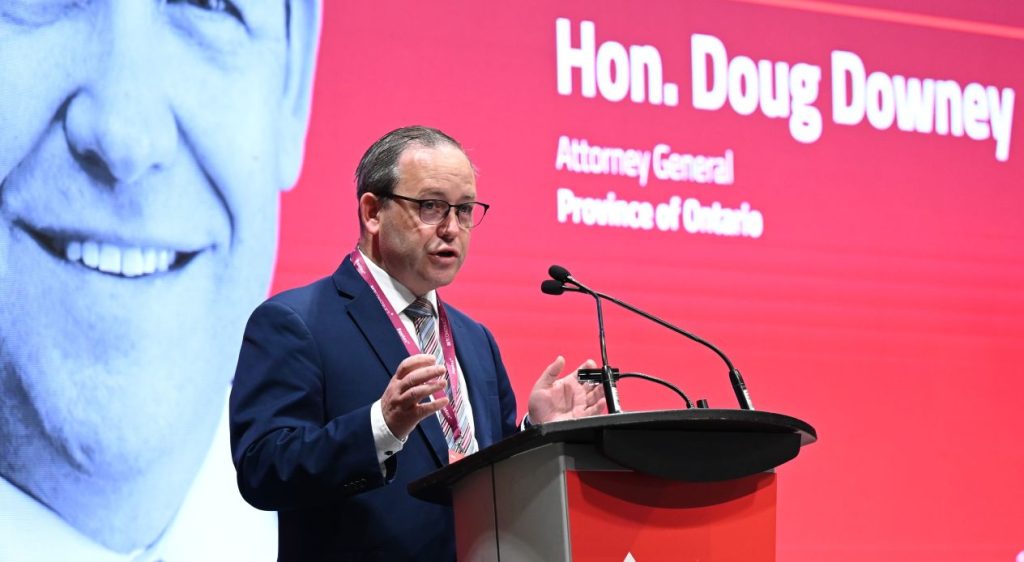
He will be replaced as Ontario’s gaming minister on an interim basis by the province’s Attorney General Doug Downey. An experienced hand when it comes to gaming, Downey has been AG since 2019 and helped to oversee the creation and implementation of Ontario’s regulated iGaming market.
Image: SBC
iGaming Ontario (iGO) President and CEO Joseph Hillier was Downey’s Chief of Staff before moving to first to the role of Alcohol and Gaming Commission of Ontario (AGCO) Chief Strategy Officer and then taking the top job at iGO.
Downey will now take up the mantle of leading Ontario’s overarching approach to a provincial gambling in industry that processes billions of dollars in wagers by residents and produces hundreds of millions in gross gaming revenues for operators every single month.
iGO-managed iGaming (excluding Ontario Lottery and Gaming) generated more than $800m in tax revenue for the Ontario government in 2025 alone.
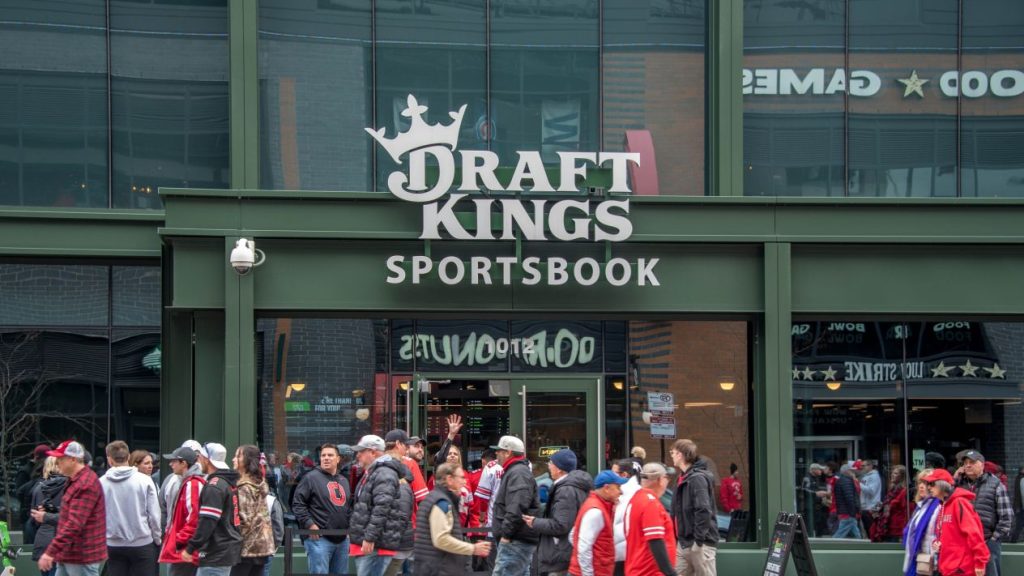
EDMONTON, ALTA. — DraftKings was one of the very first operators to launch when the clock struck midnight and Alberta launched its regulated iGaming market on July 13. There was never any doubt that it would be raring to go, says the company’s co-founder and President of Operations Paul Liberman.
“It’s not often that both OSB and iGaming come at once,” Liberman told Canadian Gaming Business in an interview on Monday. “Canada is such a large opportunity for us. It’s exciting. I mean, it’s just always exciting to see more people using the product that you’ve built.”
Alberta is DraftKings’ 34th online sports betting jurisdiction in North America and its seventh for online casino. But, to Liberman’s point, the last time one of them began allowing both sports betting and iCasino on the same day was Ontario, when Canada’s first commercial iGaming market opened back on April 4, 2022.
DraftKings not exactly a new name in Alberta
Whereas DraftKings launched a little late in Ontario four years ago, Canadian Gaming Business observed that it was accepting bets within minutes of midnight in Alberta, one of the very first to do so. The company has a firm foothold in Ontario to go alongside its leadership position in its 32 U.S. markets, where it generally vies with FanDuel for the top spot by both handle and revenue.
Liberman says DraftKings is the largest operator south of the border in the U.S. by handle in sports betting and No. 2 in online casino. The company wants similar status across its two Canadian provinces.
Speaking with Canadian Gaming Business on Monday’s launch day in an Edmonton restaurant, Liberman pointed out that, unlike some of DraftKings’ competitors, his company never offered sports betting or casino in Alberta until now, just as it refrained from offering those products in the pre-2022 Ontario unregulated market.
DraftKings co-founder Paul Liberman in Edmonton on July 13. Image: DraftKings
“We have not been live outside of Ontario,” he said on Monday’s launch day. “A lot of operators have been live here. Albertans used sportsbooks yesterday, right? Today’s the launch, but those sites that launched today, in many cases, existed yesterday and were taking bets.”
Still, he acknowledged that DraftKings nevertheless has an advantage of its own: It’s already a well-known name in an Alberta market that already hosts 22 iGaming sites run by a total of 15 separate operators.
DK has to give up DFS… for now
One of those reasons is that, like in Ontario, DraftKings arrives in Alberta with a legacy as a longstanding heritage daily fantasy sports (DFS) platform. And, also like in Ontario, the new regulated marketplace means DraftKings felt it was left with no choice but to shut down that side of its business in Alberta.
“We started off as a daily fantasy sports product, and I’m learning there are more Albertans who like daily fantasy sports than I even realized,” Liberman said on Monday.
Unfortunately, [DFS] had to be shut down today as we launched our sportsbook and iGaming product.
“I actually didn’t even realize we shut off DFS until I learned about it today from a player here. It’s not that I’m not focused on DFS. It’s just that sports and casino have been such a big portion of our focus, and DFS is a much smaller product. Maybe it just wasn’t ready for primetime [here].”
Liberman confirmed that DraftKings’ decision to end its DFS operations in Alberta is a direct consequence of the province’s regulated market rules, which stipulate that all real-money gaming activity must stay within its borders, making DFS a less lucrative and less viable product for licensed operators. That’s the same thing that happened in Ontario four years ago.
On that front, things could change in the future.
The Alberta iGaming Corporation (AiGC) and iGaming Ontario (iGO) are working on a memorandum of understanding to pool their players of peer-to-peer games like DFS and online poker. Meanwhile, pending the outcome of a multi-provincial Supreme Court appeal, they could soon be allowed to connect their players with those in other countries. On the very day that Alberta opened its iGaming market, a hearing in that international liquidity case was scheduled for Oct. 7, 2026.
Sports history, casino focus
While DraftKings had its roots in DFS and its early cachet in sports, casino has risen to the forefront in recent years. The number of U.S. iCasino states may be smaller than for sports wagering, but where it is available to operators, the revenue potential is huge.
Just look at Ontario, where gamblers wagered a total of $8.37bn on iCasino in May 2026 alone, resulting in $326.4m in gross gaming revenue (GGR) for operators. Compared to $972m in sports betting handle and $81.3m in sports wagering revenue, iCasino comprised 88% of iGO operators’ total handle and 79% of their aggregated GGR.
DraftKings has spent plenty of time and money on building up its casino product in recent years. “We have an amazing DFS product, an amazing sportsbook product, but I’d say our casino product is our best of the three,” Liberman suggested.
The operator hosts sports and casino all in one app these days, but it also offers a second, casino-only brand. Golden Nugget Online Gaming, which DraftKings bought for more than US$1.5B in stock five years ago, launched in Ontario last summer and went live alongside DraftKings’ flagship app on day one in Alberta.
Liberman says that helps DraftKings increase its appeal to more casino-centric customers.
“The DraftKings brand has been very sports-focused, historically. A lot of our marketing is around sports, so people associate it more with sports than gaming, even though we have a world-class casino product. Golden Nugget has been a traditional gaming brand, and we’ve taken almost the same product and adjusted it for the Golden Nugget audience, which skews a little bit more slot-friendly with different content likes.
The thought is, if you think of DraftKings for sports betting, maybe you’ll think of Golden Nugget for casino.
“You have the same DraftKings wallet, the same loyalty program, lots of the same features also under the Golden Nugget name. You can use your same DraftKings account on either one. It’s just that for some people, the Golden Nugget brand resonates more.”
DraftKings eyes Alberta sports partnerships, retail presence
That doesn’t mean DraftKings isn’t coming into Alberta with a big sports focus, though.
The operator is already an officially authorized partner of numerous major sports leagues, including:
MLB
NFL
NBA
NHL
PGA TOUR
UFC
WNBA
In the U.S., it also has partnerships with specific major-league teams in some markets, like MLB’s Detroit Tigers and the Chicago Cubs and White Sox.
Will it pursue similar opportunities in Alberta?
“Oh, absolutely, we are exploring and are going to explore sports partnerships,” Liberman said. “You get such passionate fanbases here, and loyal. I think it’d be crazy not to explore that. Hopefully, it’ll come with time.”
DraftKings Sportsbook at Chicago’s Wrigley Field. Image: ChicagoPhotographer / Shutterstock.com
Alberta Gaming, Liquor, and Cannabis (AGLC) regulations also allow for land-based casinos and pro sports arenas to set up retail sportsbooks, something DraftKings has utilized in numerous states, although the opportunity hasn’t been there in Ontario.
“Those are one-off decisions that we make based on the location and the strategy,” Liberman noted. “We look at them as individual investments. How they will perform, the different populations and the different audiences. Generally, we like that [Alberta] included land-based casinos. We’ve learned in the U.S. that when they’re included, it leads to a better product and creates better alignment between the online operators and the land-based operators, so it makes sense.
“We’ll see how that evolves. Those are conversations that happen. You know, if it’s at the Oilers stadium, maybe it makes sense. But if it’s somewhere where no one’s ever at, then sometimes the operational complexity is just really tough to operate these retail establishments.”
In the meantime, DraftKings has its dual-brand iGaming approach live in a second Canadian province. Not everything in Alberta will be like it is in Ontario, but much will be similar, not least the fact that with more than 50 operator sites registered, it will be fiercely competitive.
For now, like many of the new entrants, DraftKings is just happy to be here.
Loto-Québec has added AristocratInteractive content to its portfolio, a move which means the supplier’s games are now available in every regulated lottery market in Canada.
In what Aristocrat Interactive called a milestone in its continuing North American expansion, Loto-Québec will offer a range of the supplier’s leading games, including Buffalo, Mo Mummy, and other top-performing titles. The first games went live with the crown corporation in late June 2026.
Later in 2026, Loto-Québec will also onboard games from Aristocrat Interactive’s subsidiary NeoGames Studio. The lottery will also leverage the company’s Fusion aggregation platform to facilitate access to third-party content, which the organizations said will give Loto-Québec the flexibility to continuously scale and refresh its player experience.
Aristocrat Interactive’s Canadian footprint
Aristocrat Interactive is Australian gaming giant Aristocrat Leisure Ltd.’s online real-money gaming business, formed in 2024 through a merger of Anaxi and the NeoGames businesses, comprising:
Aspire Global
BtoBet
NeoGames
Pariplay
It delivers land-based gaming systems, content and technology solutions for online real-money gaming, with a full-service offering that includes content, proprietary technology platforms and other services across iLottery, online sports betting and casino, and customer experience solutions.
“Completing our Canadian lottery footprint with Loto-Québec is a significant milestone for Aristocrat Interactive,” said Aristocrat Interactive Managing Director of iLottery Chris Shaban.
“As the exclusive operator in one of Canada’s largest provinces, Loto-Québec offers a unique opportunity to bring our premium content and aggregation capabilities to players across the region. We’re excited to support their digital roadmap with our broad portfolio of proven titles and innovative experiences.”
As well as its extensive B2B operations, company also previously offered white-label B2C iGaming platforms in Ontario’s regulated market. However, it pulled Betiton and MagicRed out of the market late last year after around a year.
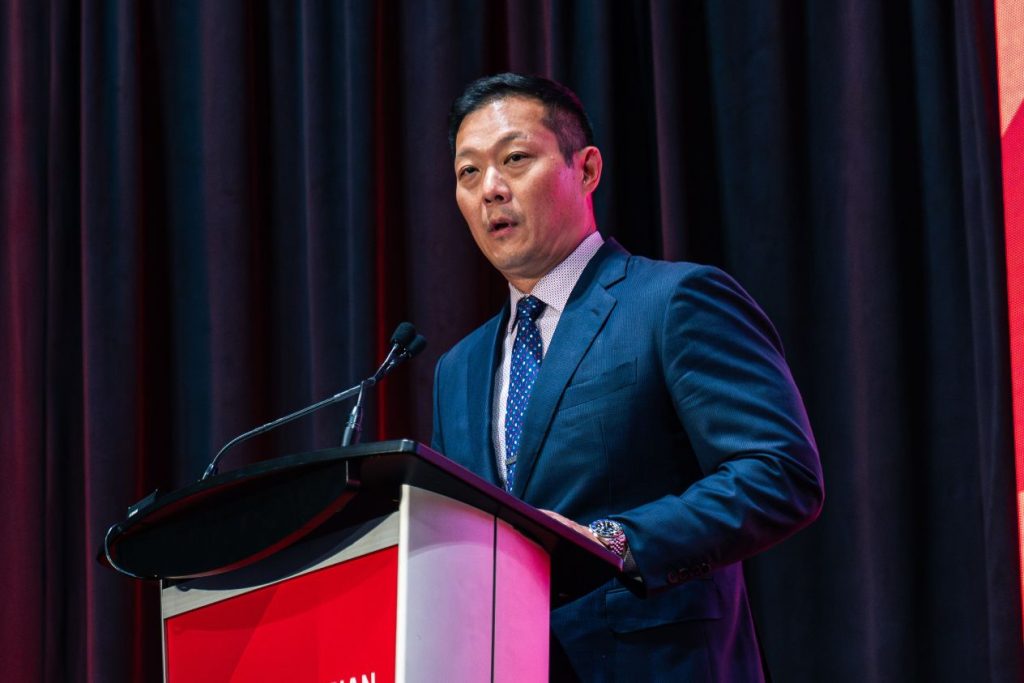
Loto-Québec President and CEO Jean-François Bergeron. Image: SBC
Loto-Québec focused on iGaming, says CEO
Aristocrat Interactive is the latest prominent supplier whose content Loto-Québec has begun offering, as it seeks to build momentum and revenue for its iLottery and iGaming operations.
The crown corporation reported in early June a new annual revenue record of more than $3bn for the 2025-26 fiscal year, but President and CEO Jean-François Bergeron acknowledged that it needs to improve its iGaming position as lobbyists and commercial operators continue to push for Québec to open a competitive market.
“It is essential that Loto-Québec strengthen its presence in the online gaming sector, including sports betting, to ensure better oversight and guarantee that profits benefit the people of Québec,” wrote Bergeron at the time. “We prioritize a responsible approach aimed at capturing the market rather than stimulating growth.”