Search
Choose a style
Dark
Light

ToonieBet sponsors Rock League curling’s inaugural season

Soft2Bet’s ToonieBet brand has added to its Canadian sports partnerships by signing up as the official sports betting partner of the inaugural season of Rock League curling.

Rock League is curling’s first professional league, hosting six mixed-gender teams from various parts of the world, including two from Canada (Maple United and Shield Curling Club), one from the U.S., two from Europe, and one Asia-Pacific team.

As the official sports betting partner of the league, which is run by the Grand Slam of Curling operator The Curling Group, ToonieBet will get visibility across digital and social channels as well as an in-arena presence theoughout the league’s first season, which runs April 6-12 at TMU Mattamy Athletic Centre in Toronto.

Rock League games are streamed live in Canada on CBC Sports‘ digital platforms, including CBC Gem and cbcsports.ca, and in the U.S. on ESPN+. Coverage of the playoffs, semifinals, and championship matches will be broadcast nationally in Canada on CBC TV.

The Curling Group was co-founded by former PointsBet Canada Chief Commercial Officer Nic Sulsky. It will expand Rock League to multiple venues across a full five-week season in 2027.

“This partnership with ToonieBet marks an important step as we build a modern, fan-focused curling professional league,” said The Curling Group VP of Sponsorship Keesje Kort. “Sports betting is an increasingly important part of the sports entertainment ecosystem, and we’re excited to work with ToonieBet to create engaging, responsible experiences for our fans.”

Canadian partnerships for a Canada-focused brand

A ToonieBet spokesperson said the partnership perfectly matches Soft2Bet’s objectives to build the brand and connect with local audiences.

Ontario-facing ToonieBet already has an existing multi-year partnership as an official betting provider of the Canadian Football League (CFL) and formerly had a deal with the NHL’s Ottawa Senators.

Soft2Bet General Counsel David Yatom Hay told Canadian Gaming Business last month that partnerships like the CFL arrangement are part of the company’s broader strategy to localize its offering, “making sure that our product, our brand and our engagement approach genuinely resonate with players in each jurisdiction we enter.”

A fresh start in Alberta for Soft2Bet?

Soft2Bet is one of numerous iGaming operators that has applied for registration to enter Alberta when that province launches commercial regulated iGaming later this year. It is seeking regulatory approval both to operate a B2C online gaming platform and to offer B2B services to other companies.

However, while ToonieBet has solidified its presence in Ontario since debuting in 2024 and is now aligned with the CFL, it may not be the B2C brand that Soft2Bet chooses to lead with in Alberta.

“We recognize that Alberta is a distinctly different region with its own unique demographics, competitive landscape, and upcoming regulatory framework,” added Yatom Hay. “We have not reached a final decision on extending the ToonieBet brand.

“However, whether it’s ToonieBet or another brand, it will deliver a localized, engaging experience that genuinely resonates with Albertan players. The hyper-local approach was a key part of our success in Ontario. The same principle applies, regardless of the brand we bring to market.”

Yatom Hay added that if Soft2Bet identifies opportunities for strategic sports partnerships in Alberta with whatever brand it chooses to launch there, it will pursue them.

“The objective is not simply visibility, but relevance, ensuring that the experience we offer feels tailored to Alberta players and connected to the sports they care about,” explained Yatom Hay. “These types of partnerships are important for building trust and familiarity in a new market.”

RGC and Ontario aim to speak to young men with new public campaign

The government of Ontario and the Responsible Gambling Council (RGC) are making a conscious effort to speak directly to young men, recognized as one of the demographics that is most susceptible to problem gambling.

The RGC unveiled a new public service announcement (PSA) that targets young men aged 19 to 24. The campaign will run nationally across several Canadian broadcasters and digital platforms including Netflix, Spotify, Twitch, YouTube, and Meta’s Facebook and Instagram.

The “Moment of Reflection” campaign evokes the idea of recognizing one’s own gambling activity and making informed choices. RGC Chief Executive Officer Sarah McCarthy and Ontario Minister of Tourism, Culture, and Gaming Stan Cho unveiled the new campaign at a press event on April 2.

“Gambling should never come at a human cost,” said McCarthy in a release. “As online betting continues to evolve rapidly, we are seeing an increased risk of early exposure and normalized gambling behaviours, particularly among young men.

“This new campaign speaks directly to young adults, giving them the practical tools and guidance they need to make safer, informed choices.”

The RGC said that its targeted prevention effort was made possible by the Responsible Internet Gambling Fund (RIGF), which takes $3m per year from Ontario’s iGaming revenues and puts it towards measures aimed at proactive harm prevention.

“Thanks to funding from the RIGF, we can reach them where they are and make a real difference,” added McCarthy.

“Excited to join the Responsible Gambling Council (RGC) to launch a new PSA campaign along with the Responsible Internet Gambling Fund impact report,” Cho wrote in an X post. “Our government proudly supports RGC’s work to promote safer, informed gambling choices.

“While Ontario has built [one] of the world’s strongest responsible gaming frameworks, we remain committed to strengthening protections and supporting safer play for all Ontarians.”

Reaching young men through sports

The RGC also published its 2026 RIGF Impact Report, which outlines some of the results of the council’s work to increase gambling education and strengthen its prevention program focusing on young people.

The report notes several milestones that have been reached since the RIGF was established in 2024. It particularly focused on its use of Canadian sports to share its messaging, including a partnership with Maple Leaf Sports and Entertainment (MLSE) and a newer collaboration with the Ottawa Senators.

  • An existing PSA called “The Randoms” that began in March 2025 and aired across national broadcasters like CBC, CTV, Global, and CityTV reached a total of 50.8 million people through the RGC’s MLSE partnership
  • It generated 601 million impressions during broadcasts of Toronto Maple Leafs, Raptors, Argos, and Toronto FC games, and 23.8 million ad views on digital platforms like theScore, TikTok, YouTube, and Twitch
  • “The Randoms” resulted in approximately $100m in broadcaster investment since the launch of Ontario’s regulated iGaming market in April 2022, which the RGC said reflects the scale of the industry’s commitment to reaching young adults with safer gambling messaging
  • More broadly, major sports leagues and arena partners raised $4.15m in safer gambling media value via sports partnerships and arena activations
  • 49 million people were reached through TV, media, and activations via what the council called “ethnocultural outreach partnerships”
  • 65% of respondents reported a significant increase in their knowledge of gambling harm risks

“Ontario’s investment in the Responsible Internet Gambling Fund reflects our government’s commitment to ensuring that online gambling expansion is matched with meaningful safeguards for players,” added Cho. “The results we are seeing demonstrate that targeted, evidence-based prevention works, and we are proud to support programs that are reaching young Ontarians with the tools and information they need to make safer choices.”

In the RIGF report, the RGC also noted that one of its priorities moving forward for the fund is to provide “a counterbalance” to gambling advertising from operators. The topic of gaming advertising continues to be a contentious one, and a Senate-approved bill to implement national restrictions on sports betting ads is currently in committee discussion in the House of Commons.

Rideau Carleton Raceway latest Canadian horse track to end racing

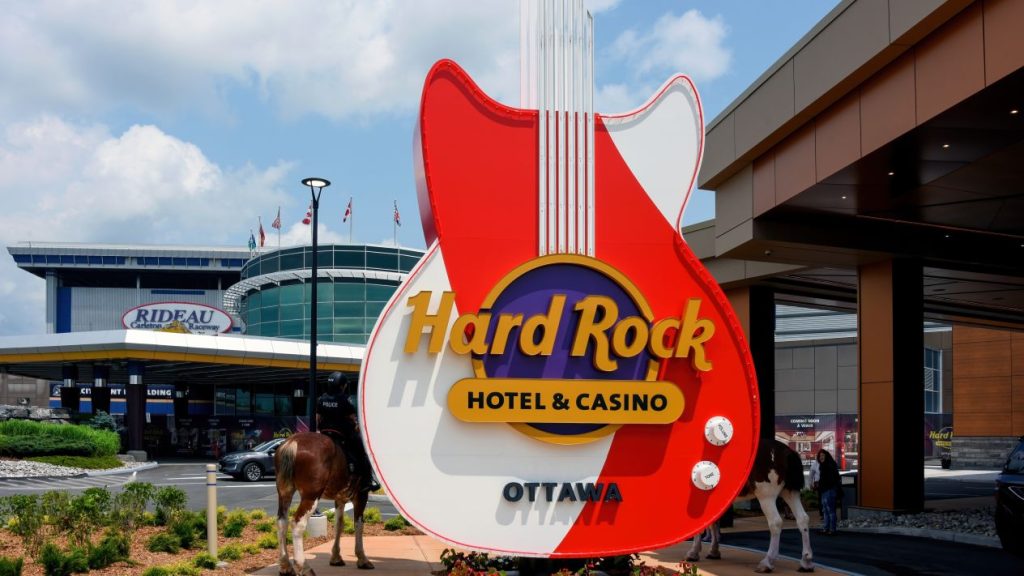
Ottawa’s Rideau Carleton Raceway has ended its harness racing operations after more than 60 years, the latest shutdown in Canada’s horse racing industry.

Hard Rock Hotel & Casino Ottawa announced on April 2 that, after “extensive discussions” with provincial horse racing authority Ontario Racing, there will be no 2026 season at the track, which has hosted racing since the early 1960s.

The casino said that despite the fact that it invested millions of dollars to rebuild the racing paddock and upgrade legacy infrastructure, “the long-term sustainability of the racing program could not be achieved.”

“We made significant investments in racing infrastructure and adjusted our operations multiple times over the last three years; however, a sustainable path forward was not possible,” said Hard Rock Hotel & Casino Ottawa President Christine Crump.

“Many of us hold deep respect and fond memories of the racing industry but consumer preferences have changed. This is a sad time for our team members, the horse racing community and all those directly impacted. Racing at Rideau Carleton Raceway will always be remembered as an important chapter in the site’s history.”

Hard Rock said that all directly impacted team members are being offered alternative employment opportunities within the organization, along with any necessary skills training to support career transitions.

Andrew Gaughan, Independent Chair of Ontario Racing, said that the organization will dedicate a portion of the funding it has been providing to Rideau Carleton Raceway towards a relocation support program, while the remainder will go back into purses for live horse racing at other Ontario Standardbred racetracks.

Harness association releases frank statement

Hard Rock took over the day-to-day casino operations at Rideau Carleton in 2017 and has run three seasons under sole ownership.

The National Capital Region Harness Horse Association (NCRHHA) said that Hard Rock decided to close the venue permanently despite the collaborative efforts of Ontario Racing and the NCRHHA.

“Fading from our racing scene here in the NCR is a racing industry and private sector business relationship that was once viewed as the best and most successful in the province… then came Hard Rock,” read a statement primarily attributed to NCRHHA President Gordon McDonald.

“Words cannot express our disappointment with Hard Rock’s decision to close one of the most successful racetracks in Ontario; as well that this decision may have been managed with greater respect and regard for our racing community following closure of the backstretch in 2025 and over four months of winter shutdown during which the NCRHHA racing community continued to invest in facilities and livestock with the expectation of racing opening in the spring to provide opportunity to recover these investments.”

While 11 standardbred racetracks remain in Ontario, Peterborough’s Kawartha Downs is now the only operational harness track in the province that is located east of Toronto.

Meanwhile, Hard Rock opened the $350m Hard Rock Hotel & Casino Ottawa last July, Hard Rock’s first fully integrated casino resort in Canada and the only Hard Rock-branded casino in the country. The resort includes a 150-room hotel, an expanded gaming floor with around 1,500 slot machines and 40 table games, a Hard Rock Café and the 1,900-seat Hard Rock Live events venue.

Rideau Carleton closure follows BC body blow

The news of the iconic Rideau Carleton Raceway’s shutdown comes just a few months after British Columbia’s last operational horse track announced its own closure.

In December, days after the B.C. government announced it would no longer dedicate a portion of revenue from slot machine gaming to the horse racing operations at Hastings Racecourse & Casino, the venue said that all thoroughbred horse racing at the facility would end, effective immediately. Hastings had hosted horse racing since the late 19th century and was the last remaining active course in B.C. after Fraser Downs in Surrey closed suddenly last summer when the city terminated the lease agreement.

Great Canadian Entertainment Regional VP Wayne Odegard said the closure of Hastings was based on “a lack of economic feasibility” after funding was pulled.

B.C. Solicitor General and Minister of Public Safety Nina Krieger said the government’s decision to stop dedicating slots funding to the track was made after a review by the province found “significant financial sustainability concerns” that suggested that maintaining B.C.’s horse racing industry was not viable because of a range of factors, primarily declining revenues and lower attendance at racing events.

Ontario tracks got slots reprieve

In contrast, multiple racetracks in Ontario including Kawartha Downs got a lifeline at the end of 2025 when Ontario Lottery and Gaming Corporation (OLG) reversed a previous decision to end its Optional Slots at Racetracks Program (OSARP), a temporary support system that allows certain racetracks to benefit from slots at nearby casinos.

Meanwhile, Ontario’s horse racing wagering industry continues to evolve.

OLG and Woodbine Entertainment Group launched online and mobile parimutuel betting on live races last August, making OLG the first Canadian provincial lottery corporation to offer such products. Woodbine already had a similar deal with commercial sportsbook bet365.

Woodbine hosts thoroughbred racing at Toronto’s Woodbine Racetrack and standardbred racing at Woodbine Mohawk Park in Milton. It is the only company federally authorized to offer parimutuel wagering on horse racing in Canada, wherein players’ bets go into a shared pool and winners share the pot. Fixed-odds betting on horse racing is illegal in Canada.

Canadian regulators say they may need to take action on prediction markets

Canadian regulators reminded the public on Thursday about the strict limits on event contract trading north of the border, as the prediction markets issue continues to dominate the gaming industry conversation in the U.S. and boils over in the broader public consciousness.

The Canadian Securities Administrators (CSA) and the Canadian Investment Regulatory Organization (CIRO) issued a joint press release on April 2 that stressed that barely any companies are licensed to offer prediction markets in Canada right now. The authorities suggested they are willing to take enforcement action against anyone offering unapproved trading in Canada.

The regulators said they were posting the notice “given the growing interest in prediction markets in Canada.”

“Anyone trading, or facilitating trading, in event contracts which are securities or derivatives must follow applicable requirements under securities or derivatives legislation, such as registration or recognition requirements,” stated the release.

“Failure to comply with applicable requirements under Canadian securities and derivatives laws may lead to enforcement action.”

Poly want a cracker?

The CSA and CIRO noted that a particular rule in place in the entirety of Canada (except British Columbia) prohibits anyone from offering, selling, trading or advertising any binary yes/no contracts that resolve within less than 30 days.

That would include the majority of the kind of sports contracts now littering the U.S. market on nationwide platforms such as Polymarket, Kalshi, and Crypto.com. In some states, sports contracts are also offered by various sportsbooks’ new prediction market platforms, such as FanDuel Predicts and DraftKings Predictions.

One of the jurisdictions that the CSA/CIRO release references is Ontario, where the Ontario Securities Commission (OSC) prohibits those short-term binary options. The OSC, which is a member of the CSA, banned Polymarket for two years in 2025 through a settlement that was reached after the company admitted that it violated the province’s rules.

As such, Polymarket is not allowed to operate or advertise in Ontario. However, the Globe and Mail reported on Thursday that Polymarket promotional materials were being handed out outside Toronto’s Rogers Centre in recent days before Blue Jays games, complete with sign-up offers.

Incidentally, Polymarket is now an official partner of Major League Baseball, and it is reputedly widely available in the rest of Canada.

Regulators look to future-proof against predictions

There is an exemption to the ban on short-term binary contracts for CIRO’s approved members, pending regulatory approvals. CIRO and the CSA stressed in their statement what they had confirmed in a bulletin just a few days earlier: As of right now, only two CIRO members have been authorized to offer Canadian access to event contracts.

Even those two firms in question, Interactive Brokers Canada and now also Wealthsimple, can only offer a limited set of event contracts that are traded and cleared through certain U.S. Commodity Futures Trading Commission-regulated exchanges and clearinghouses. In the bulletin, CIRO’s terms and conditions stated that only contracts involving “economic forecasts,” “environment forecasts” or “financial indicators” are allowed, and only if they take longer than 30 days to resolve.

Other companies such as Questrade have been reported recently as being interested in offering prediction markets.

However, the regulators’ press release stressed that while approved CIRO members may facilitate Canadian client access to event contracts that are traded on non-Canadian markets, “to date, no prediction market has been recognized as an exchange or registered as a dealer” by the CSA.

“The CSA and CIRO continue to monitor developments involving prediction markets and event contracts and intend to issue further guidance on how securities or derivatives legislation applies to them,” concluded the regulators. “Due to regulators’ ongoing concerns around prediction markets, the CSA and CIRO will also consider whether other regulatory action is required, including changes to the terms and conditions in the above-mentioned CIRO bulletin.”

You had my curiosity; now, you have my attention

For now, Canada’s stance on prediction markets remains the same, and much less accommodating than the U.S., where the Donald Trump administration is not only allowing companies like Kalshi (which says it blocks Canadian access) but even going to bat for them in federal court.

But the events of this week are hard to ignore. With Wealthsimple’s approval for limited event contracts and Questrade’s interest, and now the regulators evidently feeling they need to make their voices heard, we may start hearing a lot more about prediction markets in Canada.

Want to hear more stories like this? Check out the new SBC Media YouTube channel, the new home of all things multimedia at SBC, where our team deep-dives into the biggest stories from across the sports betting, iGaming, affiliate and payments industries.

Alberta to launch commercial sports betting and online casino on July 13, 2026

Alberta will officially open up its online gambling market to allow licensed sportsbooks and online casinos to start doing business on July 13.

The provincial minister responsible for iGaming, Minister of Service Alberta and Red Tape Reduction Dale Nally, informed stakeholders of the official go-live date in a letter dated March 30 that was viewed by Canadian Gaming Business.

“The launch of a regulated iGaming market is an exciting chapter for our province, and I am confident that we can work together to build a market that is both competitive and socially responsible,” wrote Nally. “Alberta’s future in iGaming is bright, and, with your partnership, we will ensure it is a success for everyone.”

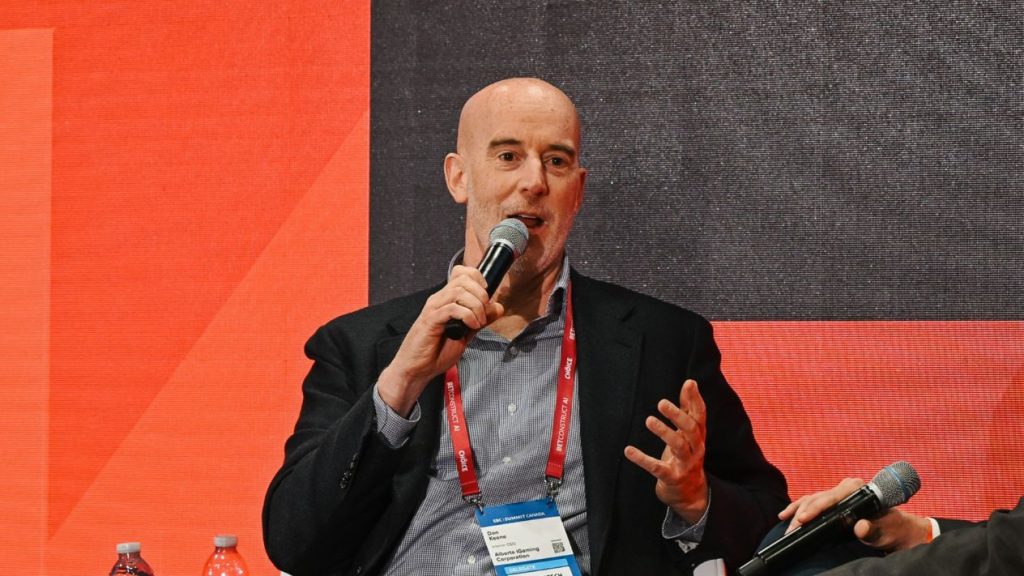
Nally’s letter was co-signed by Alberta Gaming, Liquor and Cannabis (AGLC) Chair Larry Spagnolo and Alberta iGaming Corporation (AiGC) Interim Chief Executive Officer Dan Keene.

“Beginning July 13, operators will be able to conduct and manage their legally registered iGaming platform in Alberta,” noted an update made to the AGLC website on March 31.

What will Alberta’s iGaming market look like?

Alberta will be the second Canadian province to launch regulated commercial online sports betting and online casino, more than four years after Ontario was the first to go live in April 2022. In all other provinces, the respective regional government-run lottery corporation’s platforms are the only officially authorized ones.

AGLC will be the market regulator, as well as the operator of Play Alberta. That platform is the only one currently authorized to offer online gambling in Alberta, although the province estimates that around 70% of all iGaming play right now is happening on unregulated and unapproved sites and apps.

Alongside AGLC, the AiGC will be a separate conduct-and-manage agency, in a similar vein to iGaming Ontario in that province.

Alberta will tax all licensed online gambling operators at 20% of their gross gaming revenue across both online sports betting and online casino, a rate that will be applied after 2% has already been deducted to go towards First Nations funding and 1% has been put towards social responsibility initiatives.

The Canadian Gaming Association (CGA) congratulated Nally, AGLC and the AiGC on their work, writing that “we commend your commitment to prioritizing player protection and implementing robust regulatory standards to ensure a safe market environment.”

What must happen by July 13?

Alberta passed Bill 48, the iGaming Alberta Act, in spring 2025, clearing the way for the province to set up and launch a commercial online gambling market. AGLC opened the registration process for operators and suppliers in January 2026.

Earlier in March, the regulator outlined multiple reasons why July 13 was a key date, even before Nally’s letter confirmed it as the launch date this week.

By July 13, all applicants for a license must have registered with AGLC, signed a commercial agreement with the AiGC, and paid all fees. They must also commit to integrating with the province’s centralized self-exclusion program, which will allow gamblers to opt out of all iGaming platforms, all land-based casinos and racing entertainment centres, or everything at once.

Also, companies that currently offer unregulated gambling services in the province must end those grey-market operations by July 13. If they don’t, they may be deemed ineligible for a license. All bets will need to be settled or cancelled and all funds returned to players. Those processes must restart from scratch if and when an operator re-enters the province under licensure. AGLC can give a three-month grace period for that process, up to Oct. 13, if it feels it is warranted on a case-by-case basis.

In recent weeks, several operators had cited the end of Q2 (June 30) or the start of Q3 (July 1) as a rough target timeline for Alberta launching. Nally previously noted mid-July as a critical time for the province’s plans in an interview with Canadian Gaming Business a few weeks ago.

“We have some temporary regulatory requirements that we put up, and the expiration on those is the second week in July,” Nally said at the time. “You can take that as a very big hint that we won’t be having this conversation in July … We have a date in mind. We’re just not ready to put out the media just yet.”

In his March 30 letter, Nally noted that his office, AGLC and the AiGC heard from the industry that many operators needed more time to prepare for all the requirements of going live, suggesting that what may have previously been an earlier target launch date was pushed back.

Now, finally, Alberta is ready.

Which sportsbooks and casinos will be in Alberta?

AGLC noted earlier in March that as of March 17, more than 55 operator sites had shown “strong interest” in launching in Alberta. The number of different companies seeking an operator license will likely be lower, as several operators including Betway and Jackpot owner Super Group and Caesars will offer multiple brands in the province.

Nally stated that “many” of the recipients of his letter this week have completed the registration process. As of Tuesday afternoon, the AGLC website noted that the regulator is currently experiencing a high volume of inquiries related to Alberta iGaming.

“To ensure efficient processing, priority will be given to organizations that have initiated the registration process and paid the required fees,” said the commission.

Operators that Canadian Gaming Business has noted have confirmed plans to apply for Alberta registration include:

  • Bet99
  • BetMGM
  • BetRivers
  • Betty
  • Caesars
  • DraftKings
  • FanDuel
  • High Roller Technologies
  • NorthStar Gaming
  • PointsBet
  • PowerPlay
  • Soft2Bet
  • Super Group
  • theScoreBet
  • TonyBet

Alberta front and centre at SBC Summit Canada

Minister Nally, other Alberta iGaming leaders including AiGC’s Keene, and leaders from many of those operators will be speaking at SBC Summit Canada 2026 in Toronto on May 20, less than two months before Alberta’s launch.

Want to hear more stories like this? Check out the new SBC Media YouTube channel, the new home of all things multimedia at SBC, where our team deep-dives into the biggest stories from across the sports betting, iGaming, affiliate and payments industries.

Betty deal adds to Gaming Corps’ Ontario footprint

Online casino platform Betty Canada has added more options to its slate of slots through a new partnership with Swedish developer Gaming Corps.

Betty will offer a range of Gaming Corps titles across Ontario, including recent releases such as 3 Easter Pigs, a seasonal spin on the 3 Pigs series. Betty users will also be able to play games from Gaming Corps’ latest remote games server partner, DEGEN Studios, as well as other content categories such as plinko, mine games, crash games, and table games.

Betty becomes the latest operator partner of Gaming Corps, which is a new supplier entrant to the regulated Ontario online casino market. The Swedish company first received its license from the Alcohol and Gaming Commission of Ontario (AGCO) in April 2025 and launched in the province through an agreement with BetMGM in January 2026 which gave BetMGM an initial period of exclusivity.

Gaming Corps said at the time of its licensure that it had already signed agreements with several well-known Ontario operators. It has since teamed up with other operators in the province, including Ellipse Entertainment Ltd.’s High Flyer Casino, and it extended an existing collaboration with casino games aggregator St8 to cover the Ontario market.

“Ontario has become one of the most exciting regulated markets in North America, and Betty has built an impressive reputation by offering players both quality and variety,” said Gaming Corps Chief Revenue Officer Adam Pentecost.

“We’re delighted to partner with such a progressive operator and look forward to showcasing how our latest content can bring something genuinely different to their already rich portfolio.”

Betty continues to scale up Canadian offering

Meanwhile, Betty has onboarded Gaming Corps content after sealing several new supplier partnerships in 2025 with companies including Bragg Gaming Group, 1X2 Network, Thunderkick and more.

“Betty has built its identity on being a homegrown Ontario brand with a clear focus on what local players want,” said the operator’s Senior Casino Operations Manager, Paraskeva Smirnova. “Working with Gaming Corps allows us to continue that mission, adding content that stands out and gives our players something new to discover alongside the thousands of titles we already host.”

The new deal also comes as Betty gears up for major expansion in Canada, both geographically and in terms of its product offering.

The company, which is now an official online casino partner of all of the NHL’s Toronto Maple Leafs, the NBA’s Toronto RaptorsMajor League Soccer team Toronto FC and the Canadian Football League’s Toronto Argonauts, recently acquired Kirkland Lake Bingo Hall in Northern Ontario to facilitate its move into iBingo. It will be one of just three charitable gaming-affiliated iBingo operators in the province, alongside Delta Casino and Casino Time.

Meanwhile, Betty is one of at least 15 operators to have confirmed that it has applied for a license to launch Alberta iGaming. Alberta will open a regulated online gambling market and begin allowing commercial brands to do business on July 13.

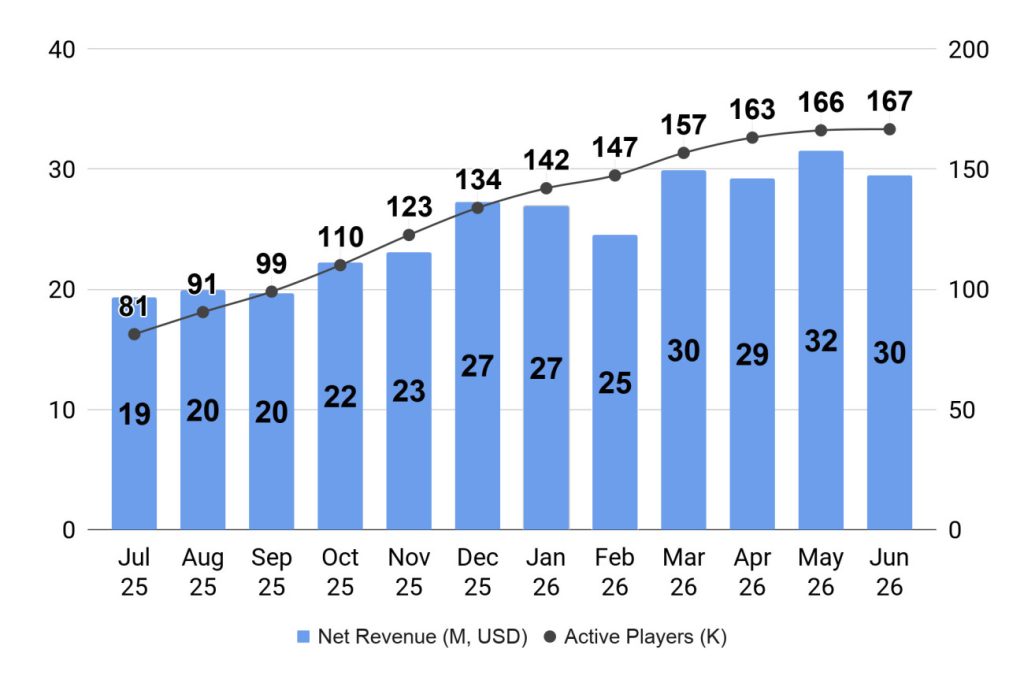
In January of this year, Betty Canada illustrated the pace of its growth in Ontario, reporting that it roughly tripled its net revenue and its active player base between January 2025 and December 2025.

Canadian regulator approves Wealthsimple to offer limited prediction markets trading

The federal regulatory body that oversees trading activity on Canada’s equity marketplaces says it has approved multiple firms to start offering prediction markets.

The Canadian Investment Regulatory Organization (CIRO) stated in an announcement posted on March 26 that it has authorized two Investment Dealer Members to facilitate trading in event contracts. Those two companies are Interactive Brokers Canada, which was approved to offer predictions last year, and Toronto-based financial services and technology firm Wealthsimple, which recently received the green light.

Those firms can offer “a limited set of event contracts” that are traded and cleared through certain U.S. Commodity Futures Trading Commission-regulated exchanges and clearinghouses. Companies authorized by the CFTC to offer event contract exchanges include Kalshi, Polymarket, and Crypto.com.

CIRO said that it provided the update “in response to growing interest among market participants and investors in prediction markets and event contracts.”

Politics and sports? No Canada do

The Canadian Securities Administrators (CSA) banned any entities from advertising, offering and trading “binary options” in 2017, but there is an exemption for CIRO’s approved members.

CIRO stated in its release that event contract trading is subject to certain terms and conditions imposed by CIRO, in consultation with CSA members, as well as CIRO’s requirements regarding options trading. In particular, it stressed that certain categories of event contracts remain prohibited and may not be offered, traded, or facilitated by Dealer Members.

Those include event contracts based on the outcome of elections or other political events such as party leaders’ nominations or referendum results. CIRO members also may not offer event contracts “based on the outcome of unlawful activities under Canadian federal, provincial or territorial law.”

Interactive Brokers does not offer sports trading. Per the Globe and Mail, neither will Wealthsimple.

The terms and conditions noted by CIRO in the release state that only contracts involving “economic forecasts,” “environment forecasts” or “financial indicators” are allowed. All prediction markets must have maturity dates of 30 days or longer, meaning they must take at least a month to resolve.

“CIRO and the CSA continue to monitor developments with prediction markets and event contracts and intend to issue further guidance which could result in the imposition of further restrictions,” added the regulator in the announcement.

Not like the US

In the U.S., the “developments” have been massive. Companies such as Kalshi, Polymarket, and Crypto.com all now offer a range of sports event contracts, and online gambling leaders including FanDuel, DraftKings, Fanatics, PrizePicks and Underdog have all jumped into the market with prediction markets.

While the legality of event contracts, particularly those that mimic state-regulated sports betting, continues to be contested in numerous courts across the U.S., in Canada, the situation is somewhat clearer.

For now, at least. Canada’s securities regulator bans yes/no binary contracts that resolve in less than a month, greatly reducing the scope of the potential market. Law firm Segev LLP notes that as event contracts resemble gambling at one level and financial derivatives at another, they run into “overlapping gambling and securities regimes” that severely restrict their operation. By contrast, the U.S. has begun to recognize prediction markets as a legitimate part of the derivatives sector under the CFTC.

“In Canada, the legal framework governing prediction markets remains highly restrictive,” added Segev. “Federal gambling prohibitions under the Criminal Code, combined with the CSA’s ban on binary options, leave little room for independent platforms to operate.”

Kalshi officially bans Canadians from accessing its platform. Polymarket was fined by the Ontario Securities Commission and banned from trading in Ontario for two years in April 2025 for offering event contracts including sports and politics markets to Ontarians, in violation of the prohibition on short-term binary options. However, Canadians outside of Ontario are still able to access Polymarket’s global site.

“Canadians should avoid using platforms that do not comply with Canadian securities and derivatives laws and are not registered with or recognized by a Canadian securities regulator,” the CSA told CTV News, amid the news of Wealthsimple’s approval.

Even without politics or sports available, other Canadian companies could get on board the prediction markets train. The Globe and Mail reports that Questrade, Canada’s largest independent online brokerage, hopes to get CIRO approval to launch prediction markets as soon as this summer.

SBC Summit Americas: How are regulatory pressures shaping North American gaming?

As regulation continues to shape how gaming companies expand and operate, SBC Summit Americas will deliver a dedicated North American Regulation and Compliance track to help stakeholders navigate the latest developments.

Taking place on Thursday, June 11, the program will bring together leading operators, regulators, and compliance specialists to examine the regulatory pressures and compliance challenges facing the North American gaming industry.

Sessions will address the rise of unregulated gaming formats, the balance between technological innovation and regulatory responsibility, and how operators are responding to new state regulations.

“For too long, the industry has looked at regulation and compliance from the wrong angle,” said SBC Founder and CEO Rasmus Sojmark. “It shouldn’t be seen as an afterthought or a restriction, but as the first consideration for any meaningful growth, whether that’s market expansion or product integration.

“These sessions will show stakeholders how to actually use regulation and compliance to their advantage.”

Staying ahead of the times

The panel ‘Regulators Rising: How Oversight Is Shaping North American Gaming‘ will examine how operators are making critical decisions in an increasingly regulated environment.

Speakers Will Griffiths (CEO, Level Media), Lee Terfloth (Chief Interactive Officer, Gaming, Delaware North), and Dawn H Himel (Director, Louisiana Department of Justice) will share how businesses are adapting to evolving state regulations and iGaming frameworks, and what the rise of formats like prediction markets means for product strategy and risk management. The discussion will also explore how compliance teams are balancing commercial objectives with regulatory demands, and what it takes to stay competitive as scrutiny intensifies.

The session ‘Innovation vs Regulation: Finding Common Ground in Prediction Markets and Emerging Formats‘ will help operators strike a balance between regulatory responsibility and player engagement.

Experts Martin Lycka (Vice President Institutional Affairs, Oddin.gg), Matt Kane (Head of Legal, Betr), Joe Brennan (Co-Founder, Prime Sports), and Evan Davis (Managing Director, Head of Gaming Investment Banking, Jefferies LLC) will examine the legal and ethical uncertainty surrounding emerging formats and outline how operators can develop engaging products while meeting evolving regulatory expectations.

Addressing enforcement trends across the U.S., the panel ‘Crackdown on Unregulated Gaming: Where States Draw the Line‘ will focus on how regulators and state authorities are responding to the rise of offshore betting sites and sweepstakes casinos.

Legal specialists Jon Ford (Former Senator,Indiana State), Carl Herold (Director of Law Enforcement,Florida Gaming Control Commission), and George Rover (Managing Partner, Princeton Global Strategies) will discuss how states are defining illegal gaming, coordinating enforcement strategies, and what these developments mean for licensed operators working to remain compliant.

Beyond the dedicated track, compliance and regulation remain a central theme across the wider conference agenda, shaping discussions around payments, emerging technologies, and new verticals such as prediction markets.

From evolving crypto frameworks and payment innovation to the legal boundaries of event-based wagering, regulatory considerations are influencing how operators invest, build, and scale. By bringing these conversations together under one roof, SBC Summit Americas offers stakeholders a comprehensive view of how regulation is redefining the North American gaming landscape and what it takes to stay ahead in an increasingly complex market.

Secure your ticket to SBC Summit Americas

SBC Summit Americas will bring together 10,000 industry stakeholders at the Broward County Convention Center in Fort Lauderdale, June 9-11. Get your ticket now

VIP Pass: Our VIP Passes are available for just US$700. You’ll have access to the full conference agenda, show floor, complimentary food at our Food Festival and our evening networking events!

Expo+ Pass: For US$95, this pass includes access to the expo floor and all conference sessions (does not include access to evening networking events).

Operator & Affiliate passes: Operators and affiliates can apply for free passes for SBC Summit Americas, subject to approval. Apply for your complimentary Operator Pass | Apply for your complimentary Affiliate Pass

Indigenous-owned Pure to buy Alberta casino company Gamehost

Indigenous-owned Pure Casino Entertainment is growing its Alberta casino portfolio with the acquisition of multi-casino operator Gamehost Inc.

Pure and Gamehost announced on Monday that they have entered into a definitive agreement for a subsidiary of Pure to acquire all of the issued and outstanding common shares of Gamehost, which owns and operates an Alberta portfolio comprising Deerfoot Inn & Casino in southeast Calgary, Rivers Casino and Entertainment Centre in Fort McMurray, Great Northern Casino in Grand Prairie, and two hotel facilities.

The cash consideration of $13.65 per Gamehost share represents a premium of approximately 16% on its most recent share closing price on the Toronto Stock Exchange. The transaction is expected to close in mid-2026, subject to customary closing conditions, including shareholder approvals and regulatory approval under applicable gaming and competition laws.

The Gamehost board has unanimously approved the acquisition and recommends that Gamehost shareholders vote in favour.

Deal follows Pure acquisition in 2024

Pure Casino Entertainment is the privately held operating entity of Indigenous Gaming Partners Inc. (IGP), a gaming partnership between five Nova Scotia First Nations and Sonco Gaming Inc., a leader in Indigenous-owned casino development and management.

IGP acquired the operating assets of Pure in late 2024 from ONCAP, a private equity platform of Onex, for an undisclosed amount. That gave it ownership of four Alberta casinos: Pure Casino Edmonton, Pure Casino Yellowhead, Pure Casino Calgary and Pure Casino Lethbridge.

Now, it will add Gamehost’s three casinos to its Alberta portfolio of land-based gaming venues. Pure and Gamehost said the deal is the result of extensive and thorough negotiations between the two entities and brings together two of Alberta’s leading gaming and hospitality companies.

“For over two decades, I have had the pleasure of working with dedicated team members to create an entertainment and hospitality company that provides extraordinary experiences for our guests, employees and community,” said Gamehost President and Chief Executive Officer Darcy Will.

“I am excited to pass on this legacy to Pure, a proven leader in the Alberta gaming industry. I am confident that they will continue to provide a high-quality guest experience and exceptional environment for our employees.”

Continuing a First Nations casino movement

IGP says it is focused on developing a portfolio of high-quality, market-leading casinos through strategic acquisitions and operational excellence, with the aim of building and expanding meaningful Indigenous ownership in Canada’s entertainment industry.

IGP Chairman Michael Peters told Canadian Gaming Business in early 2025, soon after the Pure acquisition in 2024 that the Pure acquisition was a chance for its five member First Nations — Glooscap First Nation, Millbrook First Nation, Annapolis Valley First Nation, We’koqma’q L’nue’kati, and Paqtnkek Mi’kmaw Nation — to grow their operations both economically and geographically, as well as add valuable source revenue. He forecasted at that time that IGP could explore other M&A moves.

“We’re definitely in growth mode,” Peters said in January 2025. “We’re going to be looking for other opportunities in this industry, not just in Alberta but across Canada.”

The latest IGP deal also comes amid a wave of First Nations casino ownership deals in British Columbia. In the space of less than two years, Great Canadian Entertainment has sold or agreed to sell eight of its nine B.C. casinos to various Indigenous groups.

VICI Properties will own Gamehost real estate

While Pure will own the Gamehost casinos’ operating assets, VICI Properties Inc. will own the real estate through a sale-leaseback agreement.

In a separate transaction announced on Monday, Pure said it will sell the real estate assets of Deerfoot, Great Northern Casino, and two limited-service hotels adjacent to Great Northern Casino to VICI for around $200m, in connection with Pure’s pending take-private acquisition of Gamehost.

VICI owns a large North American casino real estate portfolio including Caesars Palace, the Venetian and the MGM Grand in Las Vegas. It has owned Pure’s real estate assets since January 2023, representing VICI’s first Canadian investment. Upon the closing of the 2024 IGP deal, VICI assigned the master lease agreement it holds with Pure to IGP.

“We are very excited to deepen and expand our presence in the Canadian gaming market, a very steady and stable gaming jurisdiction, alongside an existing partner,” said VICI President and Chief Operating Officer John Payne. “Having worked alongside IGP and Pure, we have seen firsthand their ability to operate and grow a best-in-class gaming platform, and we are proud to continue supporting that growth as their real estate partner and capital provider.

“This is exactly the kind of transaction that reflects VICI’s value proposition, helping best-in-class operators execute on their growth strategies, and we hope to continue growing our relationship with IGP and Pure for years to come.”

FINTRAC fines Alberta casino charity for alleged compliance failures

Canada’s financial intelligence unit and anti-money laundering regulator has fined the designated licensed charity of Alberta’s Eagle River Casino and Travel Plaza more than $90,000 for alleged compliance and reporting violations.

The Financial Transactions and Reports Analysis Centre of Canada (FINTRAC) announced on Thursday that it has imposed a financial penalty of $91,162.50 on Northern Isga Foundation, the Host First Nations charity authorized by the Alexis Nakota Sioux Nation Chief and Council to conduct charitable events at the casino resort.

Eagle River is one of six Host First Nations casinos operating in Alberta on Indigenous reserve lands. The provincial gaming regulator, Alberta Gaming, Liquor & Cannabis (AGLC), licenses Host First Nation charities to conduct non-profit events within those casinos, the gaming proceeds of which go towards charitable and community activities such as education, cultural events, housing, infrastructure, and more.

FINTRAC alleges multiple administrative violations

FINTRAC stated that the Eagle River-partnered charity committed multiple violations of the Proceeds of Crime (Money Laundering) and Terrorist Financing Act (PCMLTFA) and associated regulations, as follows:

  • Failure to develop and apply written compliance policies and procedures that are kept up to date and approved by a senior officer
  • Failure to assess and document the risk, taking into consideration prescribed factors
  • Failure to develop and maintain a written ongoing compliance training program for employees, agents or other persons
  • Failure to institute and document a plan for a review of its compliance program for the purpose of testing its effectiveness, to be carried out and the results documented every two years

All of the alleged infringements are administrative violations that relate to protocols and reporting, rather than incidents representative of any alleged money laundering or other criminal activity.

“Canada’s Anti-Money Laundering and Anti-Terrorist Financing Regime is in place to protect the safety of Canadians and the security of Canada’s economy,” said FINTRAC Director and Chief Executive Officer Sarah Paquet. “FINTRAC works with businesses to help them understand and comply with their obligations under the Act. We are also firm in ensuring that businesses continue to do their part and we will take appropriate actions when they are needed.”

Canadian Gaming Business reached out to the Alexis Nakota Sioux Nation and Eagle River for this story.

Canadian gaming entities challenge FINTRAC in court

The fine is the latest in a string of penalties that FINTRAC has imposed upon gaming-related organizations in Canada.

Last summer, the watchdog fined the temporary non-profit casino at Toronto’s Canadian National Exhibition (CNE) almost $200,000 for alleged PCMLTFA violations.

It also hit the British Columbia Lottery Corporation (BCLC) with a fine of more than $1m, alleging that the crown corporation failed to report suspicious transactions, failed to develop and apply policies and procedures for high-risk clients and failed to take special measures for high-risk clients.

Then, in September, it handed out the biggest gaming-related punishment of all, fining the Saskatchewan Indian Gaming Authority (SIGA) $1.175m fine for three alleged violations, including a supposed failure to submit suspicious transaction reports despite reasonable grounds to do so.

The CNE Casino, BCLC, and SIGA all filed appeals in federal court against those punishments, claiming that the fines were unfair and unwarranted.

BCLC stated in its appeal that it was “ambushed” by FINTRAC in a 2024 examination and also alleged that FINTRAC “erred” on several counts and “misconstrued” numerous findings in its investigation and decision.

Meanwhile, SIGA disputed FINTRAC’s findings and argued that Paquet ignored and overruled some of her own agency’s findings in her reasoning for the fine.

The appeals from CNE Casino, BCLC, and SIGA all remain pending in federal court as of the time of writing.