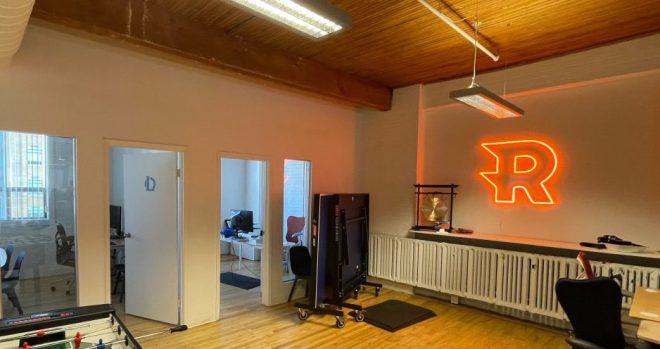
Toronto-based gaming company Rivalry confirmed on Friday that Co-Founder and Chief Executive Officer Steven Salz is the last remaining board member or C-suite executive at the company.
Five C-level executives and/or board members have resigned from the operator, stripping its leadership back to the bare bones just months after it announced it had significantly reduced operations and suspended all play in Ontario as it evaluates a path forward.
Three of Salz’s co-founders have left the company:
Steve Isenberg
Ryan White, who was also Chief Technology Officer
Kevin Wimer, who was also Chief Operating Officer
Another board member, former Ontario Lottery and Gaming (OLG) President and CEO Stephen Rigby, has also exited, as has interim Chief Financial Officer Demi Abidogun-Benson, who was not on the board.
The company added that the board and management changes are part of its “ongoing operational transition”.
Less than three months ago, the Canadian sports betting, online casino and esports operator announced that it had suspended all player activity and laid off a significant portion of its workforce as part of a board-approved “significant reduction in operating activity” while its leadership evaluated strategic alternatives such as a sale.
“The company is engaged in discussions with third parties regarding potential transactions,” added a February statement. “However, in light of recent performance volatility, the board has determined to materially reduce the scale of operations while assessing whether a strategic transaction or other alternative can be advanced.”
Image: Rivalry Corp.
Two years of big changes at Rivalry
That about-face came after Salz had stressed in several public releases throughout late 2024 and 2025 that Rivalry would benefit in the long term from a major operational shift.
Its overhaul included measures such as leaning more heavily into cryptocurrency, strategically rebranding to better target high-value digital-first players, revamping its sportsbook and redesigning its casino offering and launching a comprehensive VIP rewards program.
As part of that shift, Rivalry slashed its workforce by 50% and several C-suite executives took pay cuts.
In the company’s last public update before February’s announcement, Rivalry reported a record quarter in Ontario, with a 240% year-on-year increase in deposits and 100% increase in wagers, as well as reported three consecutive quarters of revenue growth and a 58% year-over-year reduction in its operating expenses.
While Salz said the strategic moves had made Rivalry “leaner, sharper, and more resilient”, the company ended 2025 almost $2m in the red, although that net loss improved 67% from where it stood at the end of 2024.
No updates on what’s next
At the time that it announced its Ontario shutdown, the company warned that given its reduced operations and the ongoing evaluation process, “there can be no assurance that any strategic alternative will be completed or that operations will continue in their current form.”
No further operational update was offered on Friday.
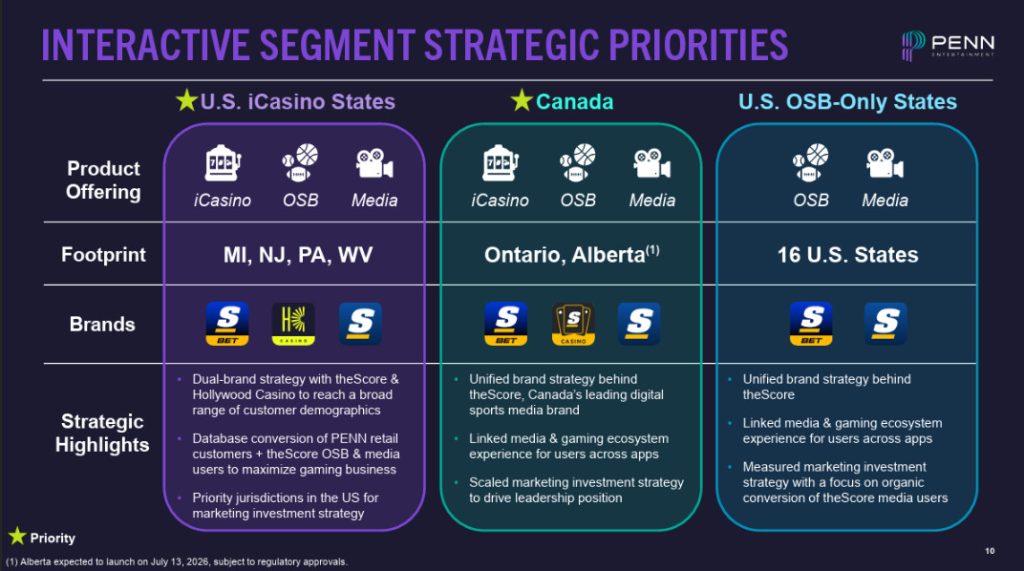
It’s all systems go for theScore Bet as parent company PENN Entertainment gears up for what it hopes will be a big splash in Alberta.
PENN confirmed Thursday that it received approval from Alberta Gaming, Liquor and Cannabis (AGLC) as a registered operator, allowing it to launch theScore’s mobile sports betting and online casino platform in the province when it opens its regulated iGaming market on July 13.
theScore Bet is one of the first commercial operators to get the official green light from the upcoming market’s regulator, along with the likes of DraftKings. It will add Alberta to a North American footprint that already includes deep roots in Ontario’s iGaming market, as well as 20 U.S. states.
The province will be the sixth market in which PENN offers both online sports betting and iCasino.
theScore ramping up Alberta marketing
PENN Chief Executive Officer Jay Snowden and his fellow executives have been saying since 2024 that they expect theScore’s longstanding nationwide sports media presence, as well as its success with online gambling in Ontario, to allow it to hit the ground running in Alberta.
“We feel really good about our launch there,” PENN Chief Technology Officer Aaron LaBerge said on a company earnings call on Thursday. “Obviously, theScore brand in Canada is very strong. It’s the number one media sports brand in market.”
Still, it sounds like they are readying a splashy launch in the western province to hammer home their arrival. Snowden promised last year when PENN abandoned its U.S.-facing ESPN Bet sportsbook venture that many of the marketing dollars saved by the end of that brand would be reinvested in Canada. That certainly seems to be the case.
“We have a full-scale marketing plan that we’re building towards that’s going to start in July,” LaBerge told investors and analysts on the April 23 call. “We’re already in market with pre-registration. We’re going to be active from a brand and performance marketing perspective.”
That will come at a short-term cost. Snowden said PENN is budgeting for a loss of roughly C$27m in 2026 directly attributable to the Alberta launch.
Ontario advantage = Alberta advantage?
Part of the reason PENN is pouring marketing spend into a province where theScore is already renowned is that, as executives noted, theScore Bet may face stiffer day-one competition in Alberta than it did in Ontario, where it launched April 4, 2022, day one of the regulated market.
More than 30 operators have applied to be in Alberta as of last week, according to comments made by the province’s minister responsible for iGaming, Dale Nally.
“When we launched in Ontario, it was a lot less competitive,” said LaBerge. “There are a lot more applicants and people in market for Alberta. That’s a factor that we’re looking at. Of course, leaning on the theScore brand is going to help us break through some of that noise.”
To that point, theScore had the immediate advantage in Ontario of drawing upon years of visibility and a large user base as a sports media company. In Alberta, it will have not only that, but also four years of Ontario iGaming to draw upon.
iGaming Ontario does not post revenue numbers or market share by operator, but PENN leaders tout theScore Bet as one of the big hitters in the province. Snowden noted Thursday that Ontario continues to be one of PENN Interactive’s biggest and best markets, with year-over-year growth in average monthly active users, online sports betting revenue, and iCasino revenue for theScore.
PENN expects similar in Alberta.
“We enjoy a very nice market share in Ontario today,” said LaBerge. “It’s a big part of our gaming business, and we expect to see similar market share [in Alberta] based on the investments we’re going to make.
“If you’re in Ontario, you’re starting to see theScore brand all around the city. And the same thing is going to continue in Alberta. We’re going to leverage all of our assets. We have as many people on theScore in Alberta as we do in Ontario. We’re expecting a very successful launch.”
Canada is PENN’s king in the north
theScore Bet also benefits from a prominent and exclusive partnership with the Toronto Blue Jays, a team that, while based in Ontario’s capital, is often referred to as “Canada’s team”. That will be heavily leaned on, suggested executives, likely through marketing, broadcast visibility, and the continuation of exclusive casino games such as Blue Jays Blackjack on theScore Bet’s all-in-one app and theScore Casino standalone app.
Ultimately, it’s clear that while PENN continues to focus on an iCasino-first approach in the U.S., Canada is a jewel in the crown for the Pennsylvania-based company’s online gambling operations.
“Ontario is clearly an area of strength for us, and we’ve done a lot of analysis on what worked for us with the Ontario launch, what maybe didn’t,” Snowden said. “Canada is going to be our strongest-margin market in North America. Part of that’s driven by volume and market share, and part of that’s driven by [20%] tax rates, and the fact that you have iCasino and OSB.
“There’s no doubt, Canada for us is going to be market number one from a margin and profitability perspective.”
Working as a gaming lawyer in Canada — being any kind of Canadian gaming participant, really — means constantly keeping your ear to the ground.
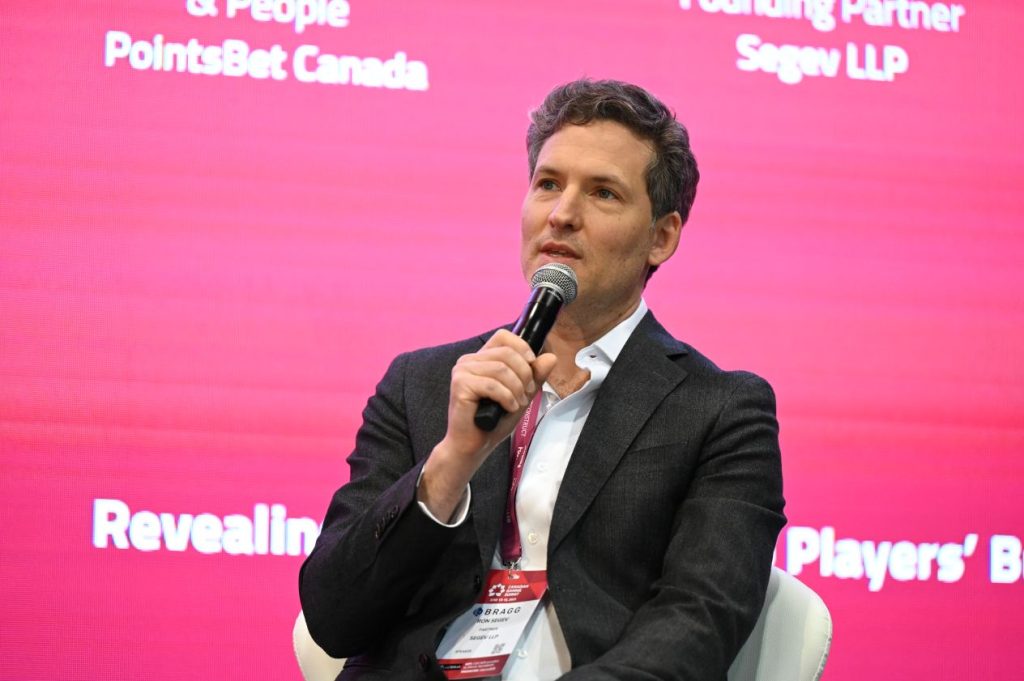
Segev LLP Founding Partner Ron Segev will be speaking at SBC Summit Canadain May on an Alberta-focused panel. What do operators and suppliers need to know about the province’s iGaming launch before doors open on July 13? And what other big-picture developments across Canada should be on everyone’s radar?
We chatted with Segev in advance of the Toronto event to get his expert thoughts.
Parts of this interview have been edited for length and clarity.
Canadian Gaming Business: Alberta will naturally be on everyone’s lips in Toronto in May. What do you make of the province’s approach to initial regulation thus far?
Ron Segev: I think Alberta has been pretty pragmatic so far. The province has separated the regulatory piece from the commercial piece, with Alberta Gaming, Liquor and Cannabis (AGLC) handling registration, compliance, and oversight, and the Alberta iGaming Corporation (AiGC) handling the conduct-and-manage side through the market structure. We are again seeing an 80/20 revenue split (subject to 3% coming off gross). The model is similar to that of Ontario’s and is familiar to the market. Familiarity is good, not reinventing the wheel is good, and the model is sensible.
In our opinion, Alberta may have improved the process by adopting a more cost-foreseeable and transparent approach to registration. Investigation fees are baked into the registration fee: There’s a single upfront fee structure of $50,000 application + $150,000 annual fee for operators, and only a registration fee of $15,000 or $3,000 for vendors, depending on the class of vendor. The real issue now is execution, and a path that gets serious operators and suppliers into market without unnecessary friction.
CGB: Alberta has stipulated that all unregulated activity in the province must end as part of a registration application. What advice would you offer to a company looking to enter Alberta’s regulated market?
Segev: My advice is to get through the door now. Once an operator is accepted into the process and the fees are paid, it may advertise and sign up prospective Alberta customers, but it still cannot accept deposits or wagers until registration is complete, the AiGC agreement is signed, and the market launches. Operators need to know they cannot incentivize new sign-ups either (so no sign-up bonuses or chances to win a free car).
The groups that will be best positioned are the ones sorting out disclosures, compliance readiness, payments, affiliate controls, customer communications, and technical integration now, not at the last minute.
CGB: Meanwhile, there’s plenty going on in Parliament, not least Bill S-211. Canadian senators want to take betting advertising by the horns. How feasible is a federal approach, and wouldn’t it risk conflict with provincial legislation or regulation?
Segev: Bill S-211 is feasible, but it should be understood for what it is. It is a framework bill, not an operating code. Now headed to committee discussion in the House of Commons, its purpose is to require the development of a national framework on sports betting advertising. Sponsor Sen.Marty Deacon has been clear that the intent of the Bill is not to impose an outright ban.
The tension with provincial regimes is real, because provinces like Ontario and Alberta already have detailed advertising rules in place. If the federal approach becomes too prescriptive, it risks duplication and compliance friction. Of interest is the general opposition to the Bill. The Canadian Gaming Association publicly opposes it on the grounds that provincial regulators already manage the issue effectively; both Ontario and Alberta have indicated they don’t support it; and Bloc Québécois characterizes it as a federal intrusion into exclusive provincial competence.
Where federal action may add value is in creating national broadcast standards, which would be useful for cross-provincial digital advertising (Ontario-based ads reaching non-Ontario viewers) and creating consistency across jurisdictions that have not opened their own markets. From an operator’s perspective, the practical answer is simple: comply with the provincial rules that already apply and keep watching the federal file.
CGB: Then, there’s Bill S-241, a potentially seismic piece of legislation related to First Nations gaming rights. How would that change how gaming is conducted in Canada, and do you expect to see more movement in Parliament this year?
Segev: I think this is the more structurally significant bill currently before Parliament. The bill would amend the Criminal Code and the Indian Act to reallocate “conduct-and-manage” authority for on-reserve lottery schemes from provinces to First Nations. In practical terms, a First Nation could, by notice, assume exclusive authority to conduct, manage, and license gaming from or within its reserve. The bill would also amend section 81 of the Indian Act to authorize band councils to pass bylaws regulating gaming.
What it does not do is just as important. It doesn’t expand the underlying Criminal Code categories of lawful gaming, and it doesn’t change the definition of “lottery scheme.” It’s really about broadening who may exercise conduct and manage powers, not about expanding what gaming is lawful in Canada.
We are also seeing growing support for S-241, which is now at consideration in committee in the Senate. Industry reporting says that 15 First Nations have signed a memorandum of understanding supporting the legislation, and reporting also indicates that the Mohawk Council of Kahnawà:ke now supports it after further consultations.
The real complexity is in implementation. The phrase “from or within” a reserve is much less clear for online or hybrid models, where questions around servers, RNGs, player contracts, and payment processing may all become relevant. There is also the issue of provincial resistance; provinces rely heavily on gaming revenues, and this bill could force a reassessment of existing arrangements. On top of that, the bill doesn’t prescribe how First Nations must structure regulatory regimes and doesn’t directly address how existing provincially authorized on-reserve operations would be transitioned or reassigned.
So yes, I do expect more movement this year, but the real work will be in how these issues are resolved in practice.
CGB: The two buzzphrases in U.S. gaming have been sweepstakes and prediction markets. In Canada, the waters have been calmer on both fronts. Where do those verticals stand legally in Canada, and do you see greater discussion ahead?
Segev: I would separate sweepstakes and prediction markets immediately, because they are fundamentally different legal questions in Canada.
Sweepstakes can be legal here if they are structured properly. That is an established pathway. The key is how the promotion is built: whether there is a genuine no-purchase-necessary route, how consideration is handled, whether the mechanics create a lottery scheme issue, and whether a skill testing question is used where required. So the short answer on sweepstakes is that they can work in Canada, but the analysis is highly fact-specific and the structure matters.
Prediction markets are much harder. In Canada, there are two overlapping barriers. The first is the Criminal Code framework. Gambling is generally prohibited unless conducted and managed by a province or its agent, which means independent prediction market platforms do not fit easily within the existing exceptions. The second is securities law. Canadian securities regulators have said there are no registered individuals or firms permitted to trade binary options in Canada, and the applicable instrument prohibits advertising, offering, selling, or otherwise trading binary options with or to individuals. That creates a serious problem for most event contract-style products marketed to retail users.
There are narrow provincial pathways, but they should not be overstated. Ontario’s standards recognize Novelty Events as bets placed on non-sporting events where real-world factual occurrences determine the outcome, and Alberta’s standards also define Novelty Bets and set criteria for them. Those are regulated exceptions inside provincial gaming regimes; they are not a broad green light for independent prediction market operators. Alberta’s current standards are especially clear that operators may not offer bets on assets or financial markets, may not offer bets that mimic the structure of financial instruments or markets, and may not offer synthetic lottery-style products.
The U.S. comparison is interesting, but it is not transferable. There, Kalshi is designated by the Commodity Futures Trading Commission (CFTC) as a contract market, and that federal derivatives framework has allowed event contracts to develop in a way that Canada does not currently mirror. CME Group and FanDuel announced a joint venture in August 2025 to develop an event contracts platform, pending CFTC review, and a DraftKings prediction market subsidiary is registered with the CFTC as an introducing broker and is a National Futures Association (NFA) member. Canada does not currently have an equivalent federal derivatives pathway for retail event contracts that would solve the underlying Criminal Code and securities law issues.
So yes, I do expect the discussion to grow as U.S. momentum continues. But in Canada, there is no imminent broad-based opening here without either Criminal Code reform, securities relief, or both.
CGB: Finally, SBC Summit Canada is always such a great opportunity to dive into conversations and consultations. What will you be looking to talk about throughout the week?
Segev: I will be looking for practical conversations. Alberta is obviously front and centre, but for me, the real discussion is about how operators and suppliers are actually preparing for entry, what they are seeing on the ground as the market takes shape, where the pressure points are, and where regulators still need to provide more clarity. I expect a lot of useful comparison across jurisdictions as well, especially where there may be opportunities for greater alignment or where different Canadian models are starting to diverge in meaningful ways.
I also expect strong conversations around how the advertising landscape may evolve with Bill S-211 in the background, what operators are doing now to stay ahead of potential changes, how First Nations participation in gaming continues to grow, and what that means for partnerships and market structure going forward. Anti-money laundering will also remain a big part of the discussion, particularly how operators are adapting their compliance programs in light of recent developments and rising expectations.
More broadly, that is really the value of a week like SBC. It is a chance to hear directly from the people building, operating, and regulating the market about what is working, what is not, and where the next set of commercial and regulatory pressure points are likely to emerge.
To catch this panel, along with the full conference program and everything else that SBC Summit Canada has to offer, secure your ticket here. Affiliates and operators qualify for complimentary passes.
Taking place on Wednesday, May 20, at the Metro Toronto Convention Centre, the track will bring together representatives from Canada’s leading operators, affiliates, and regulators, including leading companies such as bet365, BetMGM, DraftKings, and Ontario Lottery and Gaming (OLG).
Against the backdrop of a pivotal year for Canada’s iGaming market, the track will tackle major developments such as Alberta’s impending launch and the opportunities tied to the 2026 FIFA World Cup, focusing on both short-term acquisition and converting momentum into long-term retention.
Sessions will also examine the potential for a centralized self-exclusion system, whether sportsbooks can compete with iGaming in driving sustainable profitability, and the future of online poker in Canada.
Key iGaming sessions to watch
The session ‘World Cup, Endless Possibilities‘, will examine how operators can capitalize on the influx of new bettors during the 2026 World Cup and turn short-term engagement into long-term value. Speakers Andrew Cochrane (CCO, Soft2Bet), Casey Hurbis (CMO, BetMGM), Jeff Laniado (Director of Sales, Optimove), Greg Sindall (Sr Director Digital Sports Product – iSports Product, OLG), and Tim Whitehead (Sportsbook Director, DraftKings) will explore how operators can elevate brand visibility during the tournament and build lasting loyalty by connecting players to domestic competitions such as the Canadian Premier League, CFL, and NHL, as well as the fast-growing esports sector.
Building on this theme, the panel ‘Is Sports Betting Worth It? Evaluating the Role of Sportsbooks in the Canadian Online Gambling Market‘ will assess whether sportsbooks can deliver true growth in a market where online casino continues to dominate. Speakers Jared Beber (CEO, Bet99), Peter K. Czegledy (Lawyer, Aird & Berlis), Matthew Ferrara (Regional Director US, Altenar), Reece Hiland (Assurance Partner, MNP), and Scott Vanderwel (CEO, PointsBet Canada) will examine whether sportsbooks can compete with iGaming in driving profitability, and how player behaviour and risk profiles differ across verticals. Discussions will also explore the role regulation will play in shaping the future of sports betting in Canada.
‘Is a Centralized Self-Exclusion Tool Necessary for Responsible Gambling in Canada’s iGaming Industry?’ will explore what a nationwide approach to player protection could look like for the industry. Speakers Michelle Eaton (Senior Vice President & Corporate Affairs, OLG), Joseph Hillier (CEO, iGaming Ontario), Aneliya Vu (Chief Compliance Officer, Betty) will examine the feasibility of iGO’s BetGuard centralized self-exclusion system and outline the challenges that must be addressed to bring it to life. Experts will also assess whether such a framework can meaningfully reduce gambling-related harm whilst strengthening responsible gaming standards across Canada.
With Alberta set to launch its regulated market on July 13, attendees will also benefit from several sessions featuring Dale Nally, Alberta’s Minister of Service and Red Tape Reduction. Appearing in both a keynote address and a fireside chat, he will focus on preparing the industry for the province’s entry, offering key insights into the soon-to-be-launched market.
“Being a leader in this industry is about far more than a title,” said Rasmus Sojmark, SBC Founder and CEO. “These figures have earned their positions through strategic thinking, bold decisions, and the vision and leadership needed for success. This track gives attendees a unique opportunity to understand both the mindset behind great leadership and the skills required to develop it.”
Several busy conference tracks
The Leaders in Sports Betting and iGaming track is one of several focused programmes across SBC Summit Canada’s conference agenda.
Bill S-211, the legislation that would set the stage for the federal government of Canada to take a firmer hand in regulating sports betting advertising, took an unprecedented step forward Wednesday.
It marks a watershed moment for the legislation. While the proposal to create a federal framework for sports betting advertising across Canada passed the Senate in both 2024 and 2025, the current version is the first to be taken up for discussion in the opposite chamber. Wednesday was its first formal vote in the Commons.
There is still a long way to go before the legislation potentially becomes law, but it’s the latest sign that Canadian Members of Parliament believe that while the Criminal Code of Canada gives provinces the rights and responsibilities to run online gambling in their own jurisdictions, federal intervention is needed to address the advertising issue.
What would Canada sports betting ad bill do?
Put simply, S-211 would require the federal Minister of Canadian Heritage to establish a national framework on sports betting advertising.
The bill’s text stipulates that such a framework must:
Identify ways to regulate and restrict sports betting advertising, including “limiting the number, scope or location” of ads or further limiting the use of celebrities and athletes
Identify measures to promote research and intergovernmental information-sharing related to the prevention and diagnosis of minors involved in harmful gambling activities, and to support people impacted by it
Set out national standards for the prevention and diagnosis of harmful gambling and addiction and for supporting those impacted by it
Currently, the Alcohol and Gaming Commission of Ontario (AGCO) mandates that in Ontario’s commercial iGaming market (Canada’s only such provincial model until Alberta launches in July), athletes can only be used for the primary purpose of promoting responsible gambling.
During debate of this bill and its 2024 version, S-269, Deacon mooted potential measures such as implementing a whistle-to-whistle ban on broadcast adverts for sportsbooks during games, banning sponsored betting-slanted intermission shows and in-game promotions within betting apps, as well as prohibiting the dissemination of betting advertising in locations and at times of day more accessible to minors.
Prime Minister Carney votes in favour
Liberal Prime Minister Mark Carney was among the 298 yes votes on Wednesday in the House of Commons. The vast majority of the 28 no votes were from the Bloc Québécois, whose members have repeatedly argued along general partisan lines that the federal government should not interfere in Québéc’s affairs.
Although more than 40 senators including S-211’s original Senate sponsor Marty Deaconwrote to Carney last fall to urge his government to ban sports betting advertising entirely, this bill does not propose an outright prohibition. Deacon noted that while she would support such a measure, she did not believe it to be achievable via legislation.
Incidentally, in Ontario, the new provincial Bill 107 filed this week proposes banning almost all advertising for all forms of online gambling, including online casino.
MPs feel change is needed
Advocates for S-211, from legislators to problem gambling and youth support institutions, argue that the spread of sports betting advertising, particularly since Ontario launched regulated iGaming in 2022, has become a public health problem.
Conservative Party MP Kevin Waugh, who sponsored the federal bill that legalized single-event sports betting under provincial control in 2021, stressed during floor debate of S-211 last week that although he believes provinces have largely done well at regulating gaming, he feels that “sports betting advertising took the promotion to an all-time extreme”.
“What was always an accepted practice prior to the passage of Bill C-218 quickly became an avalanche of targeted, even predatory, and excessive advertising,” Waugh added. “It came at us from all sides, and I think the public was simply blindsided.”
Opponents including the Canadian Gaming Association contend that as provincial governments conduct their own gambling models and regulate their respective gaming industry advertising in their own ways, the bill is unnecessary. Some gaming and sports industry stakeholders have branded potential federal intervention as an overreach that risks complicating the issue and doing more harm than good.
“This bill would ask for more coordination and for government to study what is actually happening,” Conservative MP Kelly DeRidder stated after Waugh in last week’s discussion of the bill. “Some will say this is not enough, and others will worry that it goes too far. What it really does is ask for a clear picture of the situation and whether our current system is working as intended.
“We are not trying to change the entire system overnight, but to make sure we are asking the right questions and getting the full picture of what is happening. This industry is changing rapidly. The responsible thing to do would be for us to pause, review and ensure that there are safeguards in place and that they are doing what they are meant to do.”
The trade advocacy group that represents several provincial Canadian governmental lottery corporations has a new leader.
The Canadian Lottery Coalition (CLC) announced on Wednesday that former Atlantic Lottery Corporation (ALC) communications director Molly Cormier started work as its new Executive Director effective March 30, 2026. Cormier replaces the previous Executive Director, Will Hill, who left the position late last year.
The CLC was formed in 2021 as a partnership between numerous crown corporations across Canada. Its current membership consists of:
ALC
British Columbia Lottery Corporation (BCLC)
Loto-Québec
Manitoba Liquor and Lotteries (MBLL)
Lotteries and Gaming Saskatchewan was also a member until December 2025, when it took the decision to step away from the coalition in December 2025. Alberta Gaming, Liquor and Cannabis (AGLC) was a founding member, but left in early 2024 amid its process of legalizing and regulating commercial online sports betting and casino gaming.
Ontario, whose commercial iGaming launch in April 2022 has served as a blueprint for the Alberta market that is slated to launch on July 13, has never been represented in the coalition.
Cormier and CLC place player health at forefront
Cormier is a former Government of New Brunswick staffer who spent the last decade working for ALC in a range of communications roles, most recently serving as the multi-provincial crown corporation’s Director of Brand and Communications.
The CLC said in a press release that she brings extensive experience in public relations, marketing, and policy engagement within Canada’s regulated gaming sector and has worked closely with governments and regulators on responsible gambling and consumer protection.
“Molly brings the experience, leadership and judgment the Coalition needs as governments and regulators confront growing challenges around gambling advertising and consumer protection,” said ALC President and Chief Executive Officer Dallas McCready, who is a member of the CLC Executive Board. “She understands the urgency of supporting player health, especially in the face of clear gaps in federal law and enforcement.”
Cormier said that she joins the CLC at a time when the need for “clear, coordinated national policy” to protect player health across Canada has never been greater.
“My priorities will be to address gaps in federal legislation and regulation related to the promotion and advertising of online gambling, particularly sports betting; respond to the continued proliferation of illegal online gambling websites in Canada; and strengthen collaboration with governments, regulators and industry stakeholders,” she added.
“Canadians should be able to clearly distinguish between legal, accountable gambling options and offshore sites that operate outside Canadian and provincial laws and public safeguards.”
Lottery coalition notes fights on several fronts
The CLC’s public mission statement is for its member lotteries, all of which hold monopolies over government-authorized online gambling in their respective provinces, to work together to protect Canadian gamblers, prioritize the prevention of gambling-related harms, generate revenues for their provinces, and reinforce their gaming authority.
In Wednesday’s release announcing Cormier as Executive Director, the coalition specifically mentioned concerns over the perceived spread of online gambling advertising in the wake of Canada legalizing single‑event sports betting in August 2021 and Ontario launching its open iGaming market. It also stressed that it supports Bill S-211, the National Framework on Sports Betting Advertising Act, which was passed by the Senate last fall and received an overwhelming yes vote at second reading in the House of Commons on Wednesday.
Meanwhile, last year, CLC took an unprecedented approach to combating offshore gambling sites when MBLL, on behalf of the coalition’s members, sued prominent offshore casino and sportsbook Bodog in a Manitoba court. The lotteries were successful in obtaining a court order that deemed the Caribbean-based site to be operating and marketing illegally in that province and directed it to cease offering or advertising its products there.
“The reasoning of the Court’s decision in Manitoba would apply in every Coalition jurisdiction,” said the CLC in the new release. Hill told Canadian Gaming Business last year that the CLC would continue its efforts to shut down similar unauthorized operators “by every means necessary”.
CLC challenging Ontario player pooling ruling
One of Cormier’s immediate focuses will be the Supreme Court appeal regarding international player pooling for peer-to-peer online games such as daily fantasy sports and online poker.
After an Ontario Court of Appeal opinion determined that it would be legal under the Criminal Code’s gaming provisions for Ontario to offer international liquidity, the CLC members have contested the issue in Canada’s highest court. One of the CLC’s longstanding complaints, re-stated in filings in the Supreme Court case, is that its members believe that Ontario-licensed operators should not be allowed to advertise in other provinces, where governments do not authorize those brands to do business.
“The Coalition will continue to advocate for policy approaches that put responsible gambling, consumer protection and regulatory integrity first,” added the coalition in the April 22 release.
The online gaming arm of Delta Bingo and Gaming has teamed up with global casino content supplier Play’n GO as it continues to build out its online casino offering in Ontario.
Delta iGaming Inc., which operates the licensed Delta Casino online bingo and casino site in the province’s regulated market, has launched Play’n GO’s portfolio of games on its website and mobile app.
The operator said the partnership, one of its first with a major casino content provider, is an important step in offering its players a broader selection of slots and digital games in Ontario’s fiercely competitive online casino market.
“Partnering with Play’n GO marks an important step as we continue to expand our brand,” said Delta Casino Vice President of Gaming Jason Karklins. “Their approach to game development and presence in regulated markets aligns with our focus on delivering a reliable player experience.”
“We are pleased to partner with Delta iGaming Inc. and bring our content to Delta Casino in Ontario,” added Play’n GO Chief Commercial Officer Magnus Olsson. “Delta’s established presence and commitment to regulated gaming make them a strong partner as we expand in the Canadian market.”
Delta diversifies with online casino expansion
Delta Bingo and Gaming has run land-based gaming for over 50 years and currently operates around 20 land-based venues across Ontario and the state of Maryland. It first unveiled its Delta Bingo Online platform in Ontario’s market in 2023 with a sole focus on iBingo, but launched the full Delta Casino platform last October.
Delta Casino is one of just three official charitable gaming-affiliated iGaming operators licensed in Ontario to provide bingo on their owned and operated platforms, alongside Casino Time and Betty Gaming, the latter of which diversified from slots to add online bingo by acquiring a physical bingo hall in Ontario earlier this year.
The site uses front-end technology and player account management services from Vancouver-based Strive Gaming and already works with suppliers such as Swedish technology provider Random State, which provides it with a slate of bingo games and mini-games as well as support services.
Caesars launches RubyPlay games in Ontario
One of Play’n GO’s existing operator partners in Ontario is Caesars, which launched the supplier’s content in the province last summer on its three licensed brands: Caesars Sportsbook & Casino, Caesars Palace Online Casino and Horseshoe Online Casino.
Meanwhile, Caesars this week added another provider’s games to its Ontario platforms by rolling out RubyPlay’s titles. That agreement also includes a plan to integrate content from RubyPlay’s in-house studio, Koala Games, later in 2026.
Ontario has become one of North America’s most competitive regulated iGaming markets, pushing suppliers to sharpen their content and local strategy.
As it prepares to enter the province, Air Dice is focusing on alternative game formats and closer operator partnerships. Chief Business Development Officer Erkki Nikunen spoke with Canadian Gaming Business to outline the firm’s plans, player insights and how it aims to stand out in a crowded market.
Canadian Gaming Business: What are Air Dice’s plans for the Ontario market?
Erkki Nikunen: We plan to bring a fresh wave of alternative, high-performing game content to operators who want something genuinely different for their players. We will be rolling out a targeted portfolio of our strongest titles, not just focusing on slots but offering differentiation with our Dice Placement games and Shifters.
From there, we intend to build a long-term presence by working closely with operators, understanding their needs, and supporting them with data-driven insights and tailored content.
CGB: What makes Ontario such an enticing market for you to enter next?
Nikunen: Ontario is one of the most dynamic and well-regulated markets in North America. The combination of strong player engagement, a diverse mix of operators and a mature regulatory framework creates a fantastic opportunity for a game provider like us.
It’s a market where quality content and innovation are rewarded, and that aligns perfectly with our values and strengths.
CGB: In such a saturated market, what makes Air Dice’s games stand out from the crowd for a Canadian audience?
Nikunen: Our games stand out because they don’t follow the standard formula. We specialize in alternative, feature-rich content that leans heavily into strategy, anticipation, and emotion — not just spinning reels.
Canadian players have shown a strong appetite for fresh mechanics and differentiated gameplay, and our portfolio fills that gap beautifully. Our Dice Placement games and shifter slots allow players an element of interaction and choice, and the quality and realism of our themed game graphics really draw you into the experience.
We also bring a proven track record in markets such as Belgium,where players value depth, volatility range, and storytelling.
CGB: What have you noticed about the player behavioural trends in Ontario as you plan to enter the province?
Nikunen: Research has shown a strong mix of traditional slot players and those looking for something more experience-led. Players in Ontario appreciate innovation, but they also value trust and clarity in gameplay. Features that enhance control, transparency, and session engagement tend to resonate well.
Branded content performs strongly but so do unique game types, which is encouraging for us, as our portfolio naturally leans into originality and alternative mechanics.
CGB: How will you tailor your content to suit Canadian audiences as opposed to European players?
Nikunen: While our core game DNA translates well globally, as we gain more insight, we’ll be refining themes, maths models, and user experiences based on local player insights. Canadian players tend to respond well to mechanics that offer both entertainment and meaningful win potential.
Our roadmap will include themes, features, and volatility profiles that will suit Canadian preferences, whilst still keeping the Air Dice signature style.
CGB: Do you have any partnerships lined up in Ontario to kick off your launch?
Nikunen: Many of our existing customers operate in Ontario, and part of our commitment to entering the market is to support them.
We’re also in promising discussions with several other major operators in the region. The interest has been extremely encouraging. Our goal is to go live with a mix of established Tier-1 brands and agile, fast-growing operators who are looking to differentiate their content offer.
CGB: Are you using Ontario as a launchpad for further North American markets?
EN: Right now, our focus remains in Ontario. However, its regulatory structure, player base, and mature ecosystem would make it the ideal gateway into North America in the future.
SBC Summit Americas will deliver a unique set of networking experiences, introducing the SBC Connections program, plus five tailored ticket types designed to drive even higher attendee ROI.
Responding to attendee feedback, the organizer has reworked its networking offering to deliver a more targeted and efficient experience. The new SBC Connections program introduces a mix of new and enhanced formats designed to match different networking styles and connect attendees more effectively.
The official event app, SBC Connect, will launch on May 5 as the main platform for booking networking experiences. Ahead of its release, attendees can register interest via the website.
“We took a step back and asked ourselves how we could make every conversation at SBC Summit Americas more valuable,” said SBC Chief Marketing Officer JamesShanahan. “SBC Connections is the result. It’s a more thoughtful, structured approach to networking, focused on helping attendees get the most value from their time at the event.”
An easier way to network
While the SBC Connections program introduces a range of new formats, it also incorporates existing SBC Connect functionality, now named “SBC Connect Meets“. This includes the ability for eligible ticket holders to pre-book meetings, initiate conversations ahead of the event, and access the attendee list. The platform also provides a complete event overview, including exhibitor directories, conference content, and the floor plan.
Building on this, five new networking formats will be introduced for Networking, Business, and VIP Pass* holders, significantly expanding opportunities to connect through structured and purpose-driven experiences.
The Hive delivers fast-paced speed networking, enabling attendees to make a dozen targeted connections in under an hour, with sessions grouped by theme to ensure relevant matches.
The Briefings elevate breakfast and lunch breaks into structured networking moments, offering curated roundtables across 14 topics where attendees can connect over shared interests.
The Exchange offers a more relaxed networking setting, bringing together attendees based on shared interests, from women in gaming to tribal gaming and beyond.
The Inner Circle offers a space to continue the conversation beyond the stage, with 30-minute post-session discussions focused on key topics such as prediction markets and sweepstakes. Also available to ConferencePass holders.
The Walk Around offers a structured way to navigate the exhibition floor, connecting attendees with exhibitors aligned to their business needs through themed, guided tours.
For suppliers seeking highly targeted, conversion-driven engagement, two additional premium networking formats are available as paid opportunities:
Smart Connect delivers a curated meetings program linking exhibitors and sponsors with buyers ready to engage. Each supplier secures eight pre-arranged meetings with pre-qualified prospects, ensuring every interaction starts with intent.
The SBC Leaders Americas Dinner offers a private VIP dining experience, bringing together senior decision-makers for focused, high-value conversations in an intimate setting. With hosted and standard table options available, attendees can either benefit from a curated guest list or manage their own.
Five distinct ticket types
SBC Summit Americas 2026 will also introduce five distinct ticket types, designed to complement the new networking program and allow attendees to tailor their experience based on their objectives, whether that’s exploring, learning, networking, or combining all three.
Expo Pass (Free): Access to the exhibition floor, featuring hundreds of brands from across North and Latin America, and basic SBC Connect access.
Conference Pass (US$399): Expo access plus the full two-day conference program, featuring 250+ speakers across six stages, and entry to ‘Inner Circle’ sessions.
Networking Pass (US$399): Expo access plus the full SBC Connections program, including The Hive, The Exchange, The Briefings, The Walk Around, and The Inner Circle, alongside official evening networking events.
Business Pass (US$549): A combined experience, including full access to the expo, the conference program and networking formats, alongside enhanced access to SBC Connect.
VIP Event Pass (US$799): The all-access experience, covering conference, networking, and exhibition, plus premium benefits including access to the Operator Platinum Lounge and complimentary entry to the Food Festival.
SBC Summit Americas 2026 will take place from June 9–11, 2026, at the Broward County Convention Center in Fort Lauderdale, bringing together thousands of industry professionals from across North and Latin America. With the introduction of SBC Connections, the event sharpens its focus on delivering more targeted, high-value interactions at every level.
*Please note: operators and affiliates who have claimed a complimentary pass will receive access equivalent to a VIP Pass, including full access to all areas and features of the event.
A group of Liberal Members of Provincial Parliament (MPPs) in Ontario have authored legislation that would ban most online gambling advertising in the province.
MPP Lee Fairclough’s Bill 107, titled the “Stop Harmful Gambling Advertising Act,” was introduced in the Legislative Assembly of Ontario on Monday. It arrives in addition to a federal effort to rein in sports betting-specific advertising, S-211, which has passed the Senate and currently sits in the House of Commons.
MPPs target all online gambling ads, not just sports
Unlike that federal Private Member’s Bill (PMB), which aims to establish a national framework for regulating sports betting ads, Fairclough’s PMB proposes an explicit ban on online gambling advertising at large. It would amend Ontario’s Gaming Control Act of 1992 to prohibit any of the province’s almost 50 online sportsbooks and online casinos from advertising or otherwise promoting their sites or products in the province.
The bill includes some carveouts, including one for certain ads originating outside Ontario, but would effectively prevent licensed Ontario operators from advertising via several channels. Any iGaming company convicted of an offence under the proposed bill could be fined up to $1m, and could have its provincial operating license revoked upon a second or subsequent conviction.
Etobicoke—Lakeshore MPP Fairclough, who is the Liberal Party critic for mental health, addiction and homelessness, presented the bill in the Assembly on Monday. She specifically cited broadcast media, social media and paid sponsorships as the kind of promotional avenues that she wants to cut off.
“Addiction to online gambling is an emerging public health crisis in Ontario – the only province that has privatized online gambling in the country,” states the introduction of the legislative text, citing data that points to higher incidence rates of problem gambling. “The proliferation of gambling advertising normalizes gambling and corrupts the integrity and culture of sports. Banning the advertising of electronic gambling sites is therefore in the public interest to protect public health.”
Bill 107 was advanced at its first introductory vote on Monday, which ordered it for second reading.
Partisan bill may face uphill struggle
Ontario Premier Doug Ford’s provincial Progressive Conservative Party paved the way for Ontario to launch regulated iGaming in April 2022, which was the first time a Canadian province opened a license-based, regulated online gambling market. Alberta since legalized commercial iGaming and has set July 13 as the launch date for its own market this summer.
Fairclough’s Bill 107 has three co-sponsors, all of whom are also Liberal MPPs:
Interim Ontario Liberal leader and Ottawa South MPP John Fraser
Orléans MPP Stephen Blais
Kingston MPP Ted Hsu
In a partisan statement announcing the bill, Fairclough again labeled online gambling as a public health crisis.
“We cannot ignore the impact that Doug Ford’s privatized online gambling is having on people across Ontario,” wrote Fairclough. “Ontario is the only province in the country that has privatized online gambling. The scale and harm of online gambling advertising is out of control.”
Given the partisan nature of the bill, the incumbent PC government holding a majority of 80 seats in the Ontario Assembly, and Liberals occupying just 14 seats, Fairclough’s bill likely faces a battle for traction.
CGA says Bill 107 poses risks to players
In a statement issued on April 22, the Canadian Gaming Association (CGA) said that it and its licensed members stand in respectful opposition to MPP Fairclough’s Bill 107, pointing to Ontario’s existing iGaming advertising restrictions.
“Ontario enforces some of the most rigorous marketing regulations in North America,” said the industry association, noting that operators cannot advertise promotional bonuses or incentives outside of their own websites, apps, and customer outreach and that they are prohibited from marketing to high-risk cohorts, minors, or self-excluded players.
“Licensed advertising is closely monitored by compliance teams, including thinkTV and the Alcohol and Gaming Commission of Ontario (AGCO),” added the CGA. “Bill 107 essentially allows illegal operators to flood social media with posts, making it impossible for Ontarians to identify licensed providers while weakening the authority of the AGCO. This fails to safeguard vulnerable people or minors; on the contrary, it actually puts them at greater risk.
“Ontario has worked hard to make its market safe – we urge the government to continue to put its players first.”
Canadian legislators take up arms against ads
The Ontario bill is the latest indicator that online betting advertising has become a top-of-mind issue for lawmakers in Canada.
Bill 107 comes not only as Alberta gears up to welcome commercial iGaming operators into the province, but as Canadian politicians at the provincial and federal levels shine a harsh spotlight on gambling advertising.
A multi-year federal effort in Canadian Parliament has seen the Senate pass a national framework bill in both 2024 and 2025. The second version, S-211, is sponsored by Sen. Marty Deacon of the officially non-partisan Independent Senators Group. It is scheduled for a second reading vote in the House of Commons this week, a stage it never reached last year amid political turmoil and Justin Trudeau’s eventual resignation as Prime Minister.
Deacon said during debate of her bill last fall that she would support a blanket ban on sports betting advertising in principle if she thought it was a realistic prospect.
“While that is what I would love to see … I believe that if I had sought a complete ban through this legislation, it would certainly have had a much rougher ride,” she said during one session before the bill passed the Senate last October.
Deacon subsequently co-authored a letter to Prime Minister Mark Carney in November, in which more than 40 senators urged the federal government to ban all advertising for sports betting websites and apps nationwide, “similar to the advertising ban for cigarettes, and for the same reason: to address a public health problem.”
Meanwhile, former MP Brian Masse, who was the original bill sponsor driving the legalization of single-event sports wagering in Canada that ultimately passed into law in 2021, made headlines earlier this month when he said that the way in which some provinces (referring without name to Ontario) have implemented that law is “deplorable”.