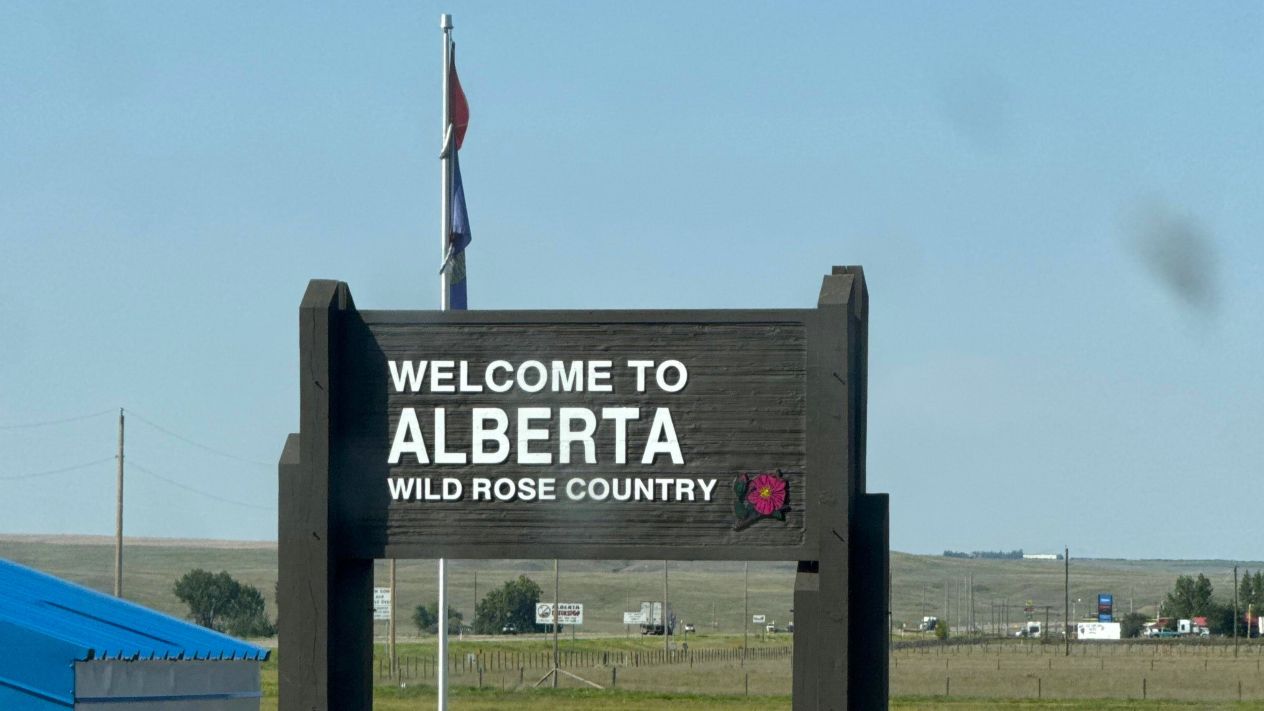
As the industry gets an early glimpse into how player behaviour is developing in Alberta, Will Whitehead, Commercial Director at mkodo –responsible for developing GeoLocs– reflects on the early trends emerging from the province and what they could reveal about the market’s next phase of growth.
Alberta’s regulated iGaming market has been live for 60 days with over 50 operators registered and around 24 already live in the province. In the lead up to launch, industry attention was understandably concentrated on licensing, customer acquisition and operational readiness.
Sixty days on, the conversation can begin to evolve.
While it may be too early to draw definitive conclusions, Alberta is already beginning to reveal characteristics that make it distinct. From how the market responds to local events to how players engage with regulated platforms, the first two months are providing valuable insight into how it’s taking shape.
For GeoLocs, Alberta is not a new market so, those insights come with valuable context We have been providing geolocation technology to the provincial Lottery operator in the province for more than five years, giving us a unique perspective on how player activity, connectivity patterns and location verification behaviour have evolved before and after regulation.
That experience provides a useful benchmark as Alberta enters its next phase of growth.
1. Alberta is establishing its own identity
Before launch, comparisons with Ontario were inevitable.
Alberta adopted many of the same structural principles that underpin Ontario’s model, while also introducing its own approach to areas such as responsible gaming and market oversight. The result is a framework that shares similarities with Ontario but has been tailored to Alberta’s priorities and player base.
That distinction matters because one of the clearest observations from the first 60 days is that player behaviour develops locally.
Markets may share regulatory foundations, but players do not automatically behave in the same way from one jurisdiction to another. Understanding those differences early can provide operators with a significant advantage as the market matures.
2. When demand increases
One of the clearest observations from Alberta’s first 60 days is how quickly player activity can respond to events and move beyond the average benchmarks.
During Alberta’s first 60 days, verification activity increased by as much as 60% on individual days, with additional spikes of 30% and 21% occurring around long weekends, Alberta Day celebrations and periods of heightened sporting activity. There isn’t enough evidence to attribute these increases directly to any individual event. What the data does suggest, however, is that player demand doesn’t exist in isolation from what is happening around them.
Long weekends, local events and major sporting moments all influence when players choose to engage. As Alberta moves into its first regulated NFL season and first full NHL season under the new framework, it will be interesting to see how these patterns continue to develop.
For operators, the takeaway isn’t simply that activity increases around major events. It’s that understanding the local rhythm of a market matters.
The moments that drive engagement in one jurisdiction will not necessarily be the same in another. Alberta’s player base, sporting interests and seasonal patterns are not identical to Ontario’s, and future regulated markets are unlikely to be identical to Alberta’s.
3. New markets create new opportunities
Alberta has also demonstrated something that is often overlooked during new market launches.
In established jurisdictions, many operators are competing to win players away from existing brands. In Alberta, many players are still forming preferences, exploring platforms and deciding which operators best meet their needs.
This creates opportunities for operators of all sizes. While large brands benefit from strong recognition and marketing investment, early-stage markets reward operators that understand local audiences, respond quickly to player behaviour and create experiences that reflect how players actually engage with their products.
Success is not determined solely by scale. It is also influenced by how effectively operators adapt to the characteristics of the market in front of them.
This is where local experience can become particularly valuable. Geolocation may be viewed primarily as a compliance requirement, but in newly regulated markets it can also provide some of the earliest indicators of player behaviour and engagement patterns. Working with a geolocation partner that understands the connectivity landscape, regional nuances and evolving player trends within a market can help operators move beyond simply meeting regulatory requirements and gain a deeper understanding of how players are interacting with their platform and regulated gaming.
4. Player behaviour doesn’t always match industry assumptions
The first two months have also provided an early indication of how players are accessing platforms.
Across Alberta, 47% of GeoLocs verification requests originated from web, compared with 28% from iOS and 25% from Android. With almost half of requests coming through web-based journeys, the data provides a useful reminder that, despite the prominence of native apps, browser-based journeys remain an important player access point. Optimising app performance alone therefore doesn’t necessarily mean optimising the experience for the entire player base.
For web-based journeys, optimisation may involve reducing unnecessary verification steps by providing clearer location-permission guidance, identifying browser-specific issues and ensuring players receive actionable feedback when a verification attempt fails. Small improvements to the user journey can have a meaningful impact when applied across a large player base.
More broadly, the finding reinforces what Alberta’s first two months are beginning to tell us: every newly regulated market develops its own characteristics. Operators that take the time to understand how local players engage, rather than assuming behaviours will mirror those of other jurisdictions, will be better positioned as the market matures.
5. Alberta may be a preview of what’s next
Perhaps the most valuable lesson from Alberta’s first 60 days extends beyond the province itself.
Discussions around regulated online gaming continue elsewhere in Canada. Most recently, the topic has emerged as part of the political conversation in Quebec, where multiple parties have expressed openness to exploring a regulated gaming market.
Whether Quebec ultimately follows Alberta and Ontario remains uncertain. What is becoming increasingly clear, however, is that future regulated markets are unlikely to be simple replicas of those that came before them.
Alberta has already shown that regulators will tailor frameworks to local priorities and that player behaviour develops according to local conditions.
For operators, that means future expansion should be approached as an opportunity to learn and adapt, rather than as a repeatable rollout exercise.
Looking beyond the first 60 days
Sixty days is only the beginning of Alberta’s regulated market story.
Yet even at this early stage, the market is providing useful signals. We’re seeing player activity respond to local moments, evidence that market-specific behaviours are beginning to emerge, and confirmation that every regulated jurisdiction develops its own characteristics over time.
Having entered the regulated market with more than five years of Alberta experience already behind us, GeoLocs has an established point of comparison as those patterns continue to emerge. And perhaps the most important insight is that geolocation data has the potential to offer far more than a compliance decision. It provides an early window into how markets evolve, how players engage and what makes each jurisdiction unique.
As Alberta continues to mature and other provinces evaluate their own regulatory futures, those insights may become just as valuable as the location decision itself.