Your article was successfully posted to your social media. Want to share more? Go ahead!
Image: Marc Marasescu / Shutterstock.com
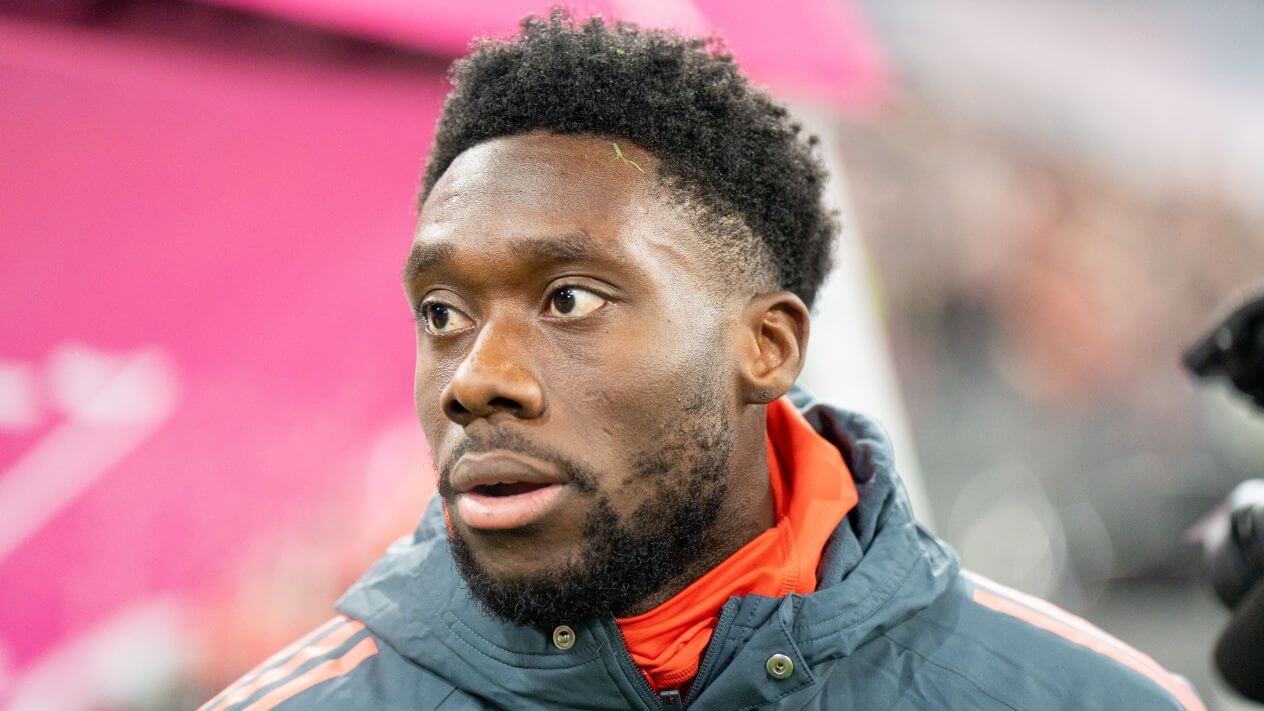
In the latest instance of fraudulent gambling advertising in Canada, soccer star Alphonso Davies‘ family were used by an offshore, unlicensed sportsbook to try to drive clicks.
As first reported by the Edmonton Journal, an Instagram account titled Prime Spin Zone posted an advert that depicted an AI-generated likeness of Edmonton-raised Davies’ father being arrested by the Edmonton Police Service.
The ad suggests that police officers discovered a vault filled with cash, but then claims that the arrest was a misunderstanding because the money came from legal gambling winnings.
The AI-generated version of Alphonso Davies’ father encourages viewers to play at the same online casino to win money themselves. Per the Journal, clicking the link directed users to Comoros-based Oxibet, an offshore gambling site that purports to be licensed in Canada but has not been authorized by Alberta, Ontario, or any other provincial government regulator.
A similarly deepfaked version of Canadian rapper Drake also reportedly appeared in the ad.
AGLC urges consumer caution
Canadian Gaming Business contacted Edmonton Police Service as well as Alberta Gaming, Liquor, and Cannabis (AGLC) and the Alberta iGaming Corporation (AiGC) about the ad.
“AGLC is aware of the risks posed by fraudulent online gambling advertising, including scams that use misleading or manipulated content to direct Albertans to offshore or unregistered gambling sites,” said a spokesperson for Alberta’s gaming regulator. “We encourage Albertans to be cautious when viewing online gambling advertisements and to verify that any gambling site they use is registered to operate in Alberta.
“AGLC’s regulatory authority applies to operators registered in Alberta. For an entity operating outside of Alberta’s legal iGaming framework, AGLC reviews the circumstances on a case-by-case basis and may refer matters to the appropriate police service or other enforcement body for follow-up.”
Canada’s fake gambling advertising problem
While Alphonso Davies is one of the more high-profile figures to be targeted, Canada is no stranger to fake casino or sportsbook advertising. The issue has been repeatedly reported for years by regulators and gambling stakeholders across Canada, including the likes of:
A popular method of fraud is to use the names, images, and likenesses of licensed gambling operators or prominent individuals to give the illusion of reputability to offshore, unlicensed sites. Brick-and-mortar casino operator Great Canadian Entertainment, for instance, keeps a list of all uncovered instances of its name or the names of its properties being used to advertise online gambling, which the company does not offer in any form.
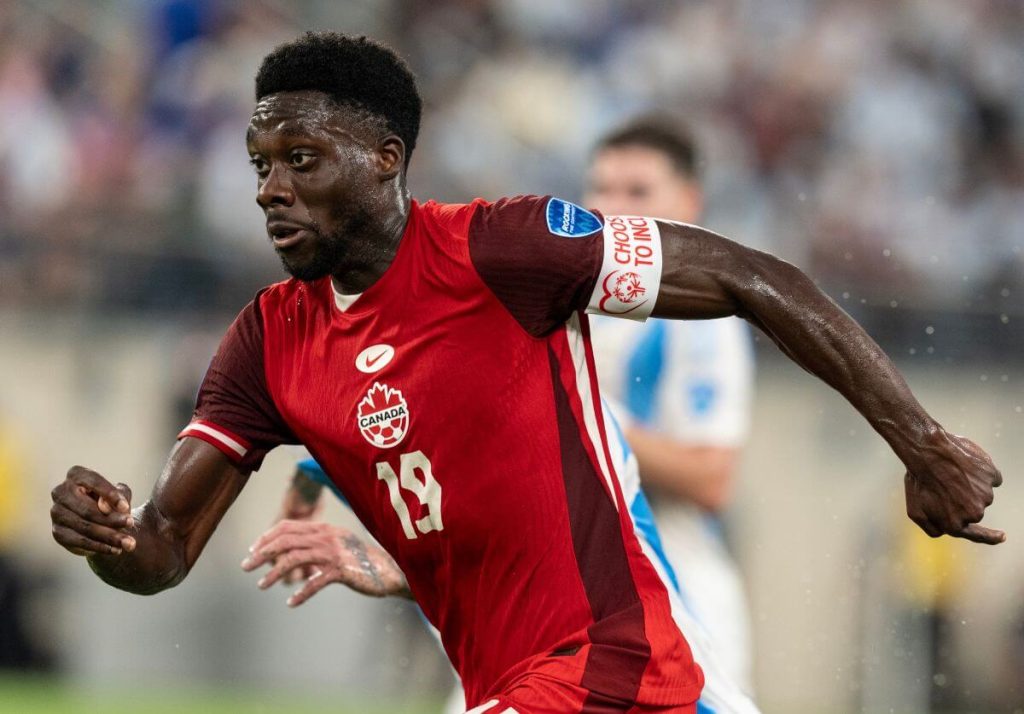
Even Alphonso Davies has been caught up before. In June 2023, TSN journalist Rick Westhead reported that Alphonso Davies’ agent Nick Huoseh told a gambling company to remove an Instagram advertisement that featured Davies without his consent, and said that Davies’ image was “routinely used” without permission.
Image: lev radin / Shutterstock.com
Scams are becoming more sophisticated, too. That 2023 ad just used a photo of Davies; the latest one involves an AI-generated deepfake of his father speaking to the camera.
Back in 2025, a similar incident targeted Alberta’s River Cree Resort & Casino, a licensed brick-and-mortar casino that does not currently offer online gambling (although it has since registered to do so in Alberta’s new regulated iGaming market). That social media advert used a digitally altered video of former CityNews journalist Baily Nitti to promote an unlicensed online betting site.
“To see yourself on that, being used in a way where your voice is saying something you never said is scary,” Nitti told CityNewsat the time. “AI is crazy, I know that, but I never realized I would be part of something like this.”
What can be done about fake gambling ads?
Speaking to Canadian Gaming Business, the AGLC spokesperson reminded the public that registered iGaming operators in Alberta are required to display the AiGC logo in marketing material and adverts, and to include references to responsible gambling and support services, such as 211 Alberta. The use of athletes in gambling advertising is also restricted to promoting an operator’s responsible gambling tools.
Ontario has the same policies in place for its own online gambling market. AGLC said that it reports some instances to law enforcement for further action where necessary.
Still, actually tackling the issue is difficult. Great Canadian Entertainment EVP Chuck Keeling told Canadian Gaming Business last year that it is akin to “a game of Whac-A-Mole”.
“If one is forced down, another pops up,” said Keeling. “It’s a never-ending cycle … If they can rip off a brand like ours to give themselves an air of legitimacy, why would they not?”
Keeling said at the time that tech companies such as Meta and Google need to be more diligent as the “gatekeepers” of the content of their sites.
“For the past four years, land-based casinos across Canada have been targeted by scammers who use images of their venues to direct users to offshore online platforms,” wrote Brewer. “As a result, my Instagram feed is now flooded with sponsored ads for real money operators based offshore, none of whom hold licenses in Ontario [or, now, Alberta] …
“We have a problem with Meta. And we invite them to do better.”