Key Takeaways
- GGPoker opted not to launch Alberta poker despite being registered to enter the province’s regulated market, and will not do so unless international liquidity is available.
- In contrast, PokerStars on FanDuel followed 888 Poker this week by starting to offer ring-fenced peer-to-peer games in the province.
- Like Ontario, Alberta’s P2P poker pool is limited to within provincial borders. The two provinces are expected to announce shared liquidity soon, while the Supreme Court of Canada considers its decision on international player pooling.
Major global online poker operator GGPoker abandoned its plans to offer peer-to-peer Alberta poker, “a decision driven entirely by the province’s closed-liquidity regulatory framework.”
The NSUS-owned operator registered with Alberta Gaming, Liquor, and Cannabis (AGLC) in August, but opted against actually pursuing an Alberta poker launch.
GGPoker does operate in Ontario, Canada’s first regulated iGaming market. In both Ontario and Alberta, players can only compete in P2P contests against other users within the same province, significantly limiting the competitive appeal and the prize pools and capping the revenue that operators (and the provinces) can expect to make from the games.
GGPoker decided that starting up under regulation in Alberta is not worth the resources while play remains restricted to within provincial borders. Alberta’s population is less than one-third that of Ontario’s, at approximately five million compared to roughly 16 million, making its potential P2P gaming market much smaller.
“Ring-fencing Alberta’s player pool cuts the community off from the broader poker world, making it impossible to deliver a compelling product for players or maintain a commercially viable operation,” a GGPoker spokesperson told Canadian Gaming Business. “Closed-liquidity models are counterproductive for players, operators, and provincial governments alike.”
PokerStars restarts Alberta poker on FanDuel, joins 888 Poker
In contrast, some other poker operators decided a limited Alberta poker market is worth the effort.
Last month, in line with Alberta’s Oct. 13 cutoff date for unregulated operators to either attain a license or shut down play, 888 Poker became the first operator to launch regulated online P2P poker in Alberta. 888 Poker also operates in Ontario and international markets, and its against-the-house online casino site, 888 Casino, is live in both regulated provinces.
Meanwhile, on Nov. 2, PokerStars announced that it relaunched operations in Alberta, with the Flutter brand folded in as part of FanDuel’s offering in the province and now using Playtech’s online poker software.
PokerStars previously announced it would shut down Alberta poker on Oct. 13, which was the deadline for operators to either transition to licensed, regulated iGaming play or to shut down operations. At the time, the brand did not confirm whether or not it would relaunch in the province. Three weeks later, it returned in its new guise as part of FanDuel.
Flutter announced earlier in 2026 that it would migrate PokerStars to the FanDuel platform in all of the poker brand’s active North American markets. It did so in Michigan, New Jersey, and Pennsylvania on April 1, and followed suit with a similar move in Ontario on June 5.
Like some other poker operators, PokerStars offers a multi-state player pool in the U.S., but the Canadian rules mean it currently cannot connect that pool with its provincial operations north of the border.
Alberta and Ontario working on shared poker liquidity
For now, 888 and PokerStars’ Ontario and Alberta poker player pools remain separate by necessity. However, that is expected to change soon.
Canada’s Criminal Code allows provinces to strike agreements to share some aspects of their online gambling markets if they so wish. Ontario and Alberta do so wish.
Alberta iGaming Corporation (AiGC) CEO Dan Keene said at SBC Summit Canada in May that the provinces were working on a Memorandum of Understanding (MOU) to connect their respective pools. Keene told Canadian Gaming Business in mid-October that the conduct-and-manage agency is “working hard” on shared liquidity with Ontario and that an announcement on that might arrive “fairly quickly.”
In the meantime, Alberta poker is a very limited revenue opportunity for operators.
GGPoker: Shared provincial pool not good enough
In fact, GGPoker’s position is that even a combined two-province player pool would not be enough for it to launch Alberta poker.
“Even limited inter-provincial pooling models fall well short of the scale required to run a sustainable, top-tier poker room,” the GGPoker spokesperson added to Canadian Gaming Business. “Shared international liquidity is the only proven model that simultaneously safeguards players, stimulates a competitive marketplace, and maximizes tax yield.
“GGPoker remains fully committed to collaborating with Alberta regulators and will eagerly reconsider entering the market should a framework permitting international shared liquidity be adopted.”
When will Supreme Court decide on international liquidity?
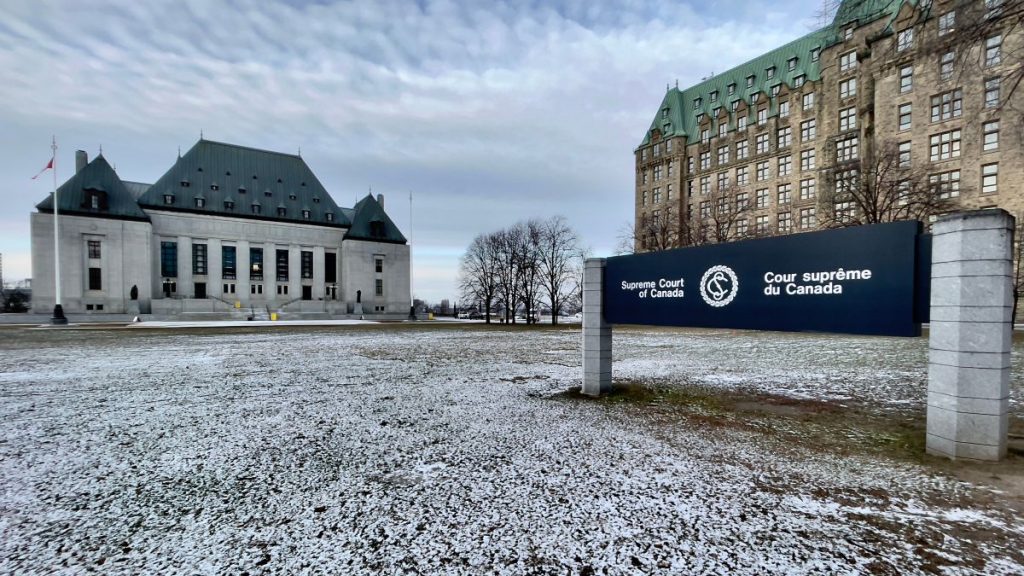
On that note, the Supreme Court of Canada is currently reviewing whether the Criminal Code can be interpreted to allow a province to connect its player pool with international jurisdictions.
The Ontario Court of Appeal issued a 4-1 majority opinion in November 2025 determining that expanding peer-to-peer Ontario iGaming in that manner would be legal. That Ontario court decision came after the Ontario government asked that question in 2024, along with other supporting parties including:
- The Canadian Gaming Association
- GGPoker owner NSUS Group
- PokerStars owner Flutter
After government lottery corporations in several other provinces appealed the Ontario court ruling to Canada’s highest court, the government of Alberta joined as an intervening party, noting that the ultimate result of the case will directly impact its own regulated iGaming market.
The Supreme Court heard oral arguments from both sides of the coin on Oct. 7 and took the case under advisement. There is no publicly estimated timeline for a final ruling. When that decision does arrive, it could have big potential impacts on how online poker operators including GGPoker, BetMGM, and BetRivers view the online poker opportunity in Canada.
In the meantime, major operators are taking differing approaches to Alberta poker.