Key Takeaways
- The Alberta iGaming Corporation published its first market report on Oct. 23, showing Albertans are already placing more than $1 billion in wagers each month.
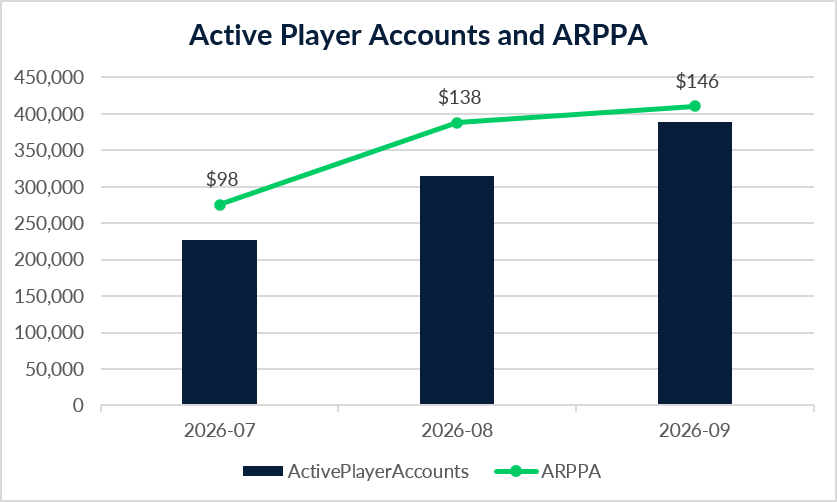
- Operators made more than $122 million in gross gaming revenue from July 13 to Sept. 30, and there were more than 388,000 active player accounts.
- As in Ontario, online casino dominates both wagering and revenue as more operators prepare to add to the 50+ licensed sites already live.
The Alberta government said on Friday it is already seeing strong migration of Alberta iGaming activity to licensed and regulated sites after only three months of its commercial online gambling market.
The Alberta iGaming Corporation (AiGC) issued its first market performance report on Oct. 23, spanning the first two and a half months from opening day on July 13 to the end of the fiscal quarter on Sept. 30. It showed that Albertans placed a total of $2.89bn in cash wagers across that 11-week reporting period, creating an accumulated $122.1m in non-adjusted gross gaming revenue for the province’s licensed operators.
One of Alberta’s core goals in allowing commercial iGaming was to bring existing online gambling activity over from unregulated or offshore sites to licensed platforms, a process known as “channelizing” play.
Pre-July estimates suggested that around 70% of online gambling in Alberta happened on unauthorized sites. Alberta officials publicly targeted a 70% channelization rate by the end of the market’s first year.
AiGC said in Friday’s news release that the first batch of data shows “steady channelization” in the initial months. The report did not provide an estimated percentage figure, but there were more than 388,000 active player accounts on licensed sites by Sept. 30.
Alberta iGaming revenue grows steadily month by month
The regulated Alberta iGaming market opened on July 13, 2026, with 15 operators running a total of 22 online casino and/or sports betting sites. By the end of September, that number reached 24 operators running more than 30 platforms.
Given both the mid-July start date and that progressive increase in the number of sites and operators, it’s not surprising that Alberta iGaming handle and GGR both increased steadily month-over-month:
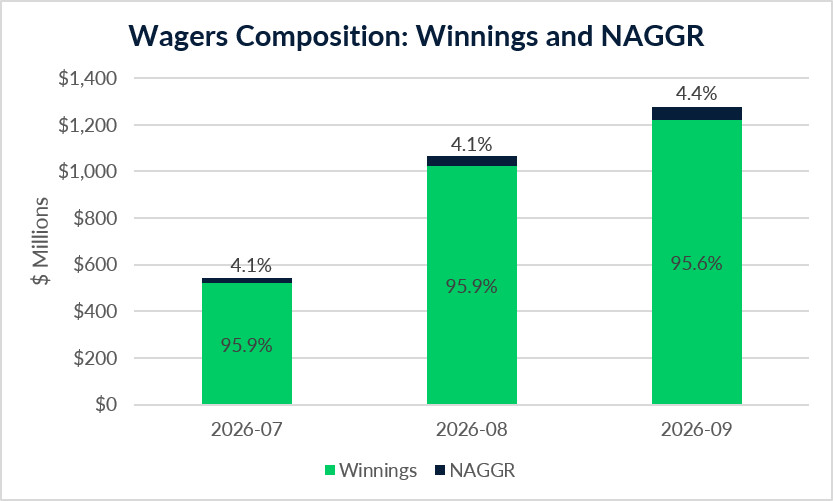
- July 13-31: $532.9m in wagers, $22.2m in GGR
- Aug. 1-31: $1.06bn in wagers, $43.3m in GGR
- Sept. 1-30: $1.22bn in wagers, $56.6m in GGR
Incidentally, while the first Alberta iGaming market report covers almost three months, AiGC will report on a monthly basis from October 2026 onwards, on a similar schedule to iGaming Ontario’s releases in that province.
Like Ontario, online casino dominates Alberta iGaming
Ontario’s market, which opened in 2022, is dominated on a month-by-month basis by online casino gaming, which accounts for approximately 85-90% of both handle and GGR.
A similar pattern emerged in the early days of Alberta iGaming.
Alberta broke down its first market report into three categories:
- Casino, meaning slots, traditional table games, poker, and more
- Betting, encompassing sports, esports, and novelty wagering
- Live dealer casino.
For September, the month that most closely resembles the early makeup of the market
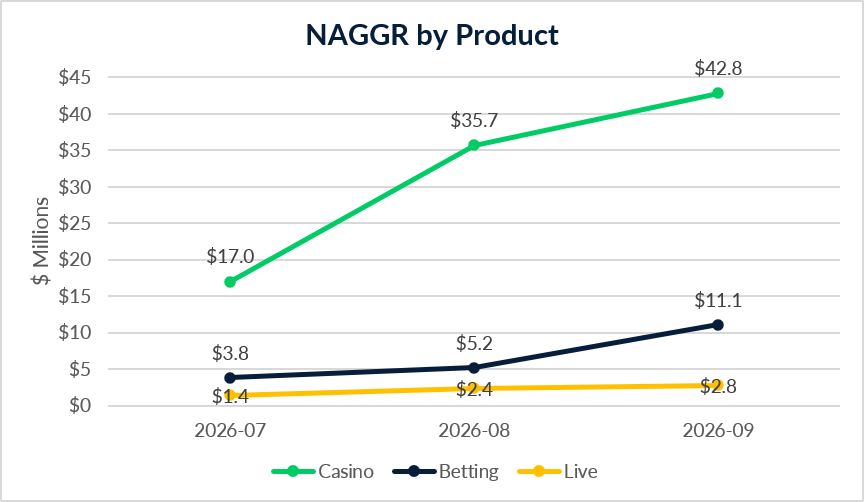
- Online casino accounted for 78.5% of total wagers ($1.00bn) and 75.6% of total GGR ($42.8m)
- Betting constituted 12.0% of handle ($152.7m) and 19.5% of GGR ($11.1m)
- Live casino comprised 9.5% of wagers ($121.5m) and 4.9% of GGR ($2.8m)
If you combine online casino and live casino, as Ontario does in its reports, 88% of all Alberta iGaming wagers so far have been on casino games, and 80.5% of operators’ total combined winnings have come from those products.
How does early Alberta iGaming revenue compare to Ontario?
So, how do Alberta’s early results stack up against the Ontario market’s first few months?
Executives at operators including BetRivers and BetMGM said on earnings calls recently that their initial metrics such as player registrations and active accounts are better on a population-adjusted basis than they were in Ontario when that province launched iGaming in April 2022.
Comparing the third month of Ontario’s market (June 2022) with the third month of Alberta iGaming (September 2026) shows that iGaming Ontario reported $1.53bn in cash wagers and $60.9m in GGR, compared to Alberta’s $1.22bn and $56.6m.
The Ontario market had 299,000 active player accounts at the end of its third month, compared to 388,000 in Alberta. That number doesn’t equate to the number of individual Albertans gambling on licensed sites, as many residents likely have accounts with more than one sportsbook or casino. Those Alberta accounts produced an average of $146 in revenue for operators.
It’s worth noting that apple-to-apple comparisons are difficult for multiple reasons. Alberta had more licensed operators live after three months than Ontario did at the same stage of its market, but Ontario’s population is more than three times the size of Alberta’s.
Why AiGC report doesn’t tell whole story
Meanwhile, since the end of the first Alberta iGaming reporting period, amid an Oct. 13 deadline for previously unregulated operators to migrate to the new market, the province’s market has swelled to 51 licensed commercial sites.
More than 30 operators are already live in the market competing with the provincial government-owned Play Alberta, which formerly held the monopoly on authorized Alberta iGaming.
Given the gradual expansion of the operator list, AiGC noted that the market report results are not a full representation of the total Alberta iGaming market as it was on Sept. 30, let alone as it is in late October.
The results also do not include activity on Play Alberta, which reports its iGaming numbers separately on an annual basis.
AiGC expects up to 65 licensed iGaming sites by end of 2026
Even the next Alberta iGaming market report could look pretty different.
AiGC expects more iGaming operators to enter the regulated market by the end of 2026. Its CEO Dan Keene told Canadian Gaming Business earlier in October that the total number of licensed Alberta iGaming sites is expected to be between 60 and 65 by the start of 2027. The likes of PointsBet, Betano, ToonieBet, and River Cree iGaming are planning to start taking bets before long.
In the meantime, Keene said that the early Alberta iGaming results show the benefits that regulating online gambling can offer to provinces.
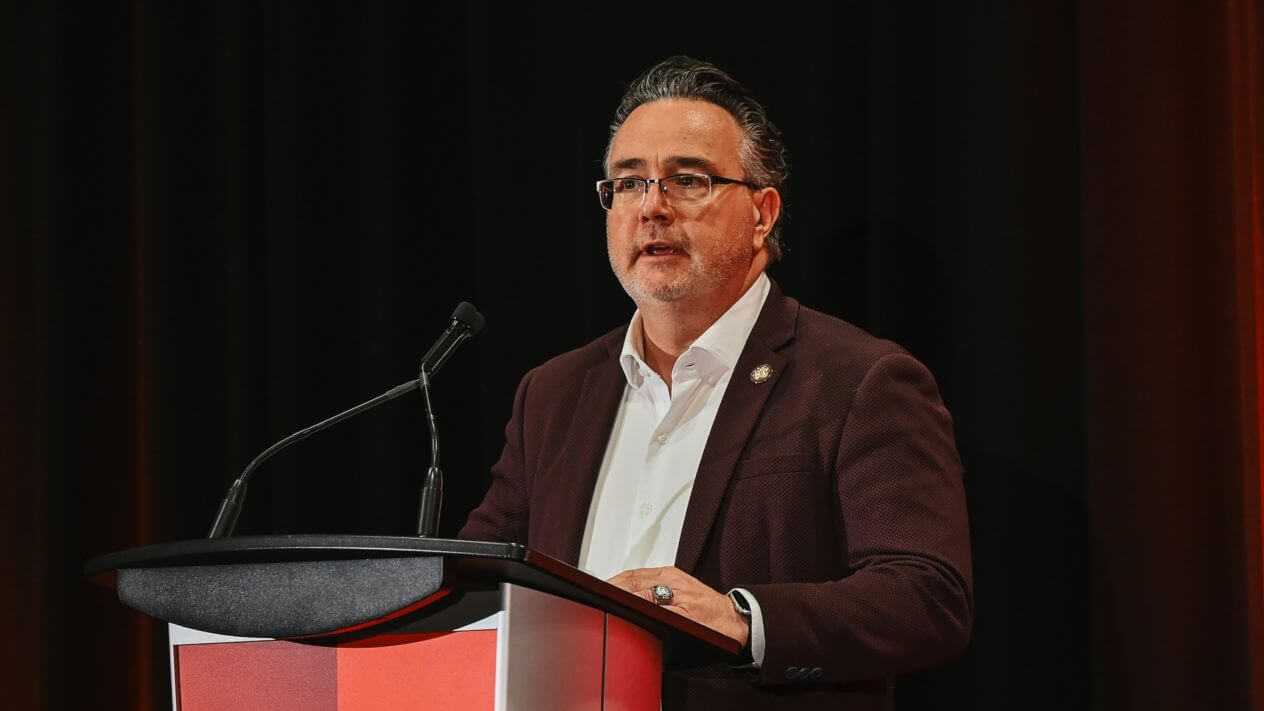
“Early results indicate that Albertans value the strong oversight and greater accountability offered by a regulated market,” said Keene on Friday. “We hope to continue educating Albertans about the risks associated with illegal offshore sites and move them onto regulated platforms where they have rights and recourse when iGaming.
“Regulation matters. This is a market where approved iGaming operators are held to high standards of accountability, and where revenue stays in the province to fund programs and services Albertans rely upon.”