Key Takeaways
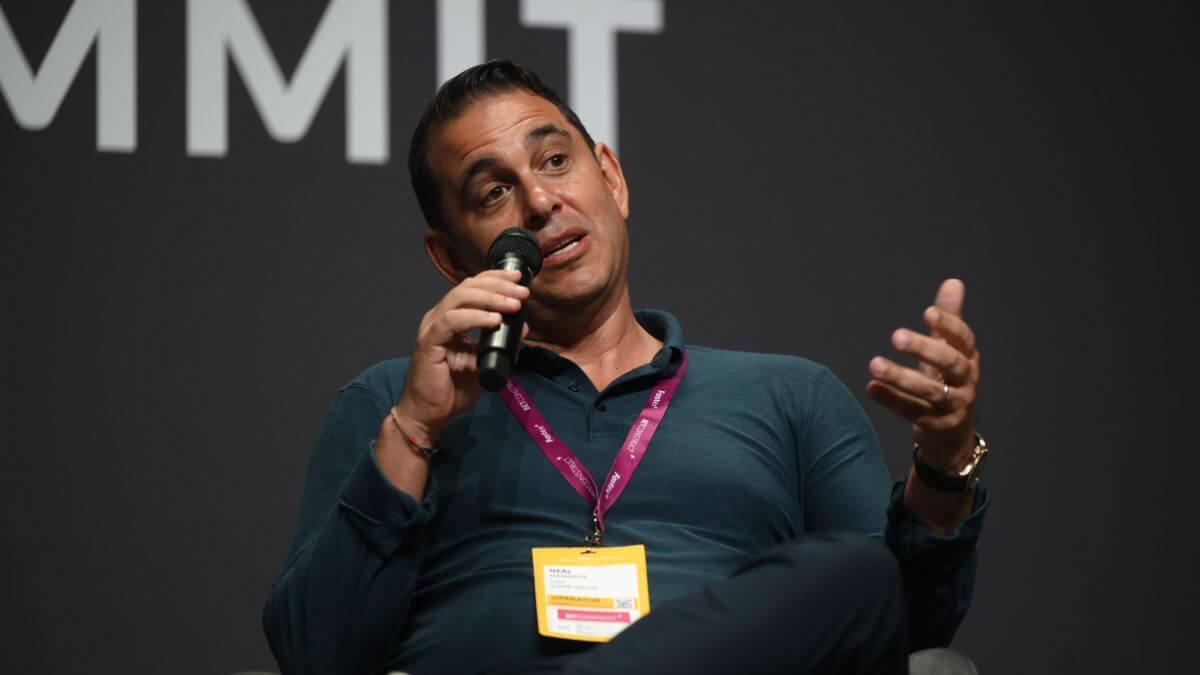
- Super Group CEO Neal Menashe and CFO Alinda van Wyk spoke to Canadian Gaming Business about the company’s new chapter in Alberta.
- The longtime grey-market operator migrated five separate iGaming platforms over to the province’s regulated market before mid-October 2026.
- Executives said the Betway parent is well-positioned to succeed in Alberta’s competitive market, as well as other provinces that may regulate iGaming.
Super Group knows Alberta better than many of the province’s licensed operators. It intends to make that advantage count.
The iGaming company operated brands including the Betway sportsbook and casino and the Jackpot City and Spin casino sites in the province for years as one of the most prominent grey-market gaming companies in Canada. Now, it has begun its new chapter as one of dozens of approved operators in the regulated market.
Super Group followed a similar path in Ontario when that province began regulating commercial iGaming in 2022. It has five licensed sites active in both provinces:
- Betway
- Jackpot City
- Royal Vegas
- Ruby Fortune
- Spin
Super Group enjoyed ‘smooth’ move out of the grey
Speaking to Canadian Gaming Business, CEO Neal Menashe and CFO Alinda van Wyk explained that they found the transition from grey to regulated in Alberta considerably smoother than it was in Ontario.
Some of that was down to lessons that Alberta learned from Ontario’s market and the industry, as well as operators’ own learnings from Ontario regulation. Another factor was that Alberta allowed Super Group to continue offering play on its unregulated dot-com sites after the market’s July 13 launch, as long as it transitioned all play to provincially regulated sites by Oct. 13.
“The difference with Alberta was they allowed us to stay on the .com sites and move brand by brand, with a set deadline,” Menashe said in an interview. “That meant we could first move our smaller brands, check it’s working, then move the next one, etc. It was quite seamless, as you could move customers over to test it.
“We begged Ontario for this and they refused to let all of us do it, which was wrong. So the problem we had was we had to do a ‘big bang’, and when you try to do a ‘big bang’, things break. The way Alberta let people transition was a much better way. We could do that, and we got it right.”
Betway headlined phased Alberta switchover
Super Group conducted a phased migration of its brands in Alberta, first moving the smaller Royal Vegas and Ruby Fortune sites to the regulated market as proof of concept, before bringing over its leading brands like Betway closer to the Oct. 13 deadline. It initially registered to launch a new, sixth brand called Grizzly’s Quest, before abandoning that idea to focus on its tried-and-tested platforms.
“We wanted to get the big ones over the line, and by the time we came to our big brands of Jackpot City and Betway, we had tested all the small brands,” Menashe added.

Like Ontario, Alberta asks many things of its licensed operators, including paying licensing fees, handing over around 20% of their gross gaming revenue in tax, limiting how they advertise, and various other stipulations.
Van Wyk said that Super Group’s operating leverage and existing success in Canada allow the company to deliver “really effective business” in a newly regulated environment.
“It doesn’t cost us too much to be able to pay the taxes effectively, and we have extra marketing capital to put back into the business,” the CFO explained.
Alberta’s rules meant gameplay tweaks were needed
Menashe noted that even some aspects of the gameplay itself on Super Group’s sites needed to be tweaked. Alberta’s regulations mandate that auto-play functionality is disabled on regular online slot play, for example, and that there is a three-second gap between virtual spins.
“They’ve got their set regulation of spins and this and that, it’s a bit different for the product in that sense, but it just takes transitioning the customers to get used to that over time,” the CEO added. “For us, compared to all the migrations we have done, Alberta probably was the best by far.
“We’ve been there for a long time and know this is a market that’s growing. We’re better than we were pre-regulation. We’ve got a player database there already. That’s the difference between us and others, we’ve got customers engaging already. We’ve moved all the players over. Now, it’s a question of how much of their gameplay we get.”
Like Ontario, Alberta iGaming competition is fierce
Super Group may have five pre-existing iGaming sites in Alberta’s new regulated market, but those are just five of more than 50 as of the time of writing. Competition will be fierce.
Operators including theScore Bet parent PENN Entertainment noted that Alberta was more competitive on day one than Ontario was at the time of its own launch in 2022. That was true on July 13, when 22 licensed sites went live; now the total has more than doubled, the fight for players’ time and dollars is intense.
Menashe said that Super Group will resume its “marketing machine” now that its five registered sites are all live as regulated platforms. The company already has Canadian aces up its sleeve, including Toronto Blue Jays star Vladimir Guerrero Jr. as Betway’s global baseball ambassador.

But the CEO suggested that he does not expect the same kind of marketing melee in Alberta as his company saw in Ontario, partly because of Super Group’s delayed arrival and partly because the winds of the industry have changed.
“Listen, it was just chaos in Ontario,” Menashe added. “It was the first [regulated province], everyone was there, they were all going mad. I think everyone’s got marketing budgets now. They’ve all got headwinds, and they can’t just spend everywhere.”
Menashe said in late 2025 that he expected Super Group’s longstanding Canadian presence to allow it to maintain its “podium position” in Alberta amid increased competition in a regulated market.
“Overall, we expect it to be a more rational competitive environment than we found in Ontario,” he added to Canadian Gaming Business this month. “Let’s see how it goes. We’re well-placed.”
Canada-wide footprint, iGaming momentum offer opportunity
Super Group’s third-quarter 2026 financial results this month revealed that the company, for whom the biggest market is Africa, increased its profits by 15% quarter-over-quarter and over 48% year-on-year for the three months ended Sept. 30, 2026.
Super Group’s brands operate in several other provinces, some of which are beginning to tentatively explore the idea of following Ontario and Alberta by regulating commercial iGaming. The operator’s revenue grew 10% in Canada and rose 15% in Canada excluding Ontario and Alberta, supported by strong casino performance.
The company opted out of the U.S. last year, shutting down its operations south of the border. Canada is a different animal entirely, said Menashe. “It’s much easier than America as we’re not starting from zero revenue, I think that’s the key.”
Super Group saw too much difficulty and not enough long-term potential in the U.S. Canada, by contrast, combines existing revenue potential with long-term promise.
“Finally, two provinces are regulated, but there’s still another eight to go,” Menashe added. “More have to come eventually. It takes time. Every province, it’s going to take time. In the U.S., how many states still haven’t done it? But there is momentum in Canada now.”