The House of Commons will soon review in detail proposed federal legislation that would establish national oversight of sports betting advertising. In the meantime, Canada’s newest regulated iGaming province, Alberta, is among the vocal critics of the bill.
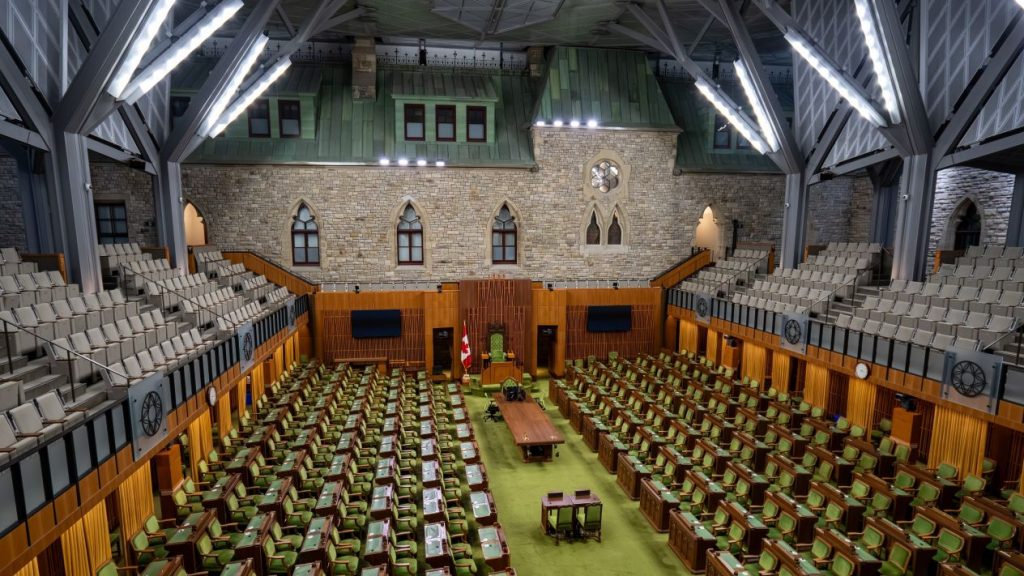
Members of the Standing Committee on Canadian Heritage will conduct clause-by-clause consideration of Bill S-211 (“An Act respecting a national framework on sports betting advertising“) on Thursday, Oct. 22, before likely reporting it out for a final vote.
The Senate passed the bill by voice vote almost 12 months ago to the day, on Oct. 21, 2025, and it garnered strong initial support in the Commons earlier this year.
In May 2026, members of the House voted 291-28 to advance it for further discussion to the Heritage Committee. Prime Minister Mark Carney was one of the nearly 300 members who voted yes.
What would Bill S-211 do to sports betting advertising?
The legislation would require the federal Minister of Canadian Heritage to establish a national framework on sports betting advertising. Although online casino accounts for roughly 90% of betting activity in Ontario, the bill does not encompass online casino advertising, only sports wagering.
Bill S-211 would not ban sports betting advertising outright, but would establish federal oversight through measures such as:
- Identifying ways to regulate and restrict sports betting advertising, including “limiting the number, scope or location” of ads or further restricting the use of celebrities and athletes
- Implementing measures to promote research and information-sharing related to shielding vulnerable populations and minors from the impacts of betting advertising
- Establishing national standards for preventing and diagnosing harmful gambling and addiction and for supporting those impacted by it
Its lead sponsor Sen. Marty Deacon, an Ontario-based member of the Independent Senators Group, hinted during Senate debate of the bill that possibilities include implementing a whistle-to-whistle ban on broadcast sports betting advertising during games, banning betting-sponsored intermission shows, and prohibiting in-game promotions within betting apps.
The details will be discussed in the committee consideration and would be ironed out if and when the bill passes.
Whatever its final form, the legislation sets up the federal government to have a hand in regulating sports betting advertising.
Alberta Minister labels S-211 ‘federal overreach’
Some in the industry say that’s a mistake.
Regulating gambling itself in Canada is the remit of the provinces, as decreed in the Criminal Code. Alberta became the second province to choose to open a regulated online gambling market, doing so in July 2026, four years after Ontario.
The Alberta government firmly opposes the idea of federal intervention on sports betting advertising.
“We are not enamoured with that bill,” Alberta’s minister responsible for iGaming, Dale Nally, said at the Global Gaming Expo (G2E) in Las Vegas last month.
“It’s another case of federal overreach into provincial jurisdiction. We do not support S-211 … I think it’s going to, in the end, do more damage to this industry than it helps.”
Alberta Minister Dale Nally
Alberta iGaming Corporation (AiGC) CEO Dan Keene told Canadian Gaming Business in an interview this week that the provincial iGaming conduct-and-manage agency is aligned with Minister Nally.
“AiGC is not in favour of Bill S-211 in terms of what’s being done there,” Keene said. “We’re working with industry and broadcasters to understand what we can do better.
“The province has given us a mandate, and we’re going to continue to serve and do what’s best for Albertans. We’re interested, of course, in what’s going on nationally, and we’ll work with the Canadian Gaming Association on that front. But I will just say there’s more work that’s being done relative to supporting responsible gaming messaging.”
CGA says both Alberta and Ontario oppose S-211
The Canadian Gaming Association (CGA) also opposes the idea, citing concerns that federal intervention is not necessary and would step on the toes of province’s rights to regulate sports betting.
In a brief filed with the Heritage Committee in June 2026, the CGA wrote that Bill S-211 “risks creating more confusion where clarity is needed and does not consider the unique role of the provinces in this domain,” and proposed amendments to stipulate that the bill would not “interfere” with provincial regulation of gambling regulation.
The CGA stated that the provincial government of Ontario, like that of Alberta, opposed the sports betting advertising bill in communications with the federal government.
“The opposition expressed by the Governments of Ontario and Alberta should be taken seriously.”
Canadian Gaming Association CEO Paul Burns
“The opposition expressed by the Governments of Ontario and Alberta should be taken seriously, so that the federal government can make an informed decision, while re-evaluating if there are other means, not in the form of a bill, in which the federal government can assist on this matter, without compromising jurisdictional authority for gambling-related activities,” added the CGA in the filing, which was attributed to President and CEO Paul Burns.
Alberta, Ontario regulators point to own restrictions
Both Alberta Gaming, Liquor, and Cannabis (AGLC) and the Alcohol and Gaming Commission of Ontario (AGCO) impose advertising and marketing restrictions on their licensed operators, including:
- Banning advertising of promotional offers and bonuses outside of operators’ own gaming platforms and opt-in direct communications
- Prohibiting advertising that is targeted towards minors, vulnerable individuals, or self-excluded gamblers
- Preventing ads from using themes or language that appeal to minors or from appearing in youth-oriented locations like schools
- Restricting the use of athletes like Connor McDavid to marketing that exclusively focuses on responsible gambling practices and tools
Canadian Gaming Business reached out to both provinces’ regulators for comment on Bill S-211.
“We are monitoring the federal legislation and don’t have any additional comments from what Minister Nally shared,” said AGLC Senior Manager of Communications Karin Campbell. “AGLC will continue working closely with the Alberta government on ensuring Alberta’s registered iGaming operators follow standards and player protections, including advertising, that safeguard vulnerable individuals and groups.”
An AGCO spokesperson said the Ontario regulator is well aware of the need to protect Ontarians, particularly minors and vulnerable groups, and “recognizes the importance of ongoing discussions about gambling advertising.”
“Ontario has implemented some of the strongest advertising and promotional standards in North America for its regulated iGaming market, including restrictions on the use of athletes and celebrities in public-facing gambling advertisements and prohibiting public promotion of bonuses and other inducements,” the spokesperson added.
Ontario’s equivalent of Alberta’s AiGC, iGaming Ontario, did not respond to a request for comment.
Operators, lotteries, leagues have their say
As well as the provinces and the CGA, major sports leagues including the NFL, the NHL, and the Canadian Football League (CFL) all also voiced caution about the idea since the sports betting advertising proposal was first introduced as Bill S-269 in 2024.
Operators have also occasionally chimed in.
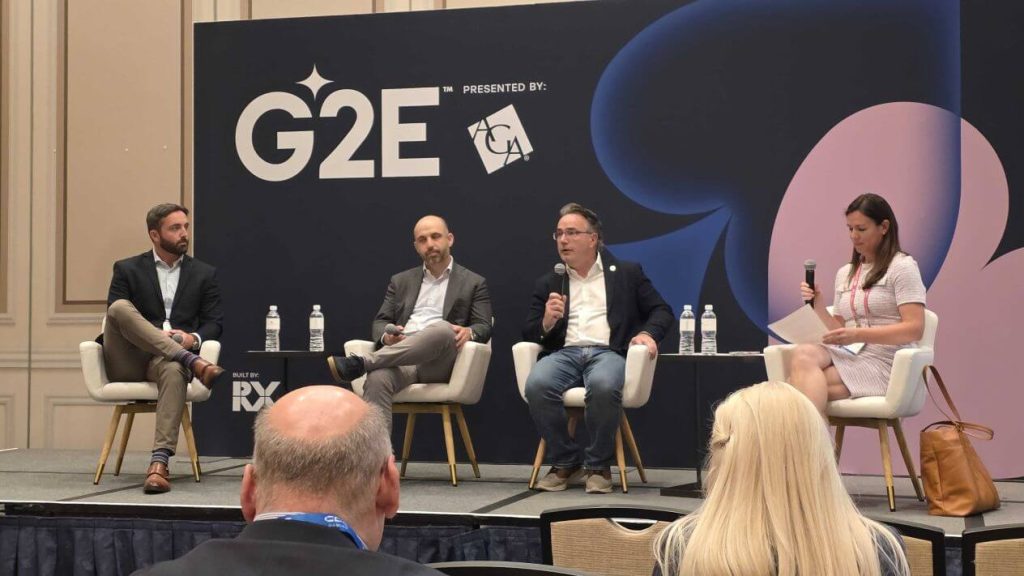
Meanwhile, speaking on the Canada-focused panel at G2E alongside Nally, FanDuel SVP of Public Policy and Sustainability Cory Fox suggested that provinces that offer regulated iGaming should be allowed to handle sports betting advertising themselves.
“Ontario and Alberta have not taken that obligation lightly, and they’ve imposed serious restrictions on the way that operators can advertise in those provinces,” Fox said. “I think the provinces are doing a thoughtful and good job, and that they all regulate engaging, and they should be allowed to handle.”
Asked at G2E for his thoughts, BetMGM Chief Revenue Officer Matt Prevost told Canadian Gaming Business that some of the responsibility around sports betting advertising lies with partners like sports leagues, broadcasters like Bell and Rogers, and tech giants like Meta and Apple. Those parties all need to be at the table, he stressed.
Meanwhile, in contrast to the stance of the CGA and the regulated iGaming provinces, mental health and youth advocacy organizations and groups like the Canadian Centre on Substance Use and Addiction and Ban Ads for Gambling support Bill S-211.
So too does the Canadian Alliance for Regulated Gaming (CARG) (formerly the Canadian Lottery Coalition). CARG’s membership comprises the provincial government gaming corporations from B.C., Manitoba, Quebec, and the Atlantic Provinces, all of which have criticized how sports betting advertising from Ontario and Alberta spills over into their provinces, which have not authorized commercial iGaming.
CARG Executive Director Molly Cormier told Canadian Gaming Business that the coalition filed a brief in support of S-211, but that “very much believe that it’s only a first step” in a longer process to rein in advertising.
What’s next for Canadian sports betting advertising bill?
During clause-by-clause consideration of Bill S-211, committee members will comb through the legislation’s text, decide whether to propose any amendments, vote on them if necessary, and and then report the bill forward. From there, it would go before the full House of Commons again.
Judging by the support it already received in both chambers, it is likely only a matter of time before the House passes the bill and tees up some kind of federal measures to tackle sports betting advertising.
To stay updated on Alberta iGaming and all things Canadian gambling, why not sign up for our weekly Canadian Gaming Business newsletter, sent directly to your inbox every Friday?