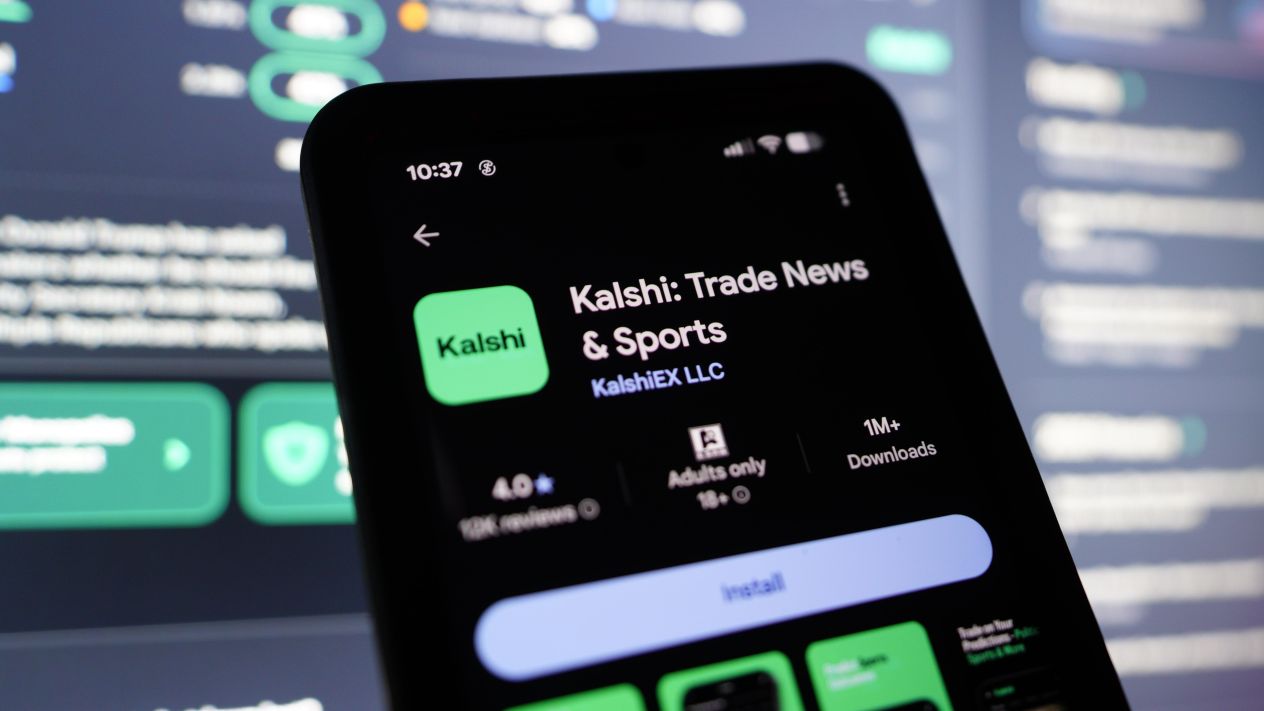
Kalshi is bringing its prediction markets to Canada, but the offering will not include sports event contracts.
The prediction markets-focused company announced on Thursday, June 18, that it partnered with Toronto-based financial services and technology firm Wealthsimple to offer event contracts on certain categories in Canada.
The Canadian Investment Regulatory Organization (CIRO), the federal self-regulatory authority that oversees all investment dealers, mutual fund dealers and trading activity, authorized Wealthsimple in March to offer event contracts trading. As of April, Wealthsimple and Interactive Brokers Canada are the only two CIRO members granted such permission.
A new Wealthsimple Predict platform, scheduled to launch this summer, will host approximately 4,000 of Kalshi’s binary event contracts.
Customers will be able to bet on yes/no outcomes by buying a contract for an initial price determined by the implied probability of the event happening. If they get it right, the contract settles at $1; if they’re wrong, it settles at $0.
Canadian Gaming Business reached out to Kalshi and Wealthsimple to clarify whether the new app and its full offering will be available in all provinces and territories, but did not receive a response to that particular question.
Why won’t Kalshi sports markets be available in Canada?
While sports trading has fast become the most popular prediction markets category in the U.S. on platforms like Kalshi, Polymarket, Crypto.com, FanDuel Predicts, and DraftKings Predictions, it will not be on offer on Wealthsimple Predict.
A press release noted that, at least in the initial launch, users will be able to trade only on “categories Wealthsimple is authorized to offer in the Canadian market,” specifically:
- Climate
- Financial markets
- Economic indicators
As alluded to in the press release, that is owed to Canada’s strict regulatory requirements on financial contracts.
CIRO’s rules, as outlined in a bulletin published on March 26, specify that economic forecasts, environmental forecasts, and financial indicators are the only categories that can be traded on through event contracts. It specifically mentions political events like elections as a forbidden category, and trading on sports events is also not allowed.
CIRO also mandates that all event contracts must have a settlement period of 30 days or longer, so they cannot be based on markets that would resolve in a few days.
More broadly, a CIRO spokesperson confirmed to Canadian Gaming Business that the only event contracts allowed to be offered under CIRO’s rules must be traded on and cleared through certain U.S. Commodity Futures Trading Commission-regulated exchanges and clearing houses. That’s where Kalshi comes in.
Compliance burden rests with Wealthsimple, not Kalshi
The CIRO representative told Canadian Gaming Business that ongoing compliance with prediction market-related terms and conditions, as with all applicable CIRO requirements, rests with the dealer member (Wealthsimple) under CIRO’s oversight.
“CIRO’s regulatory relationship is with its dealer members, not with the foreign exchanges on which event contracts trade.”
Wealthsimple co-founder and Chief Product Officer Brett Huneycutt wrote in a blog post that his company worked with CIRO on its prediction markets approval to ensure that the contracts its new platform will offer “are subjected to the same scrutiny and controls as other listed derivatives.”

The Wealthsimple co-founder also shed some light on why the firm chose Kalshi as its prediction markets partner.
“It was important that we work with another regulated partner to build this product,” Huneycutt added. “One of the biggest reasons is insider trading, which has been a problem in prediction markets. Insider trading is illegal and Kalshi follows U.S. regulations and maintains surveillance across all markets and participants to identify it. And, as with all our trading products, we have controls in place to monitor, detect and report potential insider trading activity.
“We also needed to work with an exchange that would let us control what contracts are available to trade. Other platforms allow investors to profit from violence, terrorism, or death. Those markets have no place in our app, and we’ll never offer them.”
Canadian regulators watching prediction markets closely
Canadian regulators have held prediction market operators to account in the past for breaking the rules on event contracts.
Most notably, Polymarket reached a settlement with the Ontario Securities Commission (OSC) last year after the company admitted it violated Ontario’s version of the Binary Options Ban, which prohibits the advertising, offering, selling or trading of short-term yes/no event contracts. Polymarket was banned from operating in Ontario for two years as part of the settlement, although it is active in other parts of Canada.
In early April, a few days after publishing its bulletin and announcing Wealthsimple’s approval, CIRO issued a joint press release with the Canadian Securities Administrators (CSA) in which the regulators warned that “failure to comply with applicable requirements under Canadian securities and derivatives laws may lead to enforcement action.”
CIRO and the CSA also stressed that while Wealthsimple, Interactive Brokers Canada, and any other CIRO members that might be approved in the future (Questrade is reportedly keen) may facilitate Canadian access to event contracts traded on non-Canadian markets, no prediction market has been recognized as an exchange, registered as a dealer or exempted from those requirements by the CSA.
That means Kalshi can offer limited prediction markets trading on Wealthsimple’s platform, but cannot allow Canadians to trade on its own platform directly.
“CIRO’s position is clear: prediction-market products are not entitled to enter Canadian markets simply because they exist elsewhere,” CIRO’s spokesperson told Canadian Gaming Business. “Any firm seeking to offer or facilitate these products in Canada must meet Canadian regulatory requirements.”
CIRO and the CSA said in their April press release that they each continue to monitor developments involving prediction markets and event contracts and intend to issue further guidance. They also signaled that they could take further regulatory action if they deem it to be required, including changes to CIRO’s terms and conditions or the imposition of further restrictions.
As of Thursday, CIRO told Canadian Gaming Business, there was nothing further to announce on that front.