LAS VEGAS, NEVADA — Three months into the lifespan of the regulated Alberta iGaming market, the provincial government says it is ready to use “every possible avenue” to shut down any unlicensed operators that continue to do business.
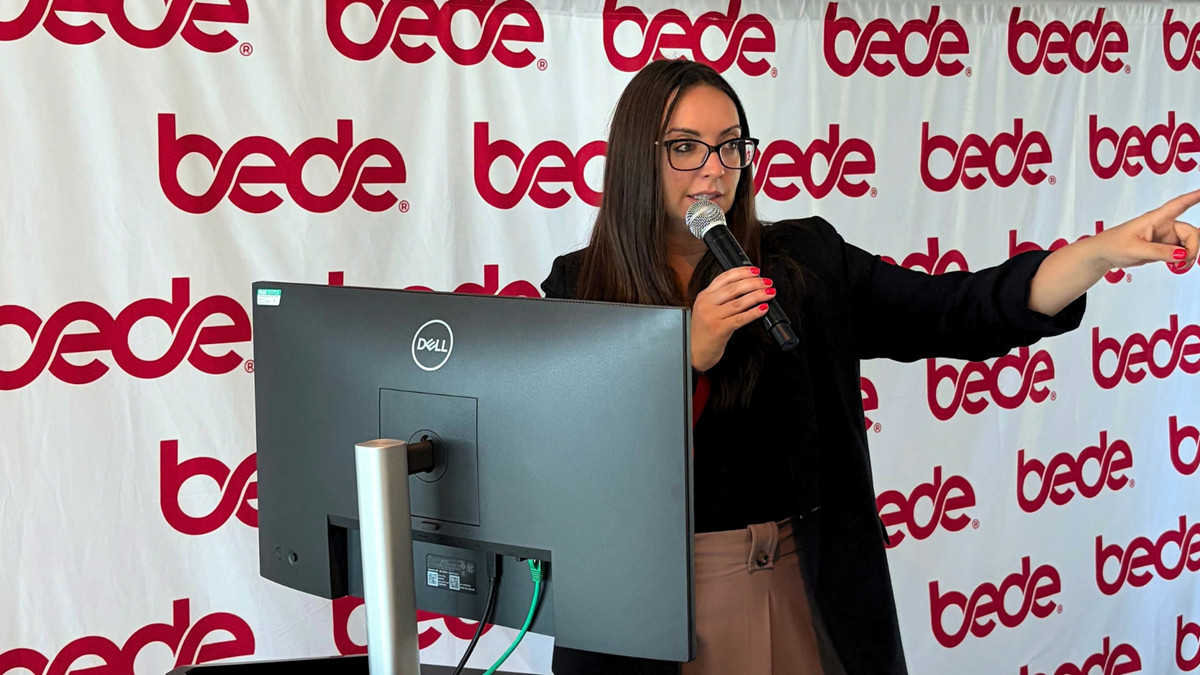
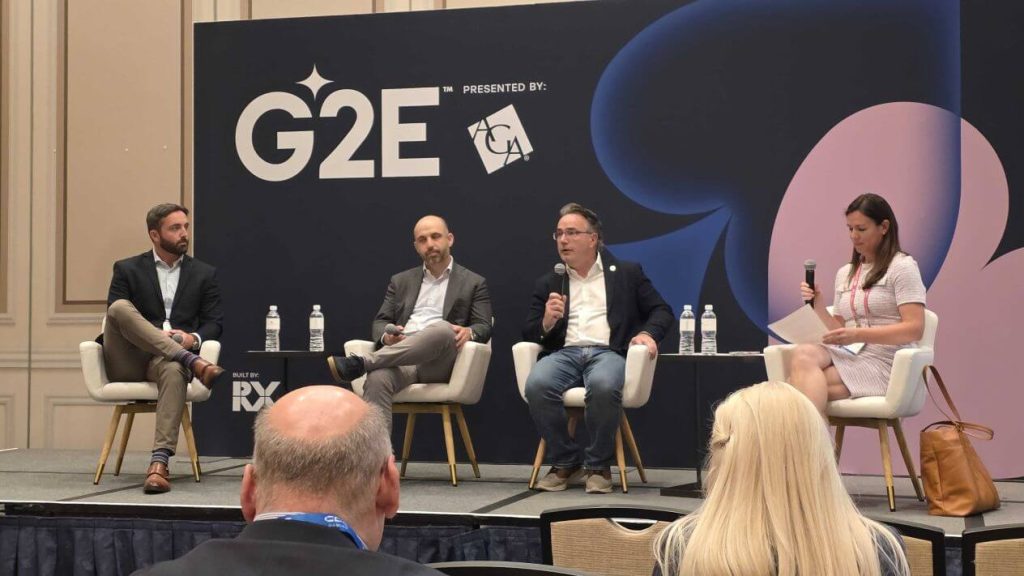
“We have levers at our disposal that may not have been tried in the past,” the minister responsible for Alberta iGaming, Dale Nally, said on a Canada-focused panel at the Global Gaming Expo (G2E) in Las Vegas on Sept. 29.
“I’m not going to broadcast what they are because I don’t want to tell the bad guys what we’re going to start doing. But we are intrinsically motivated to deal with the illicit market, and we’re going to pull every lever at our disposal to make sure that the good guys are rewarded and that we keep as much of the illicit market out of the province as possible.
“Our intention is to go as hard as we can against that illicit market. That’s our obligation, not just on behalf of Alberta but also on behalf of the operators that have chosen responsibility.”
Pay up or get out
Alberta officially began authorizing, licensing, and taxing commercial online gambling platforms this summer. Before that, Alberta iGaming was notionally a government monopoly for the Play Alberta site run by the market regulator Alberta Gaming, Liquor, and Cannabis (AGLC).
However, as was the case in Ontario when that province did the same in 2022, numerous online casinos and sportsbooks had been operating there anyway. Multiple assessments put Play Alberta’s share of the market at only around 30%, with the other 70% of iGaming activity happening on sites that were not supposed to be available.
Moving that unregulated gambling over to licensed sites (termed as ‘channelization’) is a core goal for Alberta, as it was in Ontario. The Ontario government estimates it has attained 90% channelization four years into its market. Alberta is publicly targeting around 75% by the second year of its market, although the CEO of the Alberta iGaming Corporation told SBC’s iGaming Daily podcast that’s a lowball estimate.
“Play Alberta did a great job, but the unfortunate part is they were only able to capture 30% of the market,” Nally acknowledged on the panel. “So, despite our best efforts, we knew that the black market was alive and well. When I describe the black market, the word that I use the most is ‘repugnant’.
“We’ve said throughout this process that the best way to deal with the illicit market is to have a strong, healthy legal market. The stronger your market, the more success you’re going to have pushing the illicit market out of that space.”
Alberta iGaming’s 3-month grace period ends Oct. 13
Once the commercial Alberta iGaming launch date was set as July 13, provincial authorities announced that they would allow three months for any sites that were operational in the previous grey market to complete the transition from unregulated play to licensed and regulated play.
That deadline is looming. Operators such as Super Group’s Betway, have completed that process in recent days. More will follow. In response to a question from Canadian Gaming Business at the end of the G2E panel, Nally said that he expects the list of licensed Alberta iGaming websites to expand from roughly 35 as of this week to around 60 by Oct. 13.
“The commitment I have given the market is that we will not go after illicit operators until Oct. 13,” Nally told the room at G2E. “Once we go live in Alberta, we are going to wrap up these conversations because we don’t want an illicit market in Alberta.
Alberta’s plan unclear
Exactly how Alberta iGaming officials intend to crack down on still-active unlicensed operators after Oct. 13 is unclear. Canadian Gaming Business asked Nally for more details, but the minister again did not offer any specifics.
How much the province can do in practice is uncertain.
Other jurisdictions including numerous U.S. states have pursued action such as sending cease-and-desist letters to unlicensed operators or even trying to go after service providers that work with those operators, such as payment processors. Nally said that that those methods “are absolutely two levers that we’re going to be exploring.”
Ontario regulator feels it lacks power
On a separate G2E panel on Sept. 28, Alcohol and Gaming Commission of Ontario (AGCO) CEO Karin Schnarr commented that she wished she had as much power of some of her counterparts in other North American jurisdictions when it comes to enforcement against unlicensed operators.
In January 2025, the AGCO stated in its annual report that it was working on “a comprehensive strategy” to restrict access to the unregulated market. Ontario Attorney General Doug Downey subsequently wrote to the regulator to urge it to develop “additional resources to combat illegal gaming operators,” including potential options like cease-and-desist orders and fines.
The AGCO has not spoken at any length about that since, although its COO Dave Phillips said in April 2025 that the commission has “a real significant lack of authority” to take firm action.
Ontario’s regulator then issued a notice in May 2025 in which it called upon digital media platforms to “step up the fight” and stop advertising unregulated online gambling sites in the province, which it said gives unlicensed sites “a veneer of legitimacy.”
On the G2E panel, Alberta iGaming minister Nally referenced big tech firms like Google and Apple, which allow users to download apps of online casinos or sportsbooks that have not been authorized by provincial governments.
“You have to look at every possible avenue,” Nally added. “That means Google, it means Apple, it means social media. We have those conversations, and we will continue having those conversations. It’s important to manage our expectations. There’s a bit of Whac-A-Mole because these companies always seem to pop up under a new name or IP address. So, there’s lots of work to be done.”