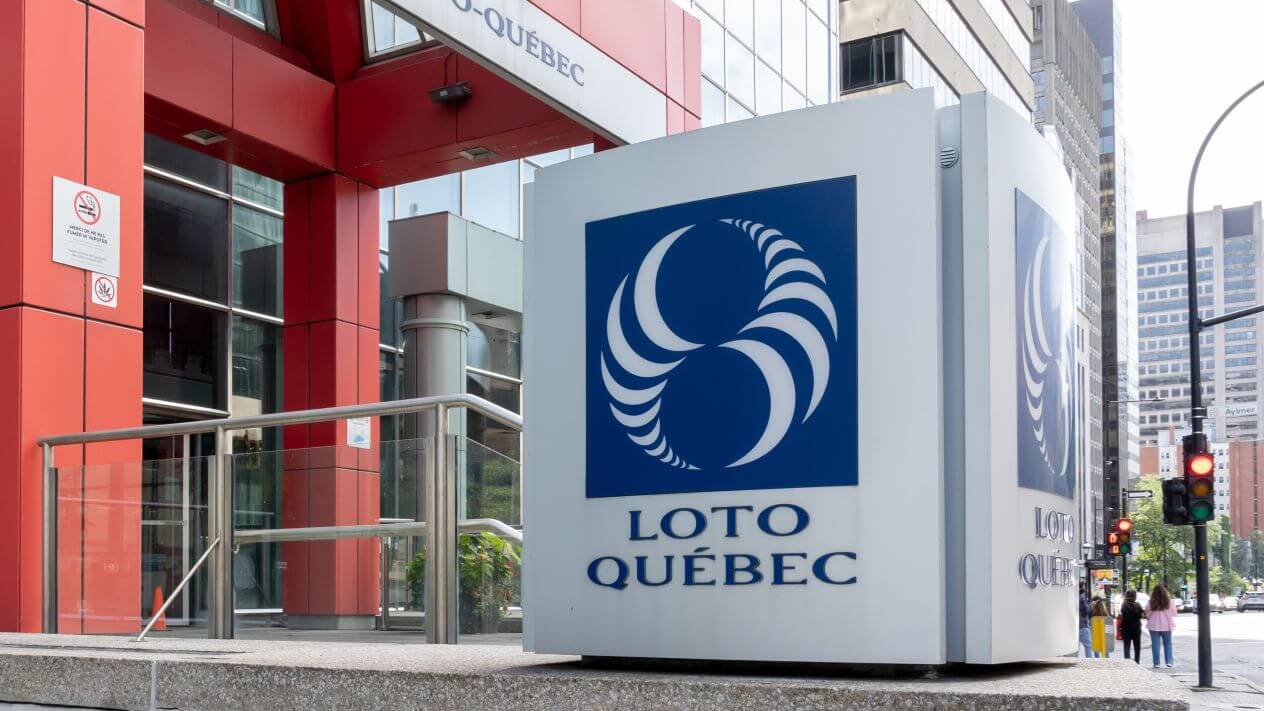
As the premier candidates leading the Quebec election polls pursue opening up iGaming in the province, the governmental gaming operator Loto-Québec reported a modest uptick in revenue.
In a Sept. 17 press release, the crown corporation said that it posted total revenues of $782.6m for the three months ended June 30, a 2.1% increase of $16.1m on the same period last year. Consolidated net income reached $398.1m, up 3.6%. Loto-Québec said that return exceeded the target it was set.
As usual, the casino sector was the strongest-performing segment. Loto-Québec’s revenue breakdown was:
- $337.6m from the casino and gaming hall sector (up 4.4%)
- $241.1m from the lottery sector (up 2.1%)
- $208.4m from gaming establishments (down 1.8%)
Loto-Québec sports betting is part of its lottery segment, while online casino is classified under the casino segment. The gaming establishments sector includes video lottery terminals (VLTs), bingo and Kinzo gaming.
Loto-Québec President and CEO Jean-François Bergeron said the crown corporation benefited from increased activity at both brick-and-mortar casinos and gaming halls and online, as well as the benefits of the late-spring and early-summer season. The organization also referred to the NHL playoffs and the Montreal Canadiens‘ run to the Conference Finals, as well as the FIFA World Cup.
“We are continuing to build on our momentum and once again seeing higher results,” he said. “The casino sector performance attests to the relevance of the offer. We will continue to strive to offer a responsible, engaging and diverse entertainment experience.”
Loto-Québec adds new iGaming supplier partners
At the time of Loto-Québec’s previous quarterly update in June, Bergeron recognized that the government gaming operator needs to work to expand and improve its online gambling offering.
“We have continued to enhance our offerings by leveraging the synergy between our various channels,” wrote the CEO at the time. “We have upgraded our online gaming site and mobile apps, and expanded our in-store offerings, particularly by focusing on a variety of entertainment options that encourage social interaction.
“It is essential that Loto-Québec strengthen its presence in the online gaming sector, including sports betting, to ensure better oversight and guarantee that profits benefit the people of Québec. We prioritize a responsible approach aimed at capturing the market rather than stimulating growth.”

Since the end of the most recent reporting period covered by Loto-Québec’s new report, the operator has brought on new online casino supplier partners.
In July, it added Aristocrat Interactive content to its portfolio, including a range of the supplier’s leading games and titles from the subsidiary NeoGames Studio. The lottery will also leverage the company’s Fusion aggregation platform to facilitate access to third-party content.
Just last week, it also struck a deal with Sweden-based Gaming Corps to add the provider’s content in the fourth quarter of 2026 via Gaming Corps and Loto-Québec’s mutual distribution partner, Light & Wonder.
Looming election could have huge Quebec iGaming repercussions
Meanwhile, all eyes are on the Quebec provincial election on Oct. 5.
The respective leaders of the Quebec Liberal Party and the Parti Québécois both expressed their support for the idea of following Ontario and Alberta by opening a regulated private-sector iGaming market and ushering in competition to Loto-Québec’s online gaming platform.
The latest Leger election poll published on Sept. 22 rates the Parti Québécois as the leader with 29% of the voting share, followed by the Liberals at 23%. The governing Coalition Avenir Québec, which does not support expanding iGaming, is third with 20%.
Industry lobbyists have been pushing for Quebec to launch a commercial iGaming market for years, citing perceived flat performance from Loto-Québec and the need to capture grey-market activity. The Quebec Online Gaming Coalition (QOGC) estimates that opening an Ontario-like market would generate hundreds of millions of dollars in tax revenue each year for the province.
The plan to overhaul iGaming in Quebec is backed by other parties including the Canadian Gaming Association and former Loto-Québec Chair Helene Fortin.