Last updated July 16, 2026
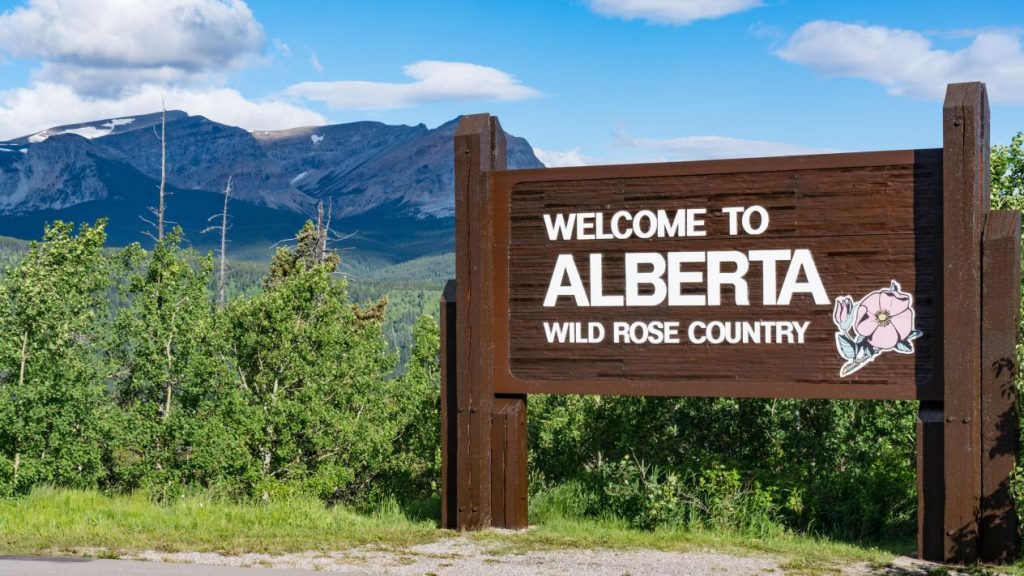
After more than three years of laying the groundwork, Alberta opened up for commercial online gambling on Monday, July 13.
Since Premier Danielle Smith tasked Minister of Service Alberta and Red Tape Reduction Dale Nally in summer 2023 with exploring the potential of launching a regulated iGaming and betting market, things have kept moving, albeit slowly at times, and with some delays. The passage of the iGaming Alberta Act in May 2025 set the stage, and the curtain is finally about to rise.
The opening of a second province has been an El Dorado for Canadian gaming, particularly for those operators, suppliers, and stakeholders who have invested so much money and time in regulated iGaming in Ontario since April 2022.
But what exactly does Alberta iGaming look like now that it is up and running? Here’s what you need to know.
How does Alberta iGaming work?
In short, the basic mechanics work like Ontario’s. The Alberta Gaming, Liquor, and Cannabis (AGLC) government agency regulates the market, laying out the initial rules and regulations, altering them where deemed necessary, and holding operators and suppliers to account if required. That role is functionally similar to the Alcohol and Gaming Commission of Ontario (AGCO).
Another, separate government agency, the Alberta iGaming Corporation (AiGC) is what’s known as the conduct-and-manage agency, similar to the role iGaming Ontario (iGO) plays. Once operators are registered with AGLC, they must sign a contract with AiGC before they can go live. AiGC will handle a lot of the public- and industry-facing communications, including publishing quarterly revenue reports.
Are there any major differences from Ontario?
While leaning heavily on Ontario’s blueprint, Alberta’s iGaming market differs from that province in several ways, including:
- A legal gambling age of 18, compared to Ontario’s 19
- A ban on betting on political elections
- Pre-split deductions in operators’ revenue-share agreement (see “tax” section below)
- Multiple First Nations-owned brick-and-mortar casinos will offer iGaming
- Casinos can host retail sportsbooks under the branding of a commercial iGaming partner
At a high level, one of the biggest differences is that, unlike the AGCO, Alberta’s AGLC serves a dual role as both the market regulator and an operator. AGLC continues to run the government-owned Play Alberta, which was formerly the only authorized iGaming site in the province but now has huge approved competition for players’ time and money (see below). In contrast, Ontario Lottery and Gaming (OLG) is the governmental operator in that province and is a separate entity from the AGCO.
Alberta is also taking a strict stance on operators who already exist in the province’s grey market, giving them until July 13 (with extensions to October 13 in some cases) to end any and all unregulated gaming activities in the province.
How many sportsbooks and casinos are operating?
Another big difference on July 13 was the number of iGaming sites that are immediately available to Albertans.
When Ontario opened Canada’s first regulated commercial online gambling market on April 4, 2022, around a dozen operators started taking bets on day one. In Alberta, it was around twice as many. Nally said at SBC Summit Canada in May that as many as 70 operators want to do business in the province.
As of the time of writing, AGLC lists around 50 operator sites as registered to do business. Several operators, including Caesars and PENN Entertainment, offer multiple distinct brands. Not every Ontario-licensed operator will be in Alberta, but most will be.
Not all of the registered operators were ready to go on day one, but Alberta is shaping up to be even more competitive at the get-go than Ontario was four years ago.
What products can operators offer?
Like Ontario, Alberta allows operators to offer both online sports betting and online casino, either in an all-in-one platform or on separate sites/brands. While there are some small differences (like the prohibition on election betting), it’s broadly a like-for-like comparison. You’ll see sports wagers, thousands of different online slot games, casino table games, and live dealer options.
In Ontario, iCasino is king, with more than 80% of iGaming play on casino games on an ongoing basis. Whether a similar pattern will emerge in Alberta remains to be seen.
What about poker and daily fantasy sports?
Operators can offer peer-to-peer online poker, as they can in Ontario. But, like Ontario, there’s a big caveat: Play is ring-fenced within Alberta, meaning Albertans can only compete against other Albertans. In the U.S., for example, a multi-state agreement allows operators to pool players across several states, facilitating a more competitive and potentially lucrative product. That is not currently available in Canada.
Daily fantasy sports (DFS) is allowed in principle, but the ring-fencing, licensing, and taxation requirements of Alberta’s market mean it’s unlikely to take off anytime soon. Case in point: DraftKings confirmed that it shut down its pre-existing DFS operations in Alberta once the regulated sports betting market opened, as it did in Ontario.
The situation for both products could change in the future. For P2P games like poker and DFS, Alberta and Ontario can choose to pool their players together if both provinces want to, and AiGC CEO Dan Keene confirmed at SBC Summit Canada that is the plan actively being worked on.
We’re currently working on a memorandum of understanding with Ontario about interprovincial liquidity, so we’ll try and get that done as quickly as we can with our friends in Ontario.
AiGC CEO Dan Keene
Meanwhile, a Supreme Court of Canada appeal process is playing out that could potentially lead to international player pooling getting the green light. File this one under “wait and see.”
How much tax do operators pay in Alberta?
Ask most people this question, and you’ll be told it’s 20% of gross gaming revenues. That’s what Ontario charges its sportsbooks and online casinos, and Alberta did indeed replicate that rate. But there’s a difference.
Alberta’s government system means that before the 80-20 split is applied, 2% of all gross gaming revenue from iGaming is dedicated to the province’s First Nations communities and another 1% towards social responsibility initiatives. That makes the real tax rate more like 22% in Alberta.
As for other costs, operators must pay a one-time $50,000 application fee, as well as a $150,000 annual operator registration fee for every site that they offer to Albertans. Suppliers’ fees are $15,000 for platform providers and $3,000 for other services.
Are operators limited in how they can advertise?
They sure are. And, again, Alberta has borrowed greatly from Ontario here, with restrictions including:
- A ban on the public advertising of inducements such as sign-up bonuses and free bets, except on operators’ own sites or through direct marketing to users who have opted in to receive it.
- A ban on marketing targeting minors, whether by direct exposure or by dissemination in places or media that could reasonably be expected to appeal to children. The use of cartoons, influencers, or celebrities who would likely be expected to appeal to minors is also banned.
- A limit on using active or retired athletes, who can only be utilized to promote responsible gambling concepts or tools.
Alberta also bans any marketing that “promotes excessive play”, that suggests that a player’s skill affects their chances of winning, or that implies that any offers increase a player’s odds of winning. And operators are responsible for the third-party marketing partners they use; of particular note, operators must ensure that none of their partners are offering similar services for unlicensed sites in Alberta.
What’s Alberta’s main goal here?
People like Minister Nally and AiGC CEO Keene continue to reiterate that legalizing commercial online gambling is not simply about generating more money for the province. And there is some credence to that, because a key goal is protecting players.
When Ontario launched in 2022, it did so with several major goals:
- “Channelize” play over from the unregulated market to licensed and regulated platforms
- Implement stringent consumer protection measures under regulatory oversight
- Make responsible gambling tools and problem gambling supports more available and accessible
- Offer users more choice and foster a competitive market
All of these are targets for Alberta, too. But it would be foolish to pretend that generating millions of dollars in extra revenue for the government isn’t a nice bonus that will have been on Premier Smith’s mind as far back as 2023, too.
What’s a realistic channelization target?
This is an interesting question, and we should preface it with two pieces of data.
- First, estimates suggest that in excess of 70% of all current online gambling play in Alberta is on unregulated platforms, with perhaps as little as around 20% on the regulated Play Alberta platform.
- Second, the most recent estimate from market research firm Ipsos suggests that four years into regulated Ontario iGaming, more than 90% of activity is now done on the province’s more than 80 licensed sites.
On its website, AiGC sets its own bar lower, at least in the early days:
Our goals include a 70% channelization rate after year one, and a 75% channelization rate of the current illegal iGaming market into the regulated Alberta market by year two of operations.
AiGC
That’s probably lowballing it. Ontario was reputedly at more than 80% channelization at the end of its first year, and Albertans may have even more prior knowledge of big-name brands than Ontarians did at launch, after four years of cross-provincial advertising bleed.
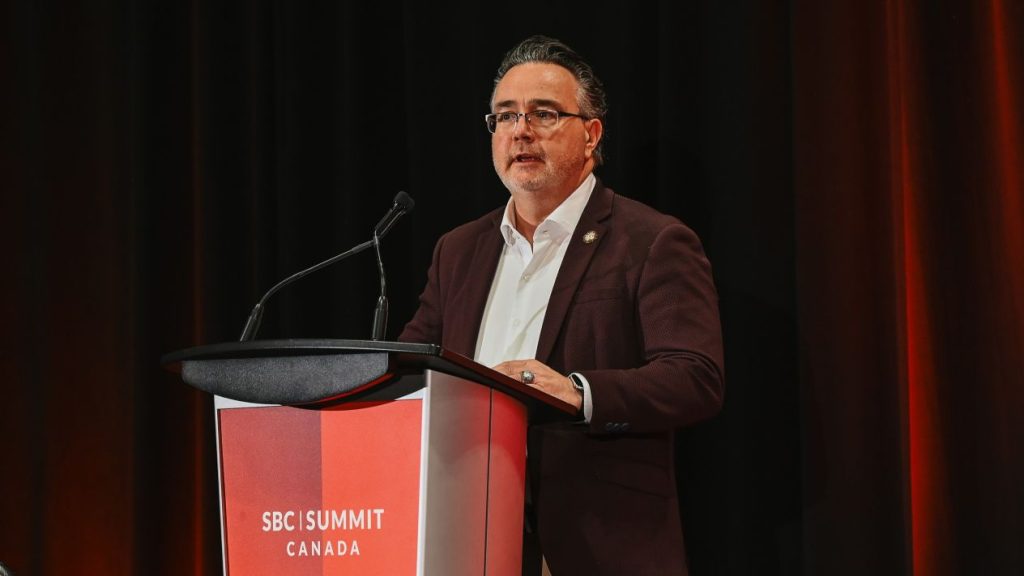
“The best way to deal with the illicit market is to have a healthy, responsible legal market,” Nally said at SBC Summit Canada. “And the more successful that market is, the harder it is going to be for the repugnant operators that don’t embrace these safety standards to participate. Success will look like a black market that has been minimized as close to non-existent as possible.”
Just how much money could Alberta iGaming generate?
This is a tough one. There are a bunch of factors at play here; as just two big examples, Alberta’s population is less than one-third of Ontario’s, but the average income is higher.
The Alberta government’s public target is $76m in tax revenue in year one, as Nally told the Edmonton Journal recently, slightly lower than Ontario made in Year 1. If we’re doing a very crude calculation based on a rough 20% tax rate (again, bear in mind the pre-split deductions), that would equate to a ballpark of $350m to $400m in gross gaming revenue for operators in Alberta’s first year.
Whatever the publicly stated target, Alberta officials will be eyeing Ontario eagerly; in that now-mature market, operators collectively made $4bn in gross gaming revenue in 2025, yielding more than $800m in tax revenue for the Ontario government.