Key Takeaways
- New Brunswick’s Finance Minister introduced Bill 8, which would allow the province to regulate online live dealer casino games for the first time.
- The government said the legislation is necessary for the Atlantic Lottery Corporation to improve its iGaming product amid increased competition from unregulated operators in Atlantic Canada.
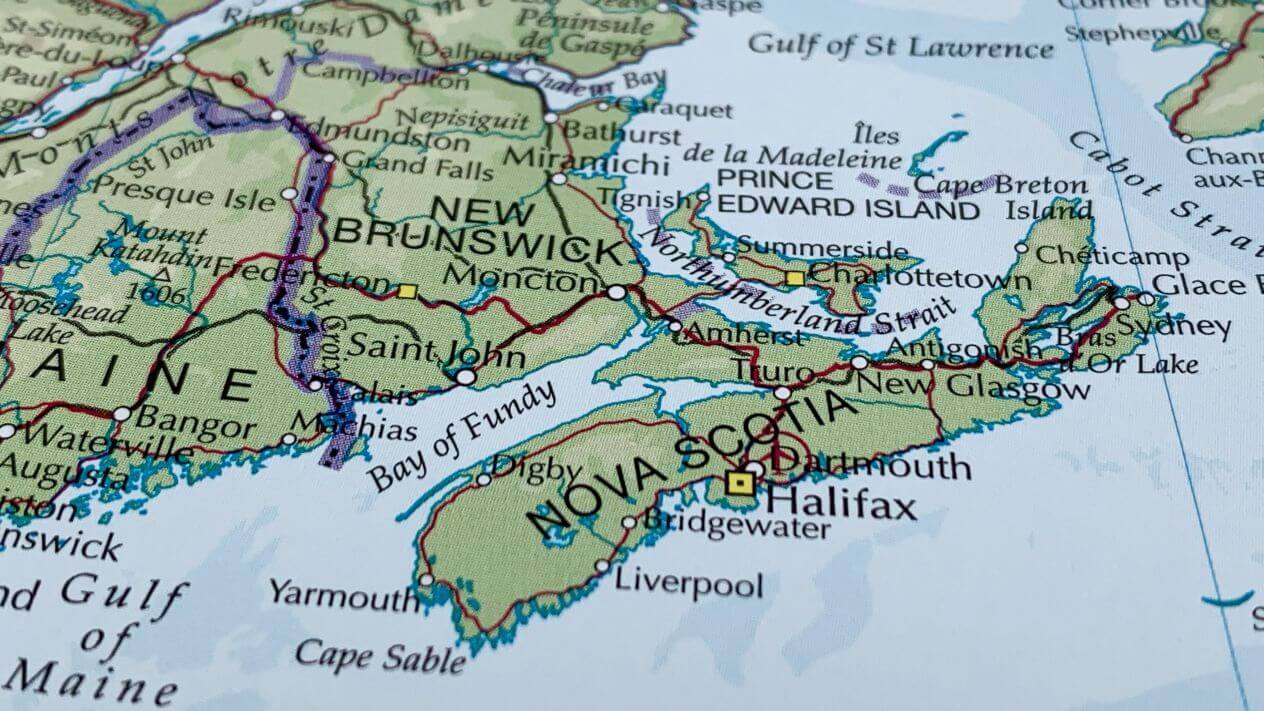
- Meanwhile, New Brunswick is exploring the idea of launching commercial regulated iGaming, and pro-expansion lobbying efforts are intensifying in the Maritimes.
New Brunswick wants to add live dealer online casino to its iGaming mix.
Finance Minister René Legacy of the governing Liberal Party introduced Bill 8 on Tuesday, Oct. 27, which would allow the government to regulate live online table games in the province for the first time, as the Atlantic Canada region re-evaluates its iGaming position amid a swell of unregulated competition.
The bill was read for the first time on Tuesday and for a second time on Wednesday in the province’s legislative assembly.
“Modernizing the Gaming Control Act is about keeping up with how gaming is changing,” said Finance and Treasury Minister Legacy. “These updates will ensure that new gaming options are developed responsibly and continue to meet the needs of players in a safe and regulated way.”
Legacy filed the bill a week after confirming to Canadian Gaming Business that New Brunswick “is exploring options around regulating private online operators” in a bid to curb an expanding unregulated market and better protect its residents who participate in online gambling.
What would New Brunswick Bill 8 do?
Bill 8 would “modernize” the province’s Gaming Control Act to give the New Brunswick Lotteries and Gaming Corporation the authority to begin regulating online live casino, wherein users play a variety of table games such as blackjack, roulette, or poker in real time with human hosts and/or dealers online or via mobile.
“‘Live casino lottery scheme’ means an online casino lottery scheme in which casino-style games are hosted, facilitated, or presented by a live person,” reads the text of the bill.
Those types of games are currently not allowed in New Brunswick but have proven popular in various other parts of Canada, including in Ontario and Alberta’s regulated commercial iGaming markets. New Brunswick Public Safety Minister Robert Gauvin noted that, “with a greater variety of online offerings, live casinos are growing in popularity.”
In Alberta, for example, players wagered $284m on live dealer casino in the first two and a half months of that province’s regulated iGaming market, accounting for about 10% of all wagers placed on licensed commercial platforms.
Bill 8 is the legal vehicle for live casino in New Brunswick, and specific regulations would be introduced at a later date.
Atlantic Lottery seeks to increase its competitiveness
The governmental New Brunswick Lotteries and Gaming Corporation already allows typical online casino games like slots and non-live table games, as well as e-instants, online bingo, and sports betting, via the Atlantic Lottery Corporation (ALC).
Jointly owned by the four Atlantic Canada provinces, ALC serves as the only authorized online gambling site in the region. However, Atlantic Lottery leaders and New Brunswick ministers acknowledge that the crown corporation needs to improve its product to enhance its competitiveness amid a growing number of unauthorized and unregulated sites available in the region.
“Current legislation does not give the government authority to establish regulations for live casinos, a concept proposed by the Atlantic Lottery Corporation,” stated a news release on Tuesday.
Legacy told Canadian Gaming Business last week that ALC’s strategy is to continue to expand its product offerings and technology so that it can “continue to serve as the regulated and responsible alternative to other online options being aggressively promoted in New Brunswick and other provinces.”
Evidently, that strategy includes adding live casino to the mix.
“In recent years, there has been rapid and significant growth in online gaming and advertising for gaming,” Legacy said during the legislative assembly’s floor session on Oct. 28. “… I want to reiterate that these changes have been introduced with the goal of providing government with the ability to adapt quickly to the changes in gaming activities here in New Brunswick.”
New Brunswick exploring idea of commercial iGaming
Bill 8 would not open up New Brunswick’s iGaming market to allow more operators beyond the ALC, which is what Ontario and Alberta’s governments did in 2022 and 2026, respectively. But the government’s reference this week to needing to better compete with unregulated offerings is noteworthy.
The Atlantic Lottery has 35% iGaming market share in the Maritimes, according to estimates from the lottery itself and H2 Gambling Capital, leaving around two-thirds of the market to unauthorized sites. Its President and CEO Dallas McCready said in the ALC annual report this month that “the growth of illegal online gambling has fundamentally changed the competitive landscape.”
Amid that backdrop, New Brunswick is considering overhauling its online gambling market.
“Government is exploring options around regulating private online operators,” Legacy told Canadian Gaming Business last week. He said that approaches in other provinces (i.e. Ontario and Alberta) are being considered as the numbers of unregulated sites in New Brunswick and licensed options in the two regulated provinces continue to grow.
Speaking during Wednesday’s session, multiple members of the assembly encouraged the government to consider expanding regulated iGaming.
Progressive Conservative Party member Don Monahan said that while Bill 8 is “an important step” towards addressing that imbalance between ALC and the unregulated market, “it must be the beginning of a broader strategy, not the end of one.”
Online gambling lobbying efforts intensify in Nova Scotia
Other Maritime provinces are monitoring the situation.
Spokespeople from the finance departments of both Nova Scotia and Newfoundland & Labrador told Canadian Gaming Business that while their respective governments have no immediate plans to change their ALC-only iGaming model, they are watching what others including New Brunswick (and possibly Quebec) are doing.
Meanwhile, the Investigative Journalism Foundation reported this week that the Canadian Online Gaming Association (COGA), an iGaming advocacy group, has registered lobbyists in both New Brunswick and Nova Scotia as it pushes for Atlantic Canada’s governments “to support a regulated iGaming market, including presenting recommended guiding principles for a future regulatory framework.”