Key Takeaways
- Ontario Premier Doug Ford says something has to be done about gambling advertising, which he believes is now “out of control.”
- Ford’s ruling Progressive Conservative party voted down a Liberal Party bill to ban iGaming ads in 2026.
- Ford’s comments come amid studies suggesting increased gambling harms in Ontario, Alberta’s Premier calling advertising “a problem,” and as a federal sports betting ads bill nears final approval.
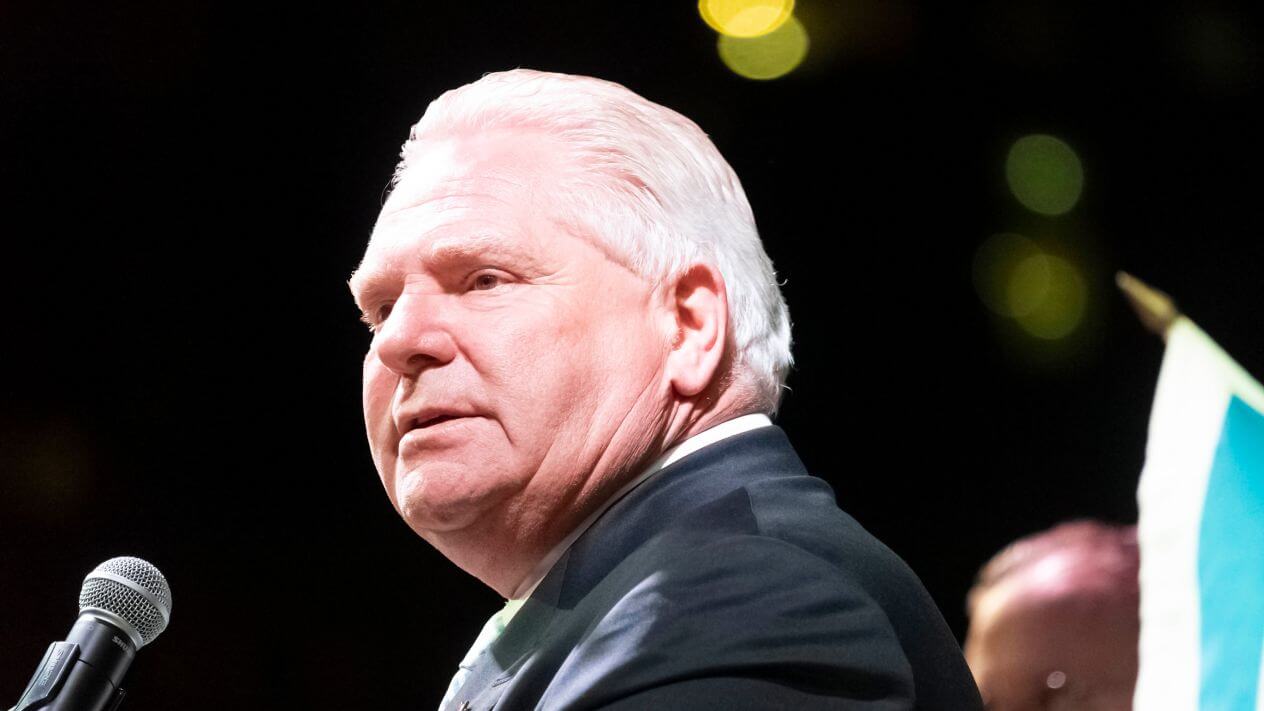
As the regulated iGaming market that his government opened in 2022 approaches its fifth birthday, Ontario Premier Doug Ford says online gambling advertising is now “out of control.”
“It’s not good on the people,” Ford told reporters on Tuesday. “Every time you pop on the TV, it’s just ads, ads ads.”
The Premier added that he directed his cabinet to “look into it” and report back to him.
“On every channel you turn on, it’s online gambling or television ads, you can go on social media,” Ford added. “So we’re gonna look into it. I asked them to look into it, they’ll come back and give me their findings. It’s just overboard, in my opinion … Everyone’s seen it. It’s out of control, in my opinion.”
Ford’s Progressive Conservative provincial government authorized Ontario’s commercial iGaming expansion and launched the market in April 2022. He did not offer any insight into what a study of gambling advertising in the province might entail or yield. But his comments add to a growing swell of opinion that something needs to be done.
What gambling advertising restrictions does Ontario have in place?
The province’s iGaming market already has a variety of restrictions on gambling in place. The Alcohol and Gaming Commission of Ontario’s (AGCO) Standards for Internet Gaming include measures such as:
- Banning public mass marketing of operators’ promotional bonuses or incentives
- Prohibiting operators from advertising to high-risk cohorts, minors, or self-excluded players
- Banning the use of imagery that appeals to users under the province’s legal gambling age of 19
- Restricting the use of athletes and celebrities in iGaming marketing to purely responsible gambling-focused messaging
Some of those regulatory requirements were in place from day one of the province’s market, while others such as the athlete marketing rule were implemented by the AGCO in the following years.
Canadian Gaming Business reached out to the AGCO about Ford’s comments this week but was redirected to the Ministry of Tourism, Culture, and Gaming (MTCG).
Former gaming minister Stan Cho suggested change was needed
Earlier in 2026, then-MTCG Minister Stan Cho acknowledged that it was time to re-evaluate the province’s approach to gambling advertising.
“We understand that the time to do something is now,” Cho said in June. “I’ve gone through this with family in terms of problem gambling online, and I know that days matter on this … If we’re not paying attention to the data and how that language is being spoken, the volume it’s being spoken in and the frequency in which it’s reaching problem gamblers, then we could have a problem on our hands.”

Cho resigned from the office a few weeks after those comments and was replaced as the minister responsible for gaming by Zee Hamid. Canadian Gaming Business reached out to the MTCG for this story but did not hear back by the time of publishing.
Liberal Party wanted to ban online gambling advertising in 2026
Public opinion and mainstream media reporting have been increasingly critical of gambling advertising amid wider concerns about the impacts of iGaming on Canadians inside and outside Ontario.
Ford’s misgivings follow recent Toronto Star reporting that found that iGaming Ontario shelved a study intended to track data on problem gamblers after it found the results were worse than anticipated. iGO initially pledged to release the data, but reportedly changed its mind.
Various studies published in the last two years suggest indicators of increased gambling harms over the last decade or so, including a rise in the number of Ontarians classified as showing signs of problem gambling and many more Ontarians contacting the province’s addiction and mental health hotline, ConnexOntario. Displaying ConnexOntario information in marketing is mandated by Ontario’s iGaming rules.
Amid that backdrop, Toronto-area Liberal Member of Provincial Parliament (MPP) Lee Fairclough introduced Bill 107, the “Stop Harmful Gambling Advertising Act,” in April 2026. The bill would have banned any of the province’s licensed online sportsbooks and online casinos from advertising or otherwise promoting their sites or products in Ontario.
The partisan Liberal bill died at second reading in the provincial legislature, where Ford’s PC government held a majority of 80 seats compared to the Liberals’ 14 seats at the time. The bill lost by a 60-33 vote that broadly followed party lines.
Gaming minister Cho voted against the bill, which the CGA said would result in Ontarians being flooded with gambling advertising for illegal operators not regulated or licensed by the province. For instance, the Canadian Gaming Association (CGA) implemented a Code for Responsible Gaming Advertising for its members in January 2026.
Fairclough calls online gambling addiction “an emerging public health crisis.” Speaking on Tuesday in reaction to Ford’s comments, Fairclough said she is “just happy that he’s woken up” about the issue.
Alberta’s own Premier expresses gambling advertising misgivings
Ford isn’t the only Canadian provincial leader who has spoken recently on the topic of gambling advertising.
Just three months after Alberta followed Ontario by launching its own regulated iGaming market with broadly the same rules on marketing, Alberta Premier Danielle Smith acknowledged that advertising is a problem.
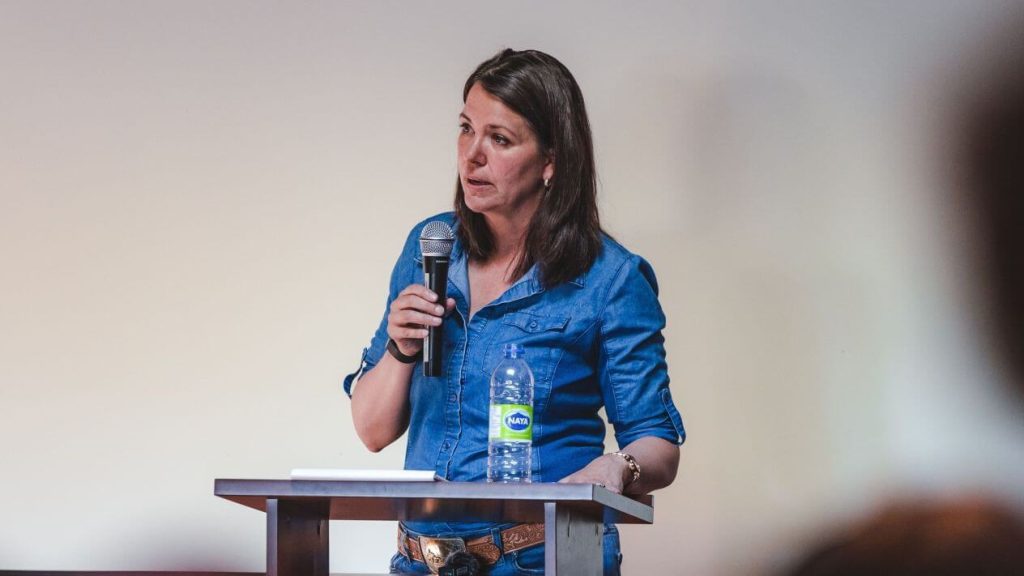
“I know that there’s something going through at the federal level, we’re watching that,” Smith said on the ‘Your Province. Your Premier.’ radio show in late October. “The problem that we had in Alberta was that we had what’s called a grey market. A lot of these online gambling entities were operating in our market, which really was a Wild West without any governance, so we put some governance around them …
“But I’ve heard the same complaints that it’s a little overwhelming. So I’ll talk with [Minister] Dale Nally about it. It is a problem nationally, which is why I think it’s come onto the radar of the federal government.”
Federal gambling advertising bill looks set to pass
The federal aspect Smith referenced is Bill S-211, “An Act respecting a national framework on sports betting advertising.” That legislation passed the Senate in October 2025, moved through the House of Commons this year, and is awaiting a final report, reading, and vote.
Unlike Fairclough’s unsuccessful Ontario bill, Sen. Marty Deacon’s Bill S-211 would not ban all online gambling advertising. It would mandate the Minister of Canadian Identity and Culture to develop a national framework on sports betting advertising specifically, with mooted measures including a whistle-to-whistle ban during game broadcasts.
Both Ford’s Ontario government and Smith’s Alberta government oppose the bill, arguing it would infringe on the provinces’ rights as bestowed by the Criminal Code of Canada to manage their own gambling markets. However, S-211 has overwhelming support in Parliament. It passed its second reading vote in the House in April with 291 yes votes (including Liberal Prime Minister Mark Carney) to only 28 no votes.
“We’re looking at ways to pull the horse back into the barn,” Deacon said on CTV’s ‘Beyond the Bet’ on Friday, Nov. 20. “… The advertising is a real draw and a lure, and lots of people are vulnerable, but particularly our younger male population. And we have seen now very strong Canadian data saying we need to do something consistent across the country and something quickly.”
Bill S-211 is on the House of Commons docket and could receive its third reading in December.