Key Takeaways
- On Nov. 3, the Standing Committee on Canadian Heritage approved an amended version of legislation that would establish a national framework on sports betting advertising.
- Bill S-211 is now set to return to the full House of Commons for final discussion before ultimately a final vote. It already passed the Senate last year.
- The bill is supported by politicians from various parties, as well as mental health and addiction organizations, but received pushback from the likes of the Canadian Gaming Association and the Alberta government.
The House of Commons looks set to vote for a final time on legislation that would establish a national framework on sports betting advertising, after a committee voted to advance an amended version of Bill S-211 on Tuesday.
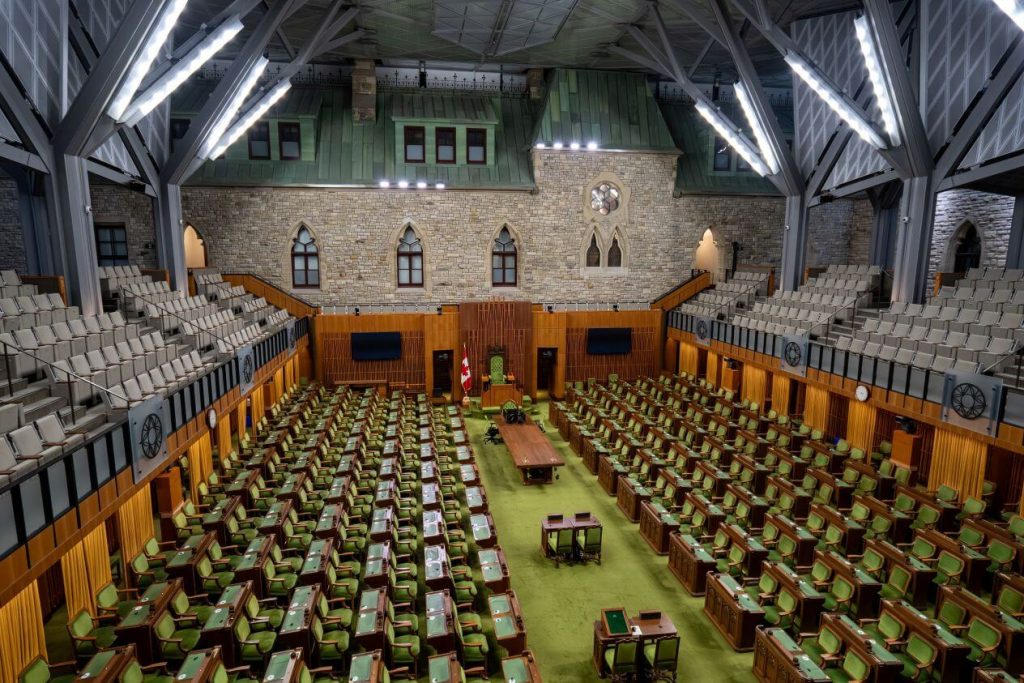
The Standing Committee on Canadian Heritage met on Nov. 3 to hear testimony from the Canadian Radio-television and Telecommunications Commission (CRTC) and Health Canada, before combing through the National Framework on Sports Betting Advertising Act clause by clause to consider amendments.
Bill S-211 passed the Senate in October 2025 and now heads for the final report stage in the House, before a third and final reading and a last vote.
What does the final version of Bill S-211 look like?
Bill S-211 would mandate the Minister of Canadian Identity and Culture to develop a national framework on sports betting advertising to:
- Identify potential measures to regulate sports betting advertising at the national level
- Identify potential measures to promote research and intergovernmental information-sharing related to preventing minors from being harmed by gambling activities
- Set out national standards for the prevention and diagnosis of harmful gambling and addiction and for support measures for persons who are impacted by it
The bill does not lay out many specific suggestions at this stage for how to regulate advertising related to provincially managed online sports betting at the federal level. The only details it offers are that measures could include “limiting the number, scope, and/or location of sports betting advertising” or limiting or banning the use of celebrities and athletes.
“This is a bill that creates a report, it’s not a ban on sports betting advertising,” noted Conservative MP Andrew Lawton. “It’s not anything that’s forcing actual action. It is a report that one hopes will guide further action.”
Committee amendments slow reporting process
In its Senate-approved version, the sports betting advertising bill stated that the minister must prepare a full report of recommended measures and a strategy for implementing them within one year of the act coming into effect. Within five years of that initial report being published, the Minister must bring a full follow-up report assessing how those measures were implemented and evaluating their effectiveness.
The Senate version also stipulated that the minister “must consult with various other parties including federal ministers and provincial governments, relevant stakeholders from across the medical, research, advertising, and gaming industries, First Nations communities, and more.
However, the Heritage Committee made multiple amendments to the bill before advancing it:
- The timeline for publishing the report of recommended measures is now two years, not one year
- The minister now “may consult” with all the listed parties, rather than “must consult”
In effect, that second change means that the Minister of Canadian Identity and Culture would have freedom and flexibility to choose whom he consults while drafting a national framework on sports betting advertising.
Those changes, among other minor changes to the bill’s language, were Liberal Party amendments. They were approved despite some pushback, with Lawton expressing concern that “I don’t think that two years [before the initial report] is necessary or reasonable if we’re looking at this as a serious health challenge for Canadians.”
Committee floated in-game betting ads ban
Other amendments proposed by the Conservatives were not approved.
Lawton raised the idea of adding “banning the advertising of in-game bets” to the list of potential measures to be explored.
“This amendment would add that we hope that framework works towards banning the advertising of such bets,” Lawton added, noting concerns about the addictive nature of live, in-game betting.
Liberal MP Fares Al Soud and a representative from the Department of Heritage countered by suggesting that such a measure would be too prescriptive to be baked into the text of a bill that is intended as a “policy-neutral” jumping-off point for further discussions about the role the federal government might play in regulating sports betting advertising.
The MPs clarified that the bill in its current form would already allow the framework to consider restricting or banning advertising for in-game betting, and the proposed amendment was rejected.
Like broadcasters association, CRTC points to provincial regulations
In the first hour of Tuesday’s meeting, the committee heard from witnesses including CRTC Secretary General Scott Hutton. As Canadian Association of Broadcasters President and CEO Kevin Desjardins did during a hearing last week, Hutton noted that the regulated iGaming provinces of Alberta and Ontario already have regulations on sports betting advertising in place.
“Sports betting falls under provincial jurisdiction,” Hutton said. “Provinces have an opportunity to regulate it, and a number of them have regulations or laws at the provincial level. Some of them regulate or restrict advertising … Ontario seems to be ahead of the pack when it comes to broadcasting and advertising standards.”
Entities including the Canadian Gaming Association, Quebec politicians, and Alberta Minister Dale Nally have warned throughout the process of considering this legislation that federal intervention on sports betting advertising would constitute an overreach and trample on provinces’ rights to regulate online gambling for their own markets.
In contrast, MPs argued during debate in late October that federal legislation is necessary in part because sports betting advertising from Ontario’s regulated market “seeps” across provincial borders into jurisdictions that have not authorized commercial iGaming.
CRTC Acting VP Sheehan Carter noted that the CGA collaborated with Ad Standards to develop a voluntary code for responsible gaming advertising that took effect in January 2026. Hutton said the CRTC is taking “a closer look” at provincial gambling jurisdictions but stressed that the agency has a limited role.
“We cannot just do whatever we want when it comes to restricting advertising at the side of the road or on the side of a bus,” he said. “The same can be true for certain parts of the internet.”
Some during the hearing noted that Alberta and Ontario already limit the use of celebrities and athletes to promoting responsible gaming, although one MP argued that restriction doesn’t really work in practice because “there are still creative ways around it” that tie athletes directly to gambling brands in the eyes of the public.
Bill S-211 keeps moving, but actual change likely years away
After the committee approved the amended version, Bill S-211 next heads back to the full House of Commons for a final reading and an eventual vote. It looks sure to pass, given that it already has great support in the chamber.
However, as emphasized by the new two-year reporting period, a ‘yay’ vote and Royal Assent would not lead to instant change.
What it would do, though, is give the federal Canadian government unprecedented authority over the advertising of provincially regulated and managed sports betting, at a time when mainstream media continues to report on the health impacts related to online gambling.