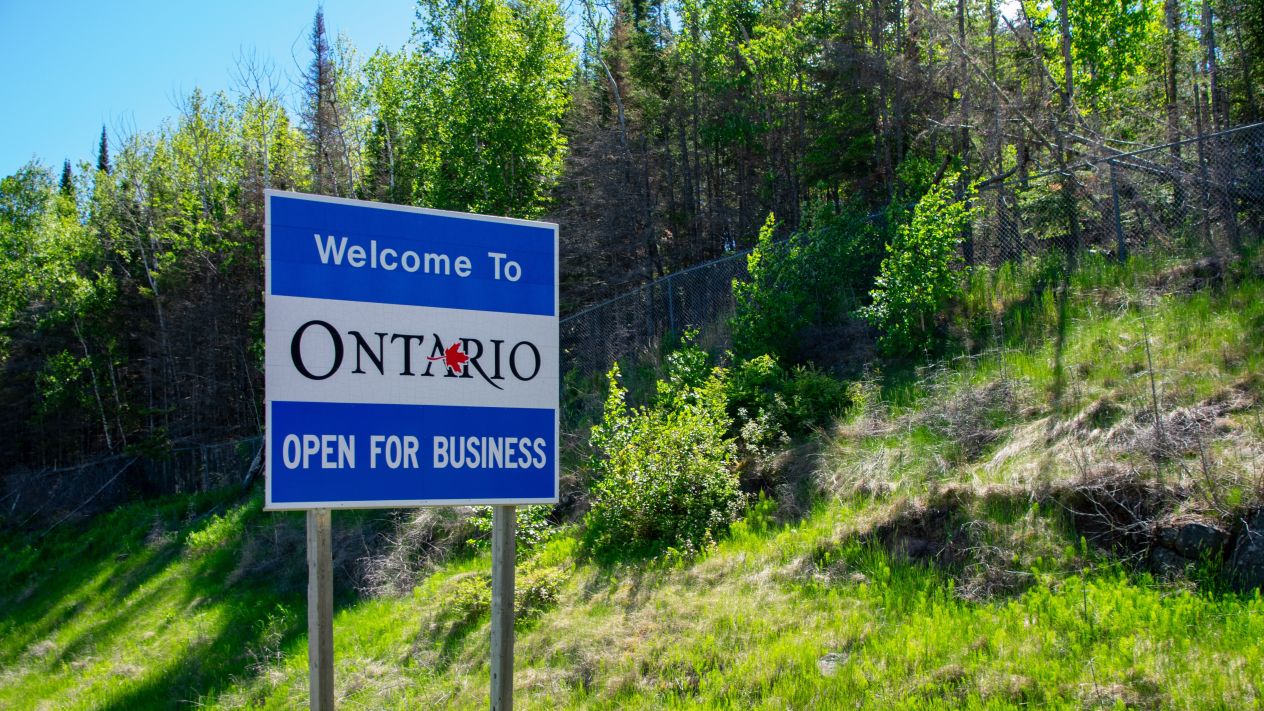
On July 13, Alberta will join Ontario as the second Canadian province to launch a regulated iGaming market, and all eyes are now on the Great White North. As more jurisdictions could soon follow the lead of the first two, John Isaac, editor at online-gambling.com, breaks down the current state of the local market for Canadian Gaming Business and explores the opportunities emerging across the country.
Alberta will be the second Canadian province to license private operators after Ontario opened its market in April 2022. For an industry that has spent four years debating whether Ontario was a one-off or a template, a big question is: Where else will follow, and on what terms?
The honest answer is that no province is rushing. The map of Canadian iGaming is filling in slowly and unevenly, and the gaps say as much about the next phase as the two open markets do.
Two models, not one
Ontario built something genuinely unusual in North America. Through iGaming Ontario, the province acts as the “conduct and manage” counterparty for dozens of competing private brands rather than running the casino itself. The provincial agency sets the rules and takes a share; operators fight for players.
Alberta has now adopted a broadly similar competitive structure, with its own distinct conditions.
The rest of the country still does the opposite. Outside Ontario and Alberta, online gambling runs through a single provincial Crown corporation, and that contrast, open competition versus a government storefront, is the real fault line in every “who’s next” conversation. The questions Alberta’s regulator wrestled with were, in large part, the same ones Ontario answered first.
Reading the rest of the country
British Columbia remains the clearest test case. PlayNow, run by BCLC, has operated online for well over a decade and generates real revenue, which cuts both ways: it gives the province a working product to protect and a reason to be cautious about inviting competitors that would split the take.
Quebec sits in a similar position with Loto-Québec’s Espacejeux, layered over a long and unresolved fight about whether the province can lawfully block unlicensed offshore sites. Atlantic Canada’s shared operator, ALC, serves four provinces at once, which makes any move toward a competitive model a four-government negotiation rather than one. Saskatchewan is the wild card: its online platform launched in partnership with the Saskatchewan Indian Gaming Authority, and First Nations gaming rights, contested for years from Kahnawake onward, will shape what any expansion there can look like.
None of these is a straightforward flip from monopoly to open market. Each carries its own revenue, politics, and Indigenous-rights dimension.
What Alberta’s terms signal
Alberta’s choices, overseen by the Alberta Gaming, Liquor and Cannabis (AGLC) regulator, are worth reading closely because they amount to a second data point.
The province launched with centralized self-exclusion in place on day one, letting players bar themselves across every licensed site at once, rather than retrofitting it later. It set a 20% tax rate, directed 1% of gross gaming revenue toward social-responsibility initiatives, and earmarked a further 2% for First Nations communities. Player-protection infrastructure of the kind championed by the Responsible Gambling Council was treated as a launch requirement, not a follow-up.
For whichever province moves next, those terms become a reference point operators will expect and regulators will be measured against.
Outside of North America, Canada’s province-by-province approach is an outlier. Online-gambling.com tracks these markets internationally and notes that most jurisdictions license online play at the national level, with a single regulator and one rulebook for the whole country, a structure that a country-by-country guide to online gambling regulation illustrates. Canada’s federation hands gambling to the provinces, so the country is effectively running more than a dozen separate experiments at once, each free to copy, ignore, or improve on its neighbours.
What to watch over the next 18 months
Three things will tell the story. First, channelization: how much play each open market pulls away from unlicensed offshore sites. Against a backdrop of global online gambling revenue that firms such as H2 Gambling Capital track as still climbing, that figure is the argument competitive provinces make to the monopoly holdouts. Second, tax and fee settings, where Alberta’s 20% becomes the number every finance ministry now compares against. Third, whether a third Crown-monopoly province feels enough competitive and channelization pressure to seriously study opening up.
The map is filling in. Ontario proved a competitive market can work here; Alberta is testing whether the template travels. The provinces watching will decide less on ideology than on which approach demonstrably keeps players, revenue, and protection inside the regulated perimeter.